
About This Book
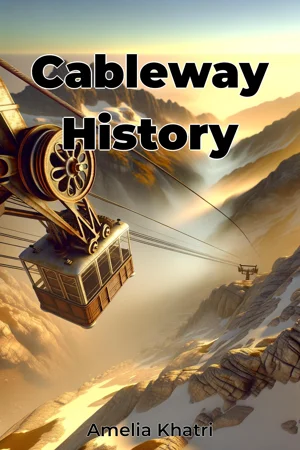
In 1927, when a Swiss engineer devised a way to transport milk across an Alpine valley using a simple cable system, few could have predicted how this innovation would transform transportation in challenging terrains worldwide. "Cableway History" traces the fascinating evolution of cable-based transportation systems from their primitive beginnings to their modern applications in urban mobility and industrial logistics. This comprehensive work examines the technical development of cableways through three distinct phases: early rope-based systems dating back to ancient civilizations, the Industrial Revolution's impact on cable technology, and modern engineering achievements in aerial transportation. The book demonstrates how cableway systems became crucial solutions for crossing otherwise impassable terrain, serving both industrial and human transportation needs. The narrative begins with ancient rope bridges in South America and Asia, where early civilizations developed innovative methods to span valleys and rivers. It then progresses through the metallurgical advances of the 18th and 19th centuries that enabled stronger, more reliable cable systems. The text details how mining operations in the European Alps and American West drove significant improvements in cableway technology, as engineers sought efficient ways to transport ore from mountain peaks to processing facilities. Central to the book's argument is the assertion that cableway development represents a crucial but often overlooked chapter in transportation history, one that continues to influence modern engineering solutions. Each chapter builds upon this theme, supported by technical drawings, historical photographs, and engineering specifications from various periods and locations worldwide. The work is organized chronologically but includes focused sections on key technical innovations, such as the development of wire rope manufacturing, the invention of grip mechanisms for detachable cables, and safety systems evolution. Case studies examine significant installations, including the Roosevelt Island Tramway in New York City, the Palm Springs Aerial Tramway, and the Grindelwald-Männlichen gondola system in Switzerland. Research draws from engineering archives, patent records, and historical documents from multiple countries, providing a global perspective on cableway development. The book includes technical analysis of load calculations, tension systems, and support structures, making it valuable for engineering students and professionals. The text connects mechanical engineering principles with civil engineering applications, while also touching on economic history and urban planning. These interdisciplinary links help readers understand how cableway technology influenced and was influenced by broader technological and social developments. Written in a technical yet accessible style, the book serves both as an engineering reference and historical document. It targets engineering professionals, transportation historians, and students of mechanical and civil engineering, while remaining accessible to general readers interested in transportation technology. The scope covers both passenger and freight applications, though it focuses primarily on systems designed for regular operation rather than temporary installations. The book concludes with an examination of modern applications, including urban transit solutions and tourism infrastructure, demonstrating how historical developments inform current engineering practices. This work fills a significant gap in transportation engineering literature by providing a comprehensive examination of a technology that continues to offer solutions for complex terrain challenges and urban mobility problems.
In 1927, when a Swiss engineer devised a way to transport milk across an Alpine valley using a simple cable system, few could have predicted how this innovation would transform transportation in challenging terrains worldwide. "Cableway History" traces the fascinating evolution of cable-based transportation systems from their primitive beginnings to their modern applications in urban mobility and industrial logistics. This comprehensive work examines the technical development of cableways through three distinct phases: early rope-based systems dating back to ancient civilizations, the Industrial Revolution's impact on cable technology, and modern engineering achievements in aerial transportation. The book demonstrates how cableway systems became crucial solutions for crossing otherwise impassable terrain, serving both industrial and human transportation needs. The narrative begins with ancient rope bridges in South America and Asia, where early civilizations developed innovative methods to span valleys and rivers. It then progresses through the metallurgical advances of the 18th and 19th centuries that enabled stronger, more reliable cable systems. The text details how mining operations in the European Alps and American West drove significant improvements in cableway technology, as engineers sought efficient ways to transport ore from mountain peaks to processing facilities. Central to the book's argument is the assertion that cableway development represents a crucial but often overlooked chapter in transportation history, one that continues to influence modern engineering solutions. Each chapter builds upon this theme, supported by technical drawings, historical photographs, and engineering specifications from various periods and locations worldwide. The work is organized chronologically but includes focused sections on key technical innovations, such as the development of wire rope manufacturing, the invention of grip mechanisms for detachable cables, and safety systems evolution. Case studies examine significant installations, including the Roosevelt Island Tramway in New York City, the Palm Springs Aerial Tramway, and the Grindelwald-Männlichen gondola system in Switzerland. Research draws from engineering archives, patent records, and historical documents from multiple countries, providing a global perspective on cableway development. The book includes technical analysis of load calculations, tension systems, and support structures, making it valuable for engineering students and professionals. The text connects mechanical engineering principles with civil engineering applications, while also touching on economic history and urban planning. These interdisciplinary links help readers understand how cableway technology influenced and was influenced by broader technological and social developments. Written in a technical yet accessible style, the book serves both as an engineering reference and historical document. It targets engineering professionals, transportation historians, and students of mechanical and civil engineering, while remaining accessible to general readers interested in transportation technology. The scope covers both passenger and freight applications, though it focuses primarily on systems designed for regular operation rather than temporary installations. The book concludes with an examination of modern applications, including urban transit solutions and tourism infrastructure, demonstrating how historical developments inform current engineering practices. This work fills a significant gap in transportation engineering literature by providing a comprehensive examination of a technology that continues to offer solutions for complex terrain challenges and urban mobility problems.
"Cableway History" unveils the remarkable journey of cable-based transportation, from ancient rope bridges to modern urban transit solutions. This comprehensive exploration begins with a pivotal moment in 1927 when a Swiss engineer's simple milk transportation system across the Alps sparked a revolution in terrain-challenging mobility. The book masterfully weaves together technological advancement, practical necessity, and engineering innovation, showing how cableway systems evolved from primitive rope mechanisms to sophisticated aerial transportation networks. The narrative progresses through three distinct phases, examining how early civilizations in South America and Asia developed basic rope systems, the transformative impact of the Industrial Revolution's metallurgical advances, and the emergence of modern engineering solutions. Particularly fascinating is the book's revelation of how mining operations in the European Alps and American West served as catalysts for technological improvements, driving innovations in wire rope manufacturing and grip mechanisms for detachable cables. Through a blend of technical analysis, historical documentation, and case studies of notable installations like the Roosevelt Island Tramway and the Grindelwald-Männlichen gondola system, the book offers valuable insights for both engineering professionals and transportation enthusiasts. Drawing from global engineering archives and patent records, it demonstrates how cableway technology continues to influence modern solutions for urban mobility and complex terrain challenges, making it an essential resource for understanding this often-overlooked chapter in transportation history.
Book Details
ISBN
9788233958596
Publisher
Publifye AS
Your Licenses
You don't own any licenses for this book
Purchase a license below to unlock this book and download the EPUB.
Purchase License
Select a tier to unlock this book
Need bulk licensing?
Contact us for enterprise agreements.