
About This Book
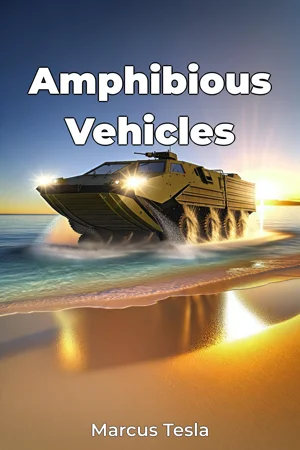
From military operations to tourist attractions, amphibious vehicles represent one of engineering's most versatile achievements, capable of seamlessly transitioning between land and water environments. This comprehensive guide explores the mechanical principles, design evolution, and technological innovations that make these dual-environment vehicles possible. The book examines three core aspects of amphibious vehicle engineering: hull design and flotation mechanics, propulsion systems adaptation, and environmental transition mechanisms. These fundamentals form the foundation for understanding how modern amphibious vehicles overcome the challenges of operating in two drastically different environments. Beginning with the historical development of amphibious vehicles during World War II, the text traces their evolution from basic military transport to today's sophisticated civilian and military applications. Readers will gain insight into how early engineering challenges, such as water sealing and power transfer, influenced current design standards and innovations. The central focus demonstrates how integrated systems engineering enables amphibious vehicles to maintain optimal performance both on land and water. Through detailed technical illustrations and case studies, the book breaks down complex mechanical systems into understandable components, including drivetrain modifications, variable suspension systems, and hybrid propulsion solutions. Each chapter builds upon fundamental engineering principles, presenting practical applications alongside theoretical concepts. The first section covers buoyancy calculations, hull structural requirements, and waterproofing techniques. The second part explores transmission systems and power distribution methods unique to amphibious vehicles. The final section addresses modern innovations, including smart materials and automated environmental adaptation systems. The book incorporates research from military archives, manufacturing specifications, and field testing data, providing readers with evidence-based insights into vehicle performance and reliability. Engineering calculations, stress analysis reports, and operational testing results support key technical concepts throughout the text. Interdisciplinary connections link mechanical engineering principles with marine architecture, materials science, and environmental engineering. These relationships highlight how advances in multiple fields contribute to amphibious vehicle development and capabilities. Written in a technical yet accessible style, the book serves as both an educational resource for engineering students and a practical guide for professionals. Technical terminology is carefully explained, while complex concepts are supported by clear diagrams and real-world examples. The primary audience includes mechanical engineering students, automotive designers, marine engineers, and military vehicle specialists. The content is particularly valuable for those involved in vehicle design, manufacturing, or maintenance operations. Practical applications extend beyond vehicle design to include maintenance procedures, performance optimization, and safety considerations. Readers will learn how to evaluate amphibious vehicle capabilities, assess operational requirements, and implement effective maintenance protocols. The text addresses current industry debates, including the balance between performance and cost-effectiveness, environmental impact considerations, and the role of autonomous systems in future amphibious vehicles. Special attention is given to emerging technologies and their potential impact on next-generation designs. While focusing primarily on mechanical systems and operational principles, the book acknowledges limitations in current technology and discusses potential areas for future development. This approach provides readers with both practical knowledge for current applications and insight into future innovations in amphibious vehicle design and operation.
From military operations to tourist attractions, amphibious vehicles represent one of engineering's most versatile achievements, capable of seamlessly transitioning between land and water environments. This comprehensive guide explores the mechanical principles, design evolution, and technological innovations that make these dual-environment vehicles possible. The book examines three core aspects of amphibious vehicle engineering: hull design and flotation mechanics, propulsion systems adaptation, and environmental transition mechanisms. These fundamentals form the foundation for understanding how modern amphibious vehicles overcome the challenges of operating in two drastically different environments. Beginning with the historical development of amphibious vehicles during World War II, the text traces their evolution from basic military transport to today's sophisticated civilian and military applications. Readers will gain insight into how early engineering challenges, such as water sealing and power transfer, influenced current design standards and innovations. The central focus demonstrates how integrated systems engineering enables amphibious vehicles to maintain optimal performance both on land and water. Through detailed technical illustrations and case studies, the book breaks down complex mechanical systems into understandable components, including drivetrain modifications, variable suspension systems, and hybrid propulsion solutions. Each chapter builds upon fundamental engineering principles, presenting practical applications alongside theoretical concepts. The first section covers buoyancy calculations, hull structural requirements, and waterproofing techniques. The second part explores transmission systems and power distribution methods unique to amphibious vehicles. The final section addresses modern innovations, including smart materials and automated environmental adaptation systems. The book incorporates research from military archives, manufacturing specifications, and field testing data, providing readers with evidence-based insights into vehicle performance and reliability. Engineering calculations, stress analysis reports, and operational testing results support key technical concepts throughout the text. Interdisciplinary connections link mechanical engineering principles with marine architecture, materials science, and environmental engineering. These relationships highlight how advances in multiple fields contribute to amphibious vehicle development and capabilities. Written in a technical yet accessible style, the book serves as both an educational resource for engineering students and a practical guide for professionals. Technical terminology is carefully explained, while complex concepts are supported by clear diagrams and real-world examples. The primary audience includes mechanical engineering students, automotive designers, marine engineers, and military vehicle specialists. The content is particularly valuable for those involved in vehicle design, manufacturing, or maintenance operations. Practical applications extend beyond vehicle design to include maintenance procedures, performance optimization, and safety considerations. Readers will learn how to evaluate amphibious vehicle capabilities, assess operational requirements, and implement effective maintenance protocols. The text addresses current industry debates, including the balance between performance and cost-effectiveness, environmental impact considerations, and the role of autonomous systems in future amphibious vehicles. Special attention is given to emerging technologies and their potential impact on next-generation designs. While focusing primarily on mechanical systems and operational principles, the book acknowledges limitations in current technology and discusses potential areas for future development. This approach provides readers with both practical knowledge for current applications and insight into future innovations in amphibious vehicle design and operation.
"Amphibious Vehicles" offers a comprehensive exploration of the engineering marvels that operate seamlessly on both land and water, presenting a detailed analysis of their mechanical principles and technological evolution. The book masterfully breaks down the three fundamental aspects of amphibious vehicle engineering: hull design and flotation mechanics, propulsion systems adaptation, and environmental transition mechanisms, tracing their development from World War II military applications to modern civilian and military uses. Through a blend of technical illustrations and real-world case studies, the text illuminates how integrated systems engineering enables these versatile vehicles to maintain optimal performance across different environments. The book's systematic approach progresses from basic principles of buoyancy and hull design to advanced topics like hybrid propulsion solutions and smart materials, incorporating research from military archives and field testing data to support its technical concepts. Readers gain practical insights into drivetrain modifications, variable suspension systems, and waterproofing techniques that make these dual-environment vehicles possible. The book stands out for its accessible presentation of complex engineering principles, making it valuable for both students and professionals in mechanical and marine engineering fields. While maintaining technical accuracy, it bridges theoretical concepts with practical applications, addressing current industry challenges such as performance optimization, maintenance protocols, and environmental considerations. The inclusion of emerging technologies and future development possibilities makes this resource particularly relevant for those interested in the evolving landscape of amphibious vehicle design and operation.
Book Details
ISBN
9788233958572
Publisher
Publifye AS
Your Licenses
You don't own any licenses for this book
Purchase a license below to unlock this book and download the EPUB.
Purchase License
Select a tier to unlock this book
Need bulk licensing?
Contact us for enterprise agreements.