
About This Book
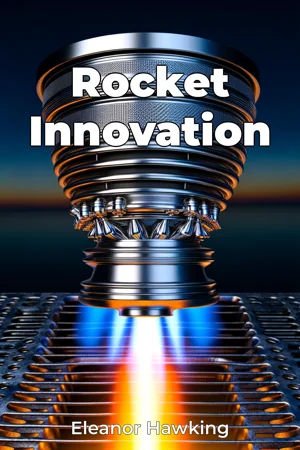
From ancient Chinese fireworks to modern space exploration, "Rocket Innovation" traces the scientific journey that transformed simple propulsion devices into vehicles capable of reaching the stars. This comprehensive exploration of rocket science bridges historical developments with cutting-edge aerospace engineering, revealing how fundamental physics principles enabled humanity's greatest space achievements. The book examines three core areas: the evolution of rocket propulsion systems, the physics of space flight, and the engineering challenges of modern rocket design. Through detailed analysis, readers discover how early pioneers like Konstantin Tsiolkovsky and Robert Goddard established the theoretical foundations that would later enable lunar missions and satellite deployment. Beginning with the basic principles of Newton's laws of motion, the text systematically builds understanding of rocket propulsion, covering action-reaction principles, specific impulse, and the rocket equation. These fundamentals set the stage for exploring more complex topics, including multi-stage rockets, fuel efficiency, and trajectory optimization. The narrative integrates historical milestones with technical insights, demonstrating how each advancement in rocket technology opened new possibilities for space exploration. Readers learn how German V2 rockets inadvertently contributed to space program development, and how the Space Race accelerated innovation in propulsion systems and materials science. Central to the book's argument is the assertion that rocket development represents one of humanity's most significant technical achievements, requiring solutions to multiple engineering challenges across various disciplines. This is supported by extensive technical documentation, wind tunnel test data, and actual mission results from space agencies worldwide. The text maintains a rigorous scientific approach while remaining accessible to readers with basic physics knowledge. Mathematical concepts are introduced gradually, with practical examples illustrating theoretical principles. Engineering diagrams, propulsion system schematics, and mission profiles provide visual support for complex concepts. Interdisciplinary connections highlight the role of materials science in developing heat-resistant components, computational fluid dynamics in optimizing rocket design, and chemistry in fuel development. These relationships demonstrate how advances in multiple fields contributed to modern rocket capability. The book's structure progresses from basic principles to advanced applications, with each chapter building on previous concepts. Key sections cover propulsion systems, structural design, guidance systems, and the challenges of human spaceflight. The final chapters examine current developments in reusable rockets and the potential for interplanetary travel. Written for engineering students, aerospace professionals, and scientifically curious readers, the content balances technical depth with practical applications. Each concept is examined through the lens of real-world rocket design and operation, making the material relevant for both academic study and industry application. The scope encompasses suborbital to interplanetary flight, while acknowledging current technological limitations in areas like propulsion efficiency and materials strength. Ongoing debates in the field, including the merits of chemical versus ion propulsion for deep space missions, are presented with supporting evidence from current research. The text maintains focus on verifiable scientific principles and engineering practices, avoiding speculation while addressing the technical challenges facing future space exploration. This approach provides readers with a solid foundation in rocket science while highlighting the continuing evolution of this dynamic field.
From ancient Chinese fireworks to modern space exploration, "Rocket Innovation" traces the scientific journey that transformed simple propulsion devices into vehicles capable of reaching the stars. This comprehensive exploration of rocket science bridges historical developments with cutting-edge aerospace engineering, revealing how fundamental physics principles enabled humanity's greatest space achievements. The book examines three core areas: the evolution of rocket propulsion systems, the physics of space flight, and the engineering challenges of modern rocket design. Through detailed analysis, readers discover how early pioneers like Konstantin Tsiolkovsky and Robert Goddard established the theoretical foundations that would later enable lunar missions and satellite deployment. Beginning with the basic principles of Newton's laws of motion, the text systematically builds understanding of rocket propulsion, covering action-reaction principles, specific impulse, and the rocket equation. These fundamentals set the stage for exploring more complex topics, including multi-stage rockets, fuel efficiency, and trajectory optimization. The narrative integrates historical milestones with technical insights, demonstrating how each advancement in rocket technology opened new possibilities for space exploration. Readers learn how German V2 rockets inadvertently contributed to space program development, and how the Space Race accelerated innovation in propulsion systems and materials science. Central to the book's argument is the assertion that rocket development represents one of humanity's most significant technical achievements, requiring solutions to multiple engineering challenges across various disciplines. This is supported by extensive technical documentation, wind tunnel test data, and actual mission results from space agencies worldwide. The text maintains a rigorous scientific approach while remaining accessible to readers with basic physics knowledge. Mathematical concepts are introduced gradually, with practical examples illustrating theoretical principles. Engineering diagrams, propulsion system schematics, and mission profiles provide visual support for complex concepts. Interdisciplinary connections highlight the role of materials science in developing heat-resistant components, computational fluid dynamics in optimizing rocket design, and chemistry in fuel development. These relationships demonstrate how advances in multiple fields contributed to modern rocket capability. The book's structure progresses from basic principles to advanced applications, with each chapter building on previous concepts. Key sections cover propulsion systems, structural design, guidance systems, and the challenges of human spaceflight. The final chapters examine current developments in reusable rockets and the potential for interplanetary travel. Written for engineering students, aerospace professionals, and scientifically curious readers, the content balances technical depth with practical applications. Each concept is examined through the lens of real-world rocket design and operation, making the material relevant for both academic study and industry application. The scope encompasses suborbital to interplanetary flight, while acknowledging current technological limitations in areas like propulsion efficiency and materials strength. Ongoing debates in the field, including the merits of chemical versus ion propulsion for deep space missions, are presented with supporting evidence from current research. The text maintains focus on verifiable scientific principles and engineering practices, avoiding speculation while addressing the technical challenges facing future space exploration. This approach provides readers with a solid foundation in rocket science while highlighting the continuing evolution of this dynamic field.
"Rocket Innovation" presents a fascinating journey through the evolution of rocket science, from ancient Chinese fireworks to modern space exploration, offering a comprehensive examination of how fundamental physics and engineering principles revolutionized space travel. The book masterfully weaves together historical developments with technical insights, demonstrating how pioneers like Tsiolkovsky and Goddard laid the groundwork for humanity's greatest space achievements. Through a systematic approach, readers discover how Newton's laws of motion and basic propulsion concepts evolved into the complex spacecraft systems we see today. The text progressively builds understanding by exploring three core areas: propulsion systems, space flight physics, and modern rocket engineering challenges. Readers learn how the German V2 rockets inadvertently contributed to space program development and how the Space Race catalyzed innovations in propulsion systems and materials science. The book maintains scientific rigor while remaining accessible, using practical examples and visual aids to illustrate complex concepts, making it valuable for both engineering students and space enthusiasts. Each chapter builds upon previous knowledge, starting with fundamental principles and advancing to sophisticated applications in modern rocketry. The interdisciplinary approach highlights connections between materials science, computational fluid dynamics, and chemistry, demonstrating how multiple fields contribute to rocket development. By examining real-world examples and current technological limitations, the book provides a balanced perspective on both present capabilities and future challenges in space exploration, from suborbital flights to interplanetary travel.
Book Details
ISBN
9788233958558
Publisher
Publifye AS
Your Licenses
You don't own any licenses for this book
Purchase a license below to unlock this book and download the EPUB.
Purchase License
Select a tier to unlock this book
Need bulk licensing?
Contact us for enterprise agreements.