
About This Book
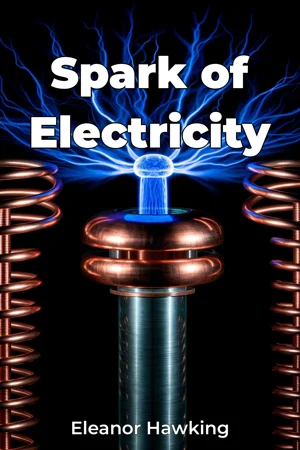
What transformed a mysterious natural phenomenon into the force that powers our modern world? "Spark of Electricity" traces the journey of electrical discovery from ancient observations of static charge to the complex power systems that drive contemporary civilization. The book presents a methodical examination of three fundamental aspects: the scientific principles underlying electricity, the key historical discoveries that unlocked its potential, and the technological developments that harnessed its power. Through careful analysis of historical documents, scientific papers, and technological archives, readers gain insight into both the theoretical foundations and practical applications that shaped our understanding of electrical energy. The narrative begins with early observations of electrical phenomena, including Greek discoveries of static electricity in amber and Chinese documentation of magnetic compasses. It then progresses through the pivotal experiments of Benjamin Franklin, Alessandro Volta, and Michael Faraday, demonstrating how each breakthrough built upon previous knowledge to create our modern electrical framework. Central to the book's thesis is the assertion that electricity's discovery and subsequent development represent one of humanity's most significant scientific achievements, fundamentally altering how we live, work, and communicate. This argument is supported by examining the cascading effects of electrical innovations across multiple sectors of society. The content is structured in three major sections. The first explores the basic physics of electrical charge, current, and electromagnetic fields. The second section chronicles the key experiments and innovations that transformed theoretical understanding into practical applications. The final section examines the development of electrical infrastructure and its impact on industrialization and urbanization. The book draws upon primary sources including laboratory notebooks, patent documents, and engineering specifications to provide readers with direct evidence of how electrical understanding evolved. It incorporates recent research from physics archives and engineering databases to present updated perspectives on historical developments. Interdisciplinary connections link electrical discoveries to developments in chemistry, particularly in battery technology and electrochemistry, and to advances in materials science that enabled better conductors and insulators. The economic implications of electrification are explored through the lens of industrial development and urban planning. The writing maintains an analytical approach while remaining accessible to readers with basic scientific knowledge. Technical concepts are explained through practical examples and clear illustrations, making complex principles comprehensible to a general audience interested in science and technology. This work is particularly relevant for engineering students, technology enthusiasts, and professionals in related fields who seek to understand the historical and scientific context of their work. The book addresses ongoing debates about energy infrastructure and the future of electrical power systems, providing historical context for current discussions about sustainable electricity generation and distribution. The scope encompasses both theoretical principles and practical applications, though it focuses primarily on developments through the early 20th century, with later developments addressed more broadly. Readers will find practical insights into how electrical systems work and how this knowledge applies to modern technology development and energy policy decisions. Throughout the narrative, the book maintains a balanced perspective on competing theories and technological approaches that shaped electrical development, acknowledging both successful and failed attempts to harness electrical power. This comprehensive examination provides readers with a thorough understanding of how electricity transformed from a scientific curiosity into an essential component of modern life.
What transformed a mysterious natural phenomenon into the force that powers our modern world? "Spark of Electricity" traces the journey of electrical discovery from ancient observations of static charge to the complex power systems that drive contemporary civilization. The book presents a methodical examination of three fundamental aspects: the scientific principles underlying electricity, the key historical discoveries that unlocked its potential, and the technological developments that harnessed its power. Through careful analysis of historical documents, scientific papers, and technological archives, readers gain insight into both the theoretical foundations and practical applications that shaped our understanding of electrical energy. The narrative begins with early observations of electrical phenomena, including Greek discoveries of static electricity in amber and Chinese documentation of magnetic compasses. It then progresses through the pivotal experiments of Benjamin Franklin, Alessandro Volta, and Michael Faraday, demonstrating how each breakthrough built upon previous knowledge to create our modern electrical framework. Central to the book's thesis is the assertion that electricity's discovery and subsequent development represent one of humanity's most significant scientific achievements, fundamentally altering how we live, work, and communicate. This argument is supported by examining the cascading effects of electrical innovations across multiple sectors of society. The content is structured in three major sections. The first explores the basic physics of electrical charge, current, and electromagnetic fields. The second section chronicles the key experiments and innovations that transformed theoretical understanding into practical applications. The final section examines the development of electrical infrastructure and its impact on industrialization and urbanization. The book draws upon primary sources including laboratory notebooks, patent documents, and engineering specifications to provide readers with direct evidence of how electrical understanding evolved. It incorporates recent research from physics archives and engineering databases to present updated perspectives on historical developments. Interdisciplinary connections link electrical discoveries to developments in chemistry, particularly in battery technology and electrochemistry, and to advances in materials science that enabled better conductors and insulators. The economic implications of electrification are explored through the lens of industrial development and urban planning. The writing maintains an analytical approach while remaining accessible to readers with basic scientific knowledge. Technical concepts are explained through practical examples and clear illustrations, making complex principles comprehensible to a general audience interested in science and technology. This work is particularly relevant for engineering students, technology enthusiasts, and professionals in related fields who seek to understand the historical and scientific context of their work. The book addresses ongoing debates about energy infrastructure and the future of electrical power systems, providing historical context for current discussions about sustainable electricity generation and distribution. The scope encompasses both theoretical principles and practical applications, though it focuses primarily on developments through the early 20th century, with later developments addressed more broadly. Readers will find practical insights into how electrical systems work and how this knowledge applies to modern technology development and energy policy decisions. Throughout the narrative, the book maintains a balanced perspective on competing theories and technological approaches that shaped electrical development, acknowledging both successful and failed attempts to harness electrical power. This comprehensive examination provides readers with a thorough understanding of how electricity transformed from a scientific curiosity into an essential component of modern life.
"Spark of Electricity" presents a compelling journey through the evolution of electrical power, from ancient static charge observations to today's sophisticated power systems. This comprehensive exploration weaves together three crucial elements: the fundamental scientific principles of electricity, groundbreaking historical discoveries, and the technological innovations that revolutionized human civilization. The narrative unfolds chronologically, beginning with early Greek and Chinese observations of electrical phenomena before delving into the transformative work of pioneers like Benjamin Franklin, Alessandro Volta, and Michael Faraday. Through careful analysis of primary sources, including laboratory notebooks and patent documents, the book reveals how each discovery built upon previous knowledge to create our modern electrical framework. Particularly fascinating is the examination of how static electricity experiments led to the development of practical battery technology and our understanding of electromagnetic fields. The book's unique approach combines technical accuracy with accessible explanations, making complex electrical concepts comprehensible to readers with basic scientific knowledge. Divided into three major sections, it progresses from basic physics principles through historical innovations to the development of electrical infrastructure, while maintaining strong connections between theoretical understanding and practical applications. This structure, supported by practical examples and clear illustrations, offers readers a thorough understanding of how electricity evolved from a scientific curiosity into the backbone of modern civilization.
Book Details
ISBN
9788233958435
Publisher
Publifye AS
Your Licenses
You don't own any licenses for this book
Purchase a license below to unlock this book and download the EPUB.
Purchase License
Select a tier to unlock this book
Need bulk licensing?
Contact us for enterprise agreements.