
About This Book
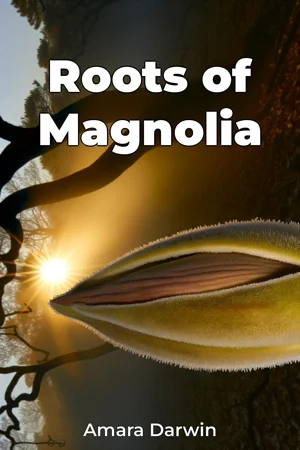
"Roots of Magnolia" begins with a startling revelation: magnolias existed before bees evolved, thriving in a world where beetles were the primary pollinators. This ancient lineage serves as the foundation for a comprehensive exploration of one of Earth's most resilient flowering plant families. The book traces the 100-million-year journey of magnolias through geological time, presenting three main threads: their evolutionary adaptations, their impact on ecosystems, and their role in advancing our understanding of plant evolution. Through fossil records and molecular studies, readers discover how magnolias survived multiple mass extinction events and climate shifts, maintaining their basic structure while most other plant families underwent significant changes. Drawing from recent paleobotanical findings and DNA analysis, the text examines how magnolias developed their distinctive features. The book details their primitive yet effective flower structure, frost-resistant buds, and unique reproductive strategies that helped them persist through dramatic environmental changes. These adaptations not only ensured their survival but also influenced the evolution of other flowering plants. The narrative is structured in three major sections. The first establishes the geological context of the Cretaceous period when magnolias first appeared. The second section analyzes their anatomical and physiological adaptations, supported by detailed microscopic studies and biochemical research. The final section examines their current distribution and diversity, featuring research from both Eastern and Western hemispheres. Research presented includes findings from fossil collections across multiple continents, genetic studies from major botanical institutions, and long-term ecological surveys. The book incorporates data from climate science, geology, and entomology to create a multifaceted understanding of magnolia evolution. The interdisciplinary approach connects botany with climate science, showing how magnolias serve as indicators of historical climate patterns. Their relationship with geology helps explain their current geographical distribution, while their interactions with insects provide insights into co-evolution processes. The text maintains an academic tone while remaining accessible to educated general readers, particularly those interested in botany, evolution, and natural history. Technical terms are carefully introduced and explained within relevant contexts, allowing readers to build their scientific vocabulary progressively. This work is particularly valuable for botanists, evolutionary biologists, and environmental scientists, but also appeals to garden enthusiasts seeking deeper understanding of these ancient trees. The book provides practical insights for conservation efforts and helps readers understand how studying ancient plant groups informs our understanding of climate change adaptation. The scope encompasses both macro and micro perspectives, from continental drift's influence on magnolia distribution to the cellular mechanisms that allow them to survive freezing temperatures. While focused primarily on the genus Magnolia, the book contextualizes their evolution within the broader flowering plant family. Current debates addressed include the timing of early flowering plant radiation and the relative importance of climate versus competition in driving evolution. The book presents multiple hypotheses where scientific consensus is still developing, showing how ongoing research continues to refine our understanding of plant evolution. By examining magnolias as a model organism for evolutionary studies, the book demonstrates how ancient lineages inform our understanding of plant adaptation and survival in changing environments, providing valuable insights for both theoretical biology and practical conservation efforts.
"Roots of Magnolia" begins with a startling revelation: magnolias existed before bees evolved, thriving in a world where beetles were the primary pollinators. This ancient lineage serves as the foundation for a comprehensive exploration of one of Earth's most resilient flowering plant families. The book traces the 100-million-year journey of magnolias through geological time, presenting three main threads: their evolutionary adaptations, their impact on ecosystems, and their role in advancing our understanding of plant evolution. Through fossil records and molecular studies, readers discover how magnolias survived multiple mass extinction events and climate shifts, maintaining their basic structure while most other plant families underwent significant changes. Drawing from recent paleobotanical findings and DNA analysis, the text examines how magnolias developed their distinctive features. The book details their primitive yet effective flower structure, frost-resistant buds, and unique reproductive strategies that helped them persist through dramatic environmental changes. These adaptations not only ensured their survival but also influenced the evolution of other flowering plants. The narrative is structured in three major sections. The first establishes the geological context of the Cretaceous period when magnolias first appeared. The second section analyzes their anatomical and physiological adaptations, supported by detailed microscopic studies and biochemical research. The final section examines their current distribution and diversity, featuring research from both Eastern and Western hemispheres. Research presented includes findings from fossil collections across multiple continents, genetic studies from major botanical institutions, and long-term ecological surveys. The book incorporates data from climate science, geology, and entomology to create a multifaceted understanding of magnolia evolution. The interdisciplinary approach connects botany with climate science, showing how magnolias serve as indicators of historical climate patterns. Their relationship with geology helps explain their current geographical distribution, while their interactions with insects provide insights into co-evolution processes. The text maintains an academic tone while remaining accessible to educated general readers, particularly those interested in botany, evolution, and natural history. Technical terms are carefully introduced and explained within relevant contexts, allowing readers to build their scientific vocabulary progressively. This work is particularly valuable for botanists, evolutionary biologists, and environmental scientists, but also appeals to garden enthusiasts seeking deeper understanding of these ancient trees. The book provides practical insights for conservation efforts and helps readers understand how studying ancient plant groups informs our understanding of climate change adaptation. The scope encompasses both macro and micro perspectives, from continental drift's influence on magnolia distribution to the cellular mechanisms that allow them to survive freezing temperatures. While focused primarily on the genus Magnolia, the book contextualizes their evolution within the broader flowering plant family. Current debates addressed include the timing of early flowering plant radiation and the relative importance of climate versus competition in driving evolution. The book presents multiple hypotheses where scientific consensus is still developing, showing how ongoing research continues to refine our understanding of plant evolution. By examining magnolias as a model organism for evolutionary studies, the book demonstrates how ancient lineages inform our understanding of plant adaptation and survival in changing environments, providing valuable insights for both theoretical biology and practical conservation efforts.
"Roots of Magnolia" unveils the remarkable 100-million-year history of one of Earth's most enduring flowering plant families, revealing how these ancient trees have persisted through multiple mass extinctions and climate changes. Perhaps most fascinating is the discovery that magnolias predated bees, evolving in a world where beetles served as their primary pollinators. This extraordinary durability stems from their primitive yet highly effective adaptations, including frost-resistant buds and unique reproductive strategies that have remained largely unchanged while other plant families underwent significant transformations. The book progresses through three distinct sections, beginning with the geological context of the Cretaceous period when magnolias first emerged. Through a combination of fossil evidence, DNA analysis, and modern botanical research, readers explore how these resilient plants developed their distinctive characteristics and adapted to dramatic environmental shifts. The narrative weaves together findings from multiple scientific disciplines, including paleobotany, climate science, and entomology, creating a comprehensive understanding of magnolia evolution and its broader implications for plant biology. This accessible yet scientifically rigorous exploration connects ancient plant history with contemporary conservation challenges, making it valuable for both academic researchers and educated enthusiasts. The book's interdisciplinary approach demonstrates how magnolias serve as living laboratories for understanding plant adaptation and survival, offering crucial insights into how species persist through environmental change. By examining magnolias from both macro and micro perspectives, readers gain a deeper appreciation for these remarkable survivors and their significance in the broader context of plant evolution.
Book Details
ISBN
9788233958404
Publisher
Publifye AS
Your Licenses
You don't own any licenses for this book
Purchase a license below to unlock this book and download the EPUB.
Purchase License
Select a tier to unlock this book
Need bulk licensing?
Contact us for enterprise agreements.