
About This Book
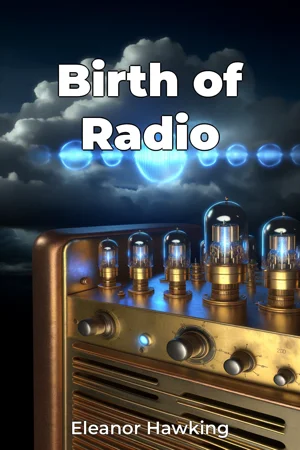
"Birth of Radio" opens with the pivotal moment in 1901 when Guglielmo Marconi successfully transmitted the letter "S" across the Atlantic Ocean, marking the dawn of wireless communication. This comprehensive exploration traces the scientific journey that transformed our understanding of electromagnetic waves and revolutionized global connectivity. The book examines three fundamental aspects of radio's development: the theoretical physics that predicted radio waves, the technological innovations that made transmission possible, and the societal impact that followed. Through detailed analysis, it reveals how Heinrich Hertz's experimental validation of James Clerk Maxwell's electromagnetic theory laid the groundwork for practical radio applications. Readers follow the progression from early experiments with spark-gap transmitters to the development of vacuum tubes and crystal detectors. The text carefully explains the technical principles behind radio wave propagation, modulation, and reception, making complex physics accessible to readers with basic scientific knowledge. Each chapter builds upon previous concepts, creating a clear path through the scientific and engineering challenges that early radio pioneers encountered. The narrative demonstrates how radio technology emerged from the convergence of multiple scientific disciplines. It connects developments in electricity, magnetism, and materials science, while exploring how advances in mathematics and theoretical physics enabled precise wave calculations and circuit designs. These interdisciplinary links highlight radio as a triumph of both pure and applied science. The book dedicates significant attention to the competitive race for radio patents and the establishment of the first broadcasting networks. It presents primary sources, including laboratory notebooks, patent documents, and contemporary scientific papers, to reconstruct the often parallel development paths taken by inventors worldwide. This evidence-based approach provides readers with a nuanced understanding of how various contributors advanced radio technology. Technical content is balanced with discussions of radio's broader implications. The text examines how this invention transformed military communication during World War I, revolutionized maritime safety following the Titanic disaster, and created the first mass media platform. These real-world applications demonstrate radio's profound influence on 20th-century society. The work maintains an academic tone while remaining accessible to technically-minded readers, including engineers, physics students, and technology enthusiasts. It approaches controversies, such as the contested attribution of radio's invention, by presenting documented evidence rather than taking sides. This objective treatment allows readers to understand the complexity of technological innovation and patent disputes. The scope encompasses the period from Maxwell's theoretical work in the 1860s through the establishment of commercial broadcasting in the 1920s. While the focus remains primarily on technical developments, the book acknowledges radio's cultural impact without delving deeply into programming history or entertainment aspects. Contemporary relevance is established through connections to modern wireless technologies, showing how principles discovered during radio's development continue to influence current communication systems. The book concludes by examining how radio's evolution provides insights into modern technological innovation and scientific discovery processes. This treatment of radio's birth offers readers both technical depth and historical context, making it a valuable resource for understanding one of humanity's most transformative inventions. It demonstrates how theoretical physics, practical engineering, and societal needs combined to create a technology that fundamentally altered human communication.
"Birth of Radio" opens with the pivotal moment in 1901 when Guglielmo Marconi successfully transmitted the letter "S" across the Atlantic Ocean, marking the dawn of wireless communication. This comprehensive exploration traces the scientific journey that transformed our understanding of electromagnetic waves and revolutionized global connectivity. The book examines three fundamental aspects of radio's development: the theoretical physics that predicted radio waves, the technological innovations that made transmission possible, and the societal impact that followed. Through detailed analysis, it reveals how Heinrich Hertz's experimental validation of James Clerk Maxwell's electromagnetic theory laid the groundwork for practical radio applications. Readers follow the progression from early experiments with spark-gap transmitters to the development of vacuum tubes and crystal detectors. The text carefully explains the technical principles behind radio wave propagation, modulation, and reception, making complex physics accessible to readers with basic scientific knowledge. Each chapter builds upon previous concepts, creating a clear path through the scientific and engineering challenges that early radio pioneers encountered. The narrative demonstrates how radio technology emerged from the convergence of multiple scientific disciplines. It connects developments in electricity, magnetism, and materials science, while exploring how advances in mathematics and theoretical physics enabled precise wave calculations and circuit designs. These interdisciplinary links highlight radio as a triumph of both pure and applied science. The book dedicates significant attention to the competitive race for radio patents and the establishment of the first broadcasting networks. It presents primary sources, including laboratory notebooks, patent documents, and contemporary scientific papers, to reconstruct the often parallel development paths taken by inventors worldwide. This evidence-based approach provides readers with a nuanced understanding of how various contributors advanced radio technology. Technical content is balanced with discussions of radio's broader implications. The text examines how this invention transformed military communication during World War I, revolutionized maritime safety following the Titanic disaster, and created the first mass media platform. These real-world applications demonstrate radio's profound influence on 20th-century society. The work maintains an academic tone while remaining accessible to technically-minded readers, including engineers, physics students, and technology enthusiasts. It approaches controversies, such as the contested attribution of radio's invention, by presenting documented evidence rather than taking sides. This objective treatment allows readers to understand the complexity of technological innovation and patent disputes. The scope encompasses the period from Maxwell's theoretical work in the 1860s through the establishment of commercial broadcasting in the 1920s. While the focus remains primarily on technical developments, the book acknowledges radio's cultural impact without delving deeply into programming history or entertainment aspects. Contemporary relevance is established through connections to modern wireless technologies, showing how principles discovered during radio's development continue to influence current communication systems. The book concludes by examining how radio's evolution provides insights into modern technological innovation and scientific discovery processes. This treatment of radio's birth offers readers both technical depth and historical context, making it a valuable resource for understanding one of humanity's most transformative inventions. It demonstrates how theoretical physics, practical engineering, and societal needs combined to create a technology that fundamentally altered human communication.
"Birth of Radio" masterfully chronicles the revolutionary journey of wireless communication, beginning with Marconi's historic 1901 transmission of the letter "S" across the Atlantic Ocean. This comprehensive exploration weaves together three critical threads: the theoretical physics behind electromagnetic waves, the groundbreaking technological innovations that made radio possible, and its profound impact on society. The narrative skillfully demonstrates how Heinrich Hertz's experimental validation of Maxwell's electromagnetic theory paved the way for practical radio applications. The book progresses systematically through the scientific and engineering milestones that shaped radio's development, from early spark-gap transmitters to sophisticated vacuum tubes and crystal detectors. It illuminates the fascinating convergence of multiple scientific disciplines, including electricity, magnetism, and materials science, while making complex technical concepts accessible to readers with basic scientific knowledge. Through careful examination of primary sources, including laboratory notebooks and patent documents, the text provides an evidence-based account of the competitive race for radio patents and the establishment of early broadcasting networks. What sets this book apart is its balanced approach to both technical detail and historical context, making it particularly valuable for engineers, physics students, and technology enthusiasts. The narrative demonstrates how radio technology emerged from theoretical physics to become a practical reality that transformed military communication, maritime safety, and mass media. By connecting historical developments to modern wireless technologies, the book illustrates how the fundamental principles discovered during radio's early days continue to influence contemporary communication systems.
Book Details
ISBN
9788233958343
Publisher
Publifye AS
Your Licenses
You don't own any licenses for this book
Purchase a license below to unlock this book and download the EPUB.
Purchase License
Select a tier to unlock this book
Need bulk licensing?
Contact us for enterprise agreements.