
About This Book
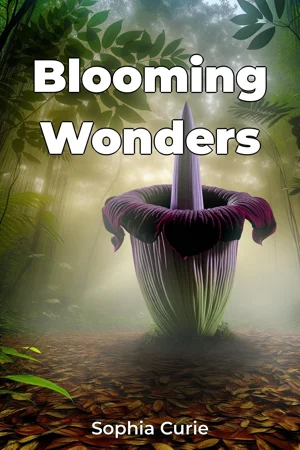
In the depths of Indonesia's rainforests, the Amorphophallus titanum blooms once every decade, releasing a pungent odor that attracts pollinators from miles away. This rare spectacle sets the stage for "Blooming Wonders," a comprehensive exploration of plants that challenge our understanding of traditional flowering cycles. The book examines three primary aspects of unusual plant reproduction: long-interval bloomers, night-flowering species, and climate-dependent flowering events. These botanical phenomena reveal the sophisticated evolutionary strategies plants have developed over millions of years to ensure survival and reproduction in diverse environments. Through detailed scientific research and field observations spanning five continents, "Blooming Wonders" presents a systematic analysis of rare flowering events and their ecological significance. The text explores how factors such as temperature, humidity, soil composition, and even lunar cycles influence these distinct blooming patterns. The book's core argument demonstrates that understanding these irregular flowering cycles is crucial for biodiversity conservation and climate change research. Each chapter builds upon this premise, starting with the fundamental biology of plant reproduction before delving into specific case studies of notable species. The content progresses through three main sections: First, it examines the physiological mechanisms that control flowering timing, including genetic triggers and environmental cues. The second section presents detailed profiles of plants with unusual blooming patterns, from the century plant (Agave americana) to the ghost orchid (Dendrophylax lindenii). The final section connects these flowering patterns to broader ecological systems and climate change impacts. Research presented includes data from long-term monitoring programs, botanical garden records, and indigenous knowledge systems. The book incorporates recent findings from molecular biology studies that reveal the genetic mechanisms behind these distinctive flowering patterns. The text establishes connections between botany, climatology, and evolutionary biology, demonstrating how flowering cycles serve as indicators of environmental change and ecosystem health. These interdisciplinary links provide readers with a holistic understanding of plant biology's role in global environmental systems. Written in an accessible academic style, the book uses clear explanations and specific examples to convey complex biological concepts. While maintaining scientific accuracy, the text avoids excessive technical language, making it suitable for both university students and informed general readers with an interest in natural sciences. The work is particularly valuable for botanists, environmental scientists, and conservation professionals, offering practical insights for species preservation and habitat management. It also serves as a resource for citizen scientists and nature enthusiasts seeking to understand and document plant behavior in their local environments. The book acknowledges current debates in the field, including discussions about the impact of climate change on flowering patterns and the challenges of preserving species with complex reproductive requirements. It addresses these issues through evidence-based analysis while highlighting areas where further research is needed. "Blooming Wonders" concludes by examining the practical applications of this knowledge in conservation efforts, agricultural planning, and ecological restoration projects. It provides readers with tools to identify and monitor unusual flowering patterns in their regions, contributing to citizen science initiatives and global plant databases.
In the depths of Indonesia's rainforests, the Amorphophallus titanum blooms once every decade, releasing a pungent odor that attracts pollinators from miles away. This rare spectacle sets the stage for "Blooming Wonders," a comprehensive exploration of plants that challenge our understanding of traditional flowering cycles. The book examines three primary aspects of unusual plant reproduction: long-interval bloomers, night-flowering species, and climate-dependent flowering events. These botanical phenomena reveal the sophisticated evolutionary strategies plants have developed over millions of years to ensure survival and reproduction in diverse environments. Through detailed scientific research and field observations spanning five continents, "Blooming Wonders" presents a systematic analysis of rare flowering events and their ecological significance. The text explores how factors such as temperature, humidity, soil composition, and even lunar cycles influence these distinct blooming patterns. The book's core argument demonstrates that understanding these irregular flowering cycles is crucial for biodiversity conservation and climate change research. Each chapter builds upon this premise, starting with the fundamental biology of plant reproduction before delving into specific case studies of notable species. The content progresses through three main sections: First, it examines the physiological mechanisms that control flowering timing, including genetic triggers and environmental cues. The second section presents detailed profiles of plants with unusual blooming patterns, from the century plant (Agave americana) to the ghost orchid (Dendrophylax lindenii). The final section connects these flowering patterns to broader ecological systems and climate change impacts. Research presented includes data from long-term monitoring programs, botanical garden records, and indigenous knowledge systems. The book incorporates recent findings from molecular biology studies that reveal the genetic mechanisms behind these distinctive flowering patterns. The text establishes connections between botany, climatology, and evolutionary biology, demonstrating how flowering cycles serve as indicators of environmental change and ecosystem health. These interdisciplinary links provide readers with a holistic understanding of plant biology's role in global environmental systems. Written in an accessible academic style, the book uses clear explanations and specific examples to convey complex biological concepts. While maintaining scientific accuracy, the text avoids excessive technical language, making it suitable for both university students and informed general readers with an interest in natural sciences. The work is particularly valuable for botanists, environmental scientists, and conservation professionals, offering practical insights for species preservation and habitat management. It also serves as a resource for citizen scientists and nature enthusiasts seeking to understand and document plant behavior in their local environments. The book acknowledges current debates in the field, including discussions about the impact of climate change on flowering patterns and the challenges of preserving species with complex reproductive requirements. It addresses these issues through evidence-based analysis while highlighting areas where further research is needed. "Blooming Wonders" concludes by examining the practical applications of this knowledge in conservation efforts, agricultural planning, and ecological restoration projects. It provides readers with tools to identify and monitor unusual flowering patterns in their regions, contributing to citizen science initiatives and global plant databases.
"Blooming Wonders" takes readers on a fascinating journey through the world of extraordinary plant reproduction, using the rare-blooming Amorphophallus titanum as a gateway into the mysterious realm of unusual flowering patterns. This comprehensive exploration reveals how plants have evolved sophisticated reproductive strategies over millions of years, from species that flower once a decade to those that bloom exclusively at night. The book masterfully weaves together three main threads: the physiological mechanisms controlling flower timing, detailed profiles of remarkable species, and the crucial connection between flowering patterns and climate change. Through extensive research spanning five continents, it presents compelling evidence of how environmental factors, including temperature, humidity, and even lunar cycles, influence these distinctive blooming events. The incorporation of indigenous knowledge systems alongside modern scientific research provides a uniquely holistic perspective on plant reproduction. Written in an accessible yet scientifically rigorous style, the text progresses logically from fundamental concepts to complex ecological relationships. It particularly shines in its examination of how understanding unusual flowering patterns contributes to biodiversity conservation efforts. By connecting botanical phenomena to broader environmental systems, the book offers valuable insights for both professional scientists and passionate naturalists, while emphasizing the urgent need to preserve these remarkable species in the face of changing global conditions.
Book Details
ISBN
9788233958084
Publisher
Publifye AS
Your Licenses
You don't own any licenses for this book
Purchase a license below to unlock this book and download the EPUB.
Purchase License
Select a tier to unlock this book
Need bulk licensing?
Contact us for enterprise agreements.