
About This Book
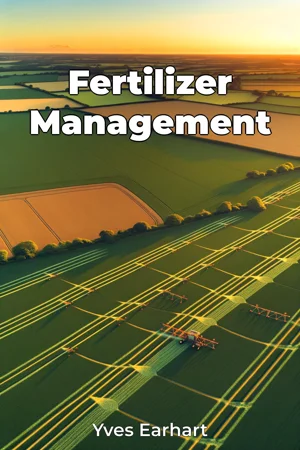
In an era where agricultural productivity and environmental stewardship must coexist, understanding the precise science of fertilizer application has become crucial for both food security and ecological preservation. "Fertilizer Management" presents a comprehensive guide to optimizing nutrient delivery systems while protecting our natural resources. The book examines three fundamental aspects of modern fertilization practices: soil chemistry and nutrient cycling, precision application technologies, and environmental impact mitigation. These interconnected topics form the foundation for a new approach to agricultural fertility management that balances productivity with sustainability. Drawing from decades of agricultural research and field studies, the text provides readers with both theoretical knowledge and practical applications. The first section delves into soil science fundamentals, explaining how different soil types interact with various fertilizer compounds and how pH levels influence nutrient availability. This background proves essential for understanding the complex relationships between soil, plants, and fertilizers. The central argument maintains that optimal fertilizer use requires a systems-thinking approach, where successful crop production depends on precise timing, appropriate quantities, and suitable application methods. This perspective is supported by extensive data from agricultural research stations across different climate zones and farming systems. The book's structure progresses logically through implementation strategies, beginning with soil testing methodologies and moving to advanced topics such as variable-rate application technologies and GPS-guided distribution systems. Real-world case studies demonstrate how farmers have reduced fertilizer use by up to 30% while maintaining or improving yields through these methods. Evidence-based recommendations draw from both traditional field trials and cutting-edge research using IoT sensors and machine learning algorithms for fertilizer optimization. The text integrates findings from soil science, plant biology, and environmental studies to provide a holistic understanding of nutrient management. The work connects agricultural science with environmental conservation and economics, showing how proper fertilizer management can simultaneously reduce costs, increase profits, and protect watersheds from excess nutrient runoff. Climate science is also addressed, as the book explores the relationship between fertilizer use and greenhouse gas emissions. Written in a technical yet accessible style, the text serves both as a practical manual for farmers and agricultural professionals and as a comprehensive resource for students and researchers. Each chapter includes detailed diagrams, application charts, and troubleshooting guides that translate complex concepts into actionable steps. The target audience includes commercial farmers, agricultural consultants, environmental managers, and serious home gardeners seeking to optimize their fertilizer practices. The content addresses both conventional and organic farming systems, providing specific recommendations for each approach. The book acknowledges current debates in the field, particularly regarding synthetic versus organic fertilizers and the role of biotechnology in nutrient use efficiency. It presents balanced evidence for various approaches while maintaining focus on scientifically verified results. Practical applications extend beyond traditional agriculture to urban farming, greenhouse production, and landscape management. The final chapters address emerging trends, including controlled-release fertilizers, biostimulants, and precision farming technologies that promise to further refine nutrient management practices. By combining scientific rigor with practical guidance, "Fertilizer Management" provides a valuable resource for anyone seeking to optimize crop nutrition while maintaining environmental responsibility. The work represents a significant contribution to sustainable agriculture practices in an age where efficient resource use has become increasingly critical.
In an era where agricultural productivity and environmental stewardship must coexist, understanding the precise science of fertilizer application has become crucial for both food security and ecological preservation. "Fertilizer Management" presents a comprehensive guide to optimizing nutrient delivery systems while protecting our natural resources. The book examines three fundamental aspects of modern fertilization practices: soil chemistry and nutrient cycling, precision application technologies, and environmental impact mitigation. These interconnected topics form the foundation for a new approach to agricultural fertility management that balances productivity with sustainability. Drawing from decades of agricultural research and field studies, the text provides readers with both theoretical knowledge and practical applications. The first section delves into soil science fundamentals, explaining how different soil types interact with various fertilizer compounds and how pH levels influence nutrient availability. This background proves essential for understanding the complex relationships between soil, plants, and fertilizers. The central argument maintains that optimal fertilizer use requires a systems-thinking approach, where successful crop production depends on precise timing, appropriate quantities, and suitable application methods. This perspective is supported by extensive data from agricultural research stations across different climate zones and farming systems. The book's structure progresses logically through implementation strategies, beginning with soil testing methodologies and moving to advanced topics such as variable-rate application technologies and GPS-guided distribution systems. Real-world case studies demonstrate how farmers have reduced fertilizer use by up to 30% while maintaining or improving yields through these methods. Evidence-based recommendations draw from both traditional field trials and cutting-edge research using IoT sensors and machine learning algorithms for fertilizer optimization. The text integrates findings from soil science, plant biology, and environmental studies to provide a holistic understanding of nutrient management. The work connects agricultural science with environmental conservation and economics, showing how proper fertilizer management can simultaneously reduce costs, increase profits, and protect watersheds from excess nutrient runoff. Climate science is also addressed, as the book explores the relationship between fertilizer use and greenhouse gas emissions. Written in a technical yet accessible style, the text serves both as a practical manual for farmers and agricultural professionals and as a comprehensive resource for students and researchers. Each chapter includes detailed diagrams, application charts, and troubleshooting guides that translate complex concepts into actionable steps. The target audience includes commercial farmers, agricultural consultants, environmental managers, and serious home gardeners seeking to optimize their fertilizer practices. The content addresses both conventional and organic farming systems, providing specific recommendations for each approach. The book acknowledges current debates in the field, particularly regarding synthetic versus organic fertilizers and the role of biotechnology in nutrient use efficiency. It presents balanced evidence for various approaches while maintaining focus on scientifically verified results. Practical applications extend beyond traditional agriculture to urban farming, greenhouse production, and landscape management. The final chapters address emerging trends, including controlled-release fertilizers, biostimulants, and precision farming technologies that promise to further refine nutrient management practices. By combining scientific rigor with practical guidance, "Fertilizer Management" provides a valuable resource for anyone seeking to optimize crop nutrition while maintaining environmental responsibility. The work represents a significant contribution to sustainable agriculture practices in an age where efficient resource use has become increasingly critical.
"Fertilizer Management" offers a comprehensive exploration of modern fertilization practices that bridges the critical gap between agricultural productivity and environmental conservation. The book masterfully weaves together three essential components: the science of soil chemistry and nutrient cycling, cutting-edge precision application technologies, and strategies for minimizing environmental impact. Through a systematic approach, it demonstrates how farmers can reduce fertilizer use by up to 30% while maintaining or improving crop yields using advanced technologies and smart management practices. The text progresses logically from fundamental soil science principles to sophisticated implementation strategies, making complex concepts accessible through practical examples and detailed diagrams. Readers learn how soil types interact with different fertilizer compounds, the crucial role of pH levels in nutrient availability, and the implementation of precision farming technologies like GPS-guided distribution systems and IoT sensors. Real-world case studies and evidence-based recommendations strengthen the book's practical value, while detailed troubleshooting guides help readers apply these concepts in their own operations. What sets this resource apart is its holistic integration of agricultural science, environmental conservation, and economic considerations. The book addresses both conventional and organic farming approaches, making it valuable for audiences ranging from commercial farmers to serious home gardeners. By incorporating emerging trends such as controlled-release fertilizers and biostimulants, while addressing crucial topics like greenhouse gas emissions and watershed protection, it serves as an essential guide for anyone seeking to optimize nutrient management in today's environmentally conscious world.
Book Details
ISBN
9788233958060
Publisher
Publifye AS
Your Licenses
You don't own any licenses for this book
Purchase a license below to unlock this book and download the EPUB.
Purchase License
Select a tier to unlock this book
Need bulk licensing?
Contact us for enterprise agreements.