
About This Book
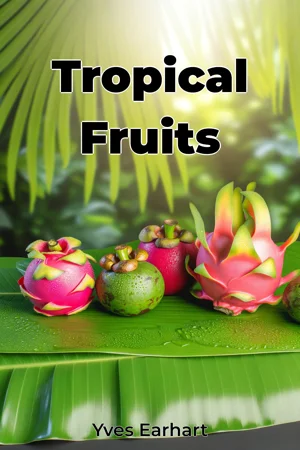
"Tropical Fruits" opens by challenging common perceptions about exotic fruit cultivation, demonstrating how home gardeners can successfully grow mangosteen, dragon fruit, and other tropical delicacies in various climate zones through proper techniques and environmental management. This comprehensive guide bridges the gap between commercial tropical fruit production and home gardening, offering detailed insights into more than 50 species of tropical fruits, their cultivation requirements, and practical applications. The book combines horticultural science with hands-on growing instructions, making it valuable for both enthusiast gardeners and small-scale farmers. The work is structured in three main sections. The first provides fundamental knowledge about tropical fruit biology, including pollination mechanisms, root systems, and climate adaptation strategies. The second section delivers species-specific profiles, examining each fruit's natural habitat, growth patterns, and optimal cultivation conditions. The final section focuses on practical implementation, covering greenhouse cultivation, temperature control, soil management, and pest prevention. Throughout the text, readers gain access to research-based growing techniques developed through collaborations with botanical gardens and tropical research stations across Southeast Asia, Central America, and the Pacific Islands. The book incorporates climate change adaptation strategies, showing how traditional growing methods are being modified to accommodate shifting weather patterns and extended growing seasons in temperate regions. The content connects horticulture with related fields including climatology, soil science, and ethnobotany. Each fruit profile includes traditional uses in indigenous cultures, nutritional analysis, and potential commercial applications. The book explains how understanding tropical fruit ecology contributes to broader environmental conservation efforts and sustainable agriculture practices. Scientific concepts are presented in accessible language, supported by detailed illustrations of growing systems, pruning techniques, and pest identification guides. The text maintains a practical focus while providing sufficient technical depth for readers to understand the biological principles behind successful cultivation. The work serves multiple audiences, from home gardeners looking to expand their growing repertoire to small-scale farmers considering tropical fruit crops. Urban gardeners will find specific guidance for container growing and indoor cultivation, while those with greenhouse facilities can explore full-scale production methods. The scope encompasses both common tropical fruits like papayas and passion fruit, and lesser-known species such as jaboticaba and rambutan. Each entry includes region-specific growing recommendations, allowing readers to adapt methods to their local conditions. The book addresses common cultivation challenges, offering solutions for issues like limited space, temperature control, and seasonal light variations. A significant portion focuses on sustainable growing practices, including water conservation, organic pest management, and soil building techniques. The text examines how home-grown tropical fruits can contribute to food security and dietary diversity while reducing the carbon footprint associated with imported exotic fruits. The book acknowledges ongoing debates in tropical agriculture, particularly regarding genetic diversity preservation and the impact of climate change on traditional growing regions. It presents current research on these topics while remaining focused on practical applications for home growers. Rather than promoting tropical fruit cultivation as a simple undertaking, the book provides realistic assessments of the challenges and requirements, enabling readers to make informed decisions about which species to attempt growing in their specific conditions.
"Tropical Fruits" opens by challenging common perceptions about exotic fruit cultivation, demonstrating how home gardeners can successfully grow mangosteen, dragon fruit, and other tropical delicacies in various climate zones through proper techniques and environmental management. This comprehensive guide bridges the gap between commercial tropical fruit production and home gardening, offering detailed insights into more than 50 species of tropical fruits, their cultivation requirements, and practical applications. The book combines horticultural science with hands-on growing instructions, making it valuable for both enthusiast gardeners and small-scale farmers. The work is structured in three main sections. The first provides fundamental knowledge about tropical fruit biology, including pollination mechanisms, root systems, and climate adaptation strategies. The second section delivers species-specific profiles, examining each fruit's natural habitat, growth patterns, and optimal cultivation conditions. The final section focuses on practical implementation, covering greenhouse cultivation, temperature control, soil management, and pest prevention. Throughout the text, readers gain access to research-based growing techniques developed through collaborations with botanical gardens and tropical research stations across Southeast Asia, Central America, and the Pacific Islands. The book incorporates climate change adaptation strategies, showing how traditional growing methods are being modified to accommodate shifting weather patterns and extended growing seasons in temperate regions. The content connects horticulture with related fields including climatology, soil science, and ethnobotany. Each fruit profile includes traditional uses in indigenous cultures, nutritional analysis, and potential commercial applications. The book explains how understanding tropical fruit ecology contributes to broader environmental conservation efforts and sustainable agriculture practices. Scientific concepts are presented in accessible language, supported by detailed illustrations of growing systems, pruning techniques, and pest identification guides. The text maintains a practical focus while providing sufficient technical depth for readers to understand the biological principles behind successful cultivation. The work serves multiple audiences, from home gardeners looking to expand their growing repertoire to small-scale farmers considering tropical fruit crops. Urban gardeners will find specific guidance for container growing and indoor cultivation, while those with greenhouse facilities can explore full-scale production methods. The scope encompasses both common tropical fruits like papayas and passion fruit, and lesser-known species such as jaboticaba and rambutan. Each entry includes region-specific growing recommendations, allowing readers to adapt methods to their local conditions. The book addresses common cultivation challenges, offering solutions for issues like limited space, temperature control, and seasonal light variations. A significant portion focuses on sustainable growing practices, including water conservation, organic pest management, and soil building techniques. The text examines how home-grown tropical fruits can contribute to food security and dietary diversity while reducing the carbon footprint associated with imported exotic fruits. The book acknowledges ongoing debates in tropical agriculture, particularly regarding genetic diversity preservation and the impact of climate change on traditional growing regions. It presents current research on these topics while remaining focused on practical applications for home growers. Rather than promoting tropical fruit cultivation as a simple undertaking, the book provides realistic assessments of the challenges and requirements, enabling readers to make informed decisions about which species to attempt growing in their specific conditions.
"Tropical Fruits" revolutionizes the approach to exotic fruit cultivation by demonstrating how everyday gardeners can successfully grow tropical delicacies in various climates. This comprehensive guide breaks down the complexities of growing over 50 tropical fruit species, from common varieties like papaya to rare specimens such as jaboticaba and rambutan, making it an invaluable resource for both home gardeners and small-scale farmers. The book's three-section structure progressively builds readers' knowledge, beginning with fundamental tropical fruit biology and climate adaptation, moving through detailed species profiles, and culminating in practical cultivation techniques. Drawing from research conducted across Southeast Asia, Central America, and the Pacific Islands, it offers innovative solutions for greenhouse growing, container gardening, and climate adaptation. What sets this guide apart is its balanced approach to combining scientific principles with accessible, hands-on growing instructions. Throughout the text, readers discover not only how to cultivate these exotic fruits but also their nutritional benefits and cultural significance. The guide addresses real-world challenges like limited space and temperature control while emphasizing sustainable practices and organic pest management. By incorporating climate change adaptation strategies and traditional growing methods, the book provides a realistic and comprehensive approach to tropical fruit cultivation that's both environmentally conscious and practical for modern growers.
Book Details
ISBN
9788233958053
Publisher
Publifye AS
Your Licenses
You don't own any licenses for this book
Purchase a license below to unlock this book and download the EPUB.
Purchase License
Select a tier to unlock this book
Need bulk licensing?
Contact us for enterprise agreements.