
About This Book
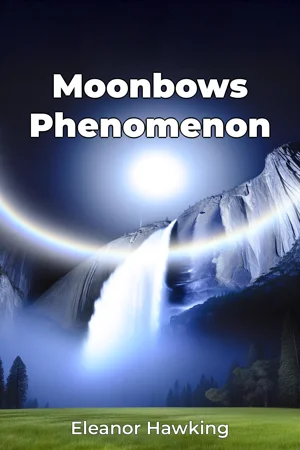
In the depths of night, when moonlight pierces through water droplets in the air, a rare optical phenomenon occurs - the moonbow. This comprehensive exploration of lunar rainbows reveals the intricate physics behind these ethereal appearances and their significance in both scientific understanding and natural observation. "Moonbows Phenomenon" presents a detailed analysis of these nocturnal spectacles, beginning with their fundamental formation process. The book examines the precise conditions required for moonbow creation: a full or nearly full moon positioned at 42 degrees or lower to the horizon, clear skies, and water droplets in the air. These elements must align perfectly, making moonbows considerably rarer than their daytime counterparts. The text is structured in three main sections. The first delves into the physics of light interaction, explaining how moonlight differs from sunlight and how this affects the intensity and visibility of moonbows. The second section maps global locations where moonbows frequently occur, from the mists of Yosemite Falls to the spray of Cumberland Falls in Kentucky. The final section connects moonbow observation with practical applications in meteorology and atmospheric science. Through precise scientific data and documented observations, the book presents research from atmospheric physicists, meteorologists, and optical scientists. It includes specialized photography techniques for capturing moonbows, complete with exposure settings and equipment recommendations. The text incorporates recent studies using spectral analysis to understand the unique properties of moonlight reflection and refraction. The work bridges multiple scientific disciplines, connecting physics with meteorology, astronomy, and photography. This interdisciplinary approach provides readers with a comprehensive understanding of how various natural elements interact to create these phenomena. The book maintains an academic tone while remaining accessible to educated general readers interested in natural phenomena. Particular attention is given to the mathematical principles governing moonbow formation, including detailed explanations of the Mie scattering theory and its application to water droplets. The text explains how moonbow observation can serve as an indicator of atmospheric conditions and why this knowledge is valuable for weather prediction and climate study. The book addresses several common misconceptions about moonbows, using empirical evidence to explain why they appear white to the human eye despite containing the same spectral colors as rainbows. It also explores the historical documentation of moonbows, from ancient astronomical records to modern scientific observations. Written for science enthusiasts, meteorologists, photographers, and naturalists, this work provides both theoretical knowledge and practical observation guides. It includes detailed charts of optimal viewing conditions and global locations known for frequent moonbow appearances. The scope focuses specifically on the physics and observation of moonbows, intentionally limiting coverage of related phenomena like fog bows and cloudbows to maintain depth in its primary subject. The book concludes with a discussion of ongoing research in atmospheric optics and how modern technology is advancing our understanding of these phenomena. This systematic examination of moonbows contributes to the field of atmospheric optics while providing practical knowledge for observers and photographers seeking to witness and document these elusive natural displays.
In the depths of night, when moonlight pierces through water droplets in the air, a rare optical phenomenon occurs - the moonbow. This comprehensive exploration of lunar rainbows reveals the intricate physics behind these ethereal appearances and their significance in both scientific understanding and natural observation. "Moonbows Phenomenon" presents a detailed analysis of these nocturnal spectacles, beginning with their fundamental formation process. The book examines the precise conditions required for moonbow creation: a full or nearly full moon positioned at 42 degrees or lower to the horizon, clear skies, and water droplets in the air. These elements must align perfectly, making moonbows considerably rarer than their daytime counterparts. The text is structured in three main sections. The first delves into the physics of light interaction, explaining how moonlight differs from sunlight and how this affects the intensity and visibility of moonbows. The second section maps global locations where moonbows frequently occur, from the mists of Yosemite Falls to the spray of Cumberland Falls in Kentucky. The final section connects moonbow observation with practical applications in meteorology and atmospheric science. Through precise scientific data and documented observations, the book presents research from atmospheric physicists, meteorologists, and optical scientists. It includes specialized photography techniques for capturing moonbows, complete with exposure settings and equipment recommendations. The text incorporates recent studies using spectral analysis to understand the unique properties of moonlight reflection and refraction. The work bridges multiple scientific disciplines, connecting physics with meteorology, astronomy, and photography. This interdisciplinary approach provides readers with a comprehensive understanding of how various natural elements interact to create these phenomena. The book maintains an academic tone while remaining accessible to educated general readers interested in natural phenomena. Particular attention is given to the mathematical principles governing moonbow formation, including detailed explanations of the Mie scattering theory and its application to water droplets. The text explains how moonbow observation can serve as an indicator of atmospheric conditions and why this knowledge is valuable for weather prediction and climate study. The book addresses several common misconceptions about moonbows, using empirical evidence to explain why they appear white to the human eye despite containing the same spectral colors as rainbows. It also explores the historical documentation of moonbows, from ancient astronomical records to modern scientific observations. Written for science enthusiasts, meteorologists, photographers, and naturalists, this work provides both theoretical knowledge and practical observation guides. It includes detailed charts of optimal viewing conditions and global locations known for frequent moonbow appearances. The scope focuses specifically on the physics and observation of moonbows, intentionally limiting coverage of related phenomena like fog bows and cloudbows to maintain depth in its primary subject. The book concludes with a discussion of ongoing research in atmospheric optics and how modern technology is advancing our understanding of these phenomena. This systematic examination of moonbows contributes to the field of atmospheric optics while providing practical knowledge for observers and photographers seeking to witness and document these elusive natural displays.
"Moonbows Phenomenon" delves into the fascinating world of lunar rainbows, those ethereal nocturnal spectacles that occur when moonlight interacts with water droplets in the air. This comprehensive exploration reveals how these rare optical phenomena require specific conditions to form: a full or nearly full moon positioned at 42 degrees or lower to the horizon, clear skies, and the presence of water droplets, making them considerably more elusive than typical rainbows. The book progresses through three distinct sections, beginning with the fundamental physics of light interaction and how moonlight's unique properties affect moonbow formation. It then guides readers through notable global viewing locations, from Yosemite Falls to Cumberland Falls in Kentucky, before connecting these observations to practical applications in meteorology and atmospheric science. Throughout the text, readers discover intriguing insights, such as why moonbows appear white to the human eye despite containing the same spectral colors as rainbows, and how their observation can serve as indicators of atmospheric conditions. Written for both scientists and educated enthusiasts, the book bridges multiple disciplines while maintaining accessibility. It combines theoretical knowledge with practical guidance, including specialized photography techniques and equipment recommendations for capturing these ethereal displays. The work stands out for its comprehensive approach, incorporating recent spectral analysis studies and mathematical principles like the Mie scattering theory, while providing practical observation guides for witnessing these remarkable natural phenomena.
Book Details
ISBN
9788233958046
Publisher
Publifye AS
Your Licenses
You don't own any licenses for this book
Purchase a license below to unlock this book and download the EPUB.
Purchase License
Select a tier to unlock this book
Need bulk licensing?
Contact us for enterprise agreements.