
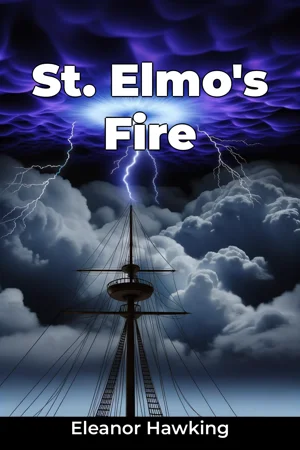
About This Book
On a stormy night in 1748, Benjamin Franklin witnessed mysterious blue flames dancing along his kite's string during his famous electrical experiments. This phenomenon, known as St. Elmo's Fire, has captivated mariners, scientists, and aviation experts for centuries, playing a crucial role in our understanding of atmospheric electricity and plasma physics. "St. Elmo's Fire" presents a comprehensive examination of this electrical weather phenomenon, combining historical accounts, scientific analysis, and modern applications. The book traces the evolution of human understanding of this luminous plasma discharge, from ancient Mediterranean sailors who viewed it as a divine omen to contemporary physicists who study its role in atmospheric electricity. The text is structured in three main sections. The first explores the historical documentation of St. Elmo's Fire across cultures, including detailed accounts from maritime logs, military records, and scientific journals. Notable observations range from Christopher Columbus's Caribbean voyages to World War II aircraft encounters, demonstrating the phenomenon's persistent presence throughout human history. The second section delves into the physics underlying St. Elmo's Fire. Readers will learn about corona discharge, plasma formation, and the specific atmospheric conditions required for this phenomenon to occur. The book explains how the interaction between charged particles and pointed conductors creates the characteristic blue-violet glow, using clear diagrams and mathematical models accessible to readers with basic physics knowledge. The final section examines modern implications and applications. This includes the phenomenon's impact on aircraft safety, its role in lightning protection system design, and its significance in atmospheric research. The text explores how understanding St. Elmo's Fire has contributed to developments in electrical engineering, particularly in the design of lightning protection systems for buildings, vessels, and aircraft. The book incorporates research from multiple disciplines, including meteorology, electrical engineering, and materials science. It features data from weather stations, aircraft incident reports, and laboratory experiments, providing readers with empirical evidence supporting the scientific explanations presented. Written in a technical yet accessible style, the book serves both as an academic resource and a practical guide. It addresses ongoing debates in the scientific community regarding the exact mechanisms of plasma formation under various atmospheric conditions and the phenomenon's relationship to other electrical weather events. The target audience includes physics students, electrical engineers, meteorologists, and aviation professionals. However, the careful explanation of technical concepts makes it accessible to readers with a general interest in atmospheric phenomena and the history of scientific discovery. Throughout the text, particular attention is paid to practical applications, including how to recognize conditions conducive to St. Elmo's Fire, safety considerations for pilots and maritime personnel, and the phenomenon's role in modern lightning protection design. The book also discusses current research directions, including the use of St. Elmo's Fire observations in predicting severe weather conditions and its potential applications in plasma technology. By examining this fascinating intersection of historical observation and modern physics, "St. Elmo's Fire" provides readers with a thorough understanding of how this once-mystifying phenomenon has contributed to our knowledge of atmospheric electricity and continues to influence technological developments in multiple fields.
On a stormy night in 1748, Benjamin Franklin witnessed mysterious blue flames dancing along his kite's string during his famous electrical experiments. This phenomenon, known as St. Elmo's Fire, has captivated mariners, scientists, and aviation experts for centuries, playing a crucial role in our understanding of atmospheric electricity and plasma physics. "St. Elmo's Fire" presents a comprehensive examination of this electrical weather phenomenon, combining historical accounts, scientific analysis, and modern applications. The book traces the evolution of human understanding of this luminous plasma discharge, from ancient Mediterranean sailors who viewed it as a divine omen to contemporary physicists who study its role in atmospheric electricity. The text is structured in three main sections. The first explores the historical documentation of St. Elmo's Fire across cultures, including detailed accounts from maritime logs, military records, and scientific journals. Notable observations range from Christopher Columbus's Caribbean voyages to World War II aircraft encounters, demonstrating the phenomenon's persistent presence throughout human history. The second section delves into the physics underlying St. Elmo's Fire. Readers will learn about corona discharge, plasma formation, and the specific atmospheric conditions required for this phenomenon to occur. The book explains how the interaction between charged particles and pointed conductors creates the characteristic blue-violet glow, using clear diagrams and mathematical models accessible to readers with basic physics knowledge. The final section examines modern implications and applications. This includes the phenomenon's impact on aircraft safety, its role in lightning protection system design, and its significance in atmospheric research. The text explores how understanding St. Elmo's Fire has contributed to developments in electrical engineering, particularly in the design of lightning protection systems for buildings, vessels, and aircraft. The book incorporates research from multiple disciplines, including meteorology, electrical engineering, and materials science. It features data from weather stations, aircraft incident reports, and laboratory experiments, providing readers with empirical evidence supporting the scientific explanations presented. Written in a technical yet accessible style, the book serves both as an academic resource and a practical guide. It addresses ongoing debates in the scientific community regarding the exact mechanisms of plasma formation under various atmospheric conditions and the phenomenon's relationship to other electrical weather events. The target audience includes physics students, electrical engineers, meteorologists, and aviation professionals. However, the careful explanation of technical concepts makes it accessible to readers with a general interest in atmospheric phenomena and the history of scientific discovery. Throughout the text, particular attention is paid to practical applications, including how to recognize conditions conducive to St. Elmo's Fire, safety considerations for pilots and maritime personnel, and the phenomenon's role in modern lightning protection design. The book also discusses current research directions, including the use of St. Elmo's Fire observations in predicting severe weather conditions and its potential applications in plasma technology. By examining this fascinating intersection of historical observation and modern physics, "St. Elmo's Fire" provides readers with a thorough understanding of how this once-mystifying phenomenon has contributed to our knowledge of atmospheric electricity and continues to influence technological developments in multiple fields.
"St. Elmo's Fire" explores the fascinating phenomenon of atmospheric electrical discharge that has intrigued humanity for centuries, from Benjamin Franklin's kite experiment to modern aviation safety protocols. This comprehensive examination weaves together historical observations, scientific principles, and practical applications, offering readers a unique perspective on how this ethereal blue-violet glow has influenced our understanding of atmospheric electricity and plasma physics. The book progresses thoughtfully through three main sections, beginning with rich historical accounts from maritime logs and military records that document this mysterious phenomenon across cultures and eras. The middle section breaks down the complex physics of corona discharge and plasma formation using accessible language and clear diagrams, making technical concepts digestible for readers with basic physics knowledge. The final section bridges past and present by examining modern applications in aircraft safety and lightning protection systems. What sets this book apart is its multidisciplinary approach, combining insights from meteorology, electrical engineering, and materials science to present a complete picture of St. Elmo's Fire's significance. Through careful examination of weather station data, aircraft incident reports, and laboratory experiments, readers gain practical knowledge about recognizing conducive conditions for this phenomenon while understanding its crucial role in contemporary atmospheric research and technology development. The text maintains technical accuracy while remaining accessible to both professionals and enthusiasts interested in atmospheric electricity and weather phenomena.
Book Details
ISBN
9788233958015
Publisher
Publifye AS
Your Licenses
You don't own any licenses for this book
Purchase a license below to unlock this book and download the EPUB.
Purchase License
Select a tier to unlock this book
Need bulk licensing?
Contact us for enterprise agreements.