
About This Book
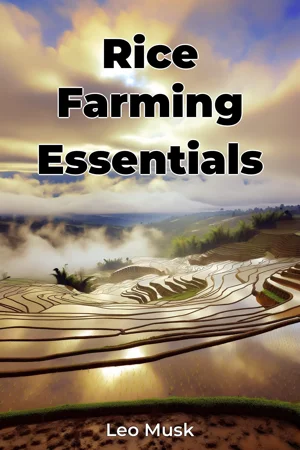
"Rice Farming Essentials" presents a comprehensive guide to modern rice cultivation, addressing the critical need for efficient and sustainable farming practices in an era of increasing food security challenges. This practical resource combines traditional wisdom with cutting-edge agricultural technology to help farmers maximize their rice production while maintaining environmental responsibility. The book begins by establishing the fundamental significance of rice as a global staple crop, feeding over half the world's population, before delving into three core areas: water management systems, integrated pest management, and soil optimization. These interconnected elements form the foundation of successful rice cultivation, each receiving detailed attention throughout the text. Drawing from extensive agricultural research and field studies across major rice-producing regions, the book presents evidence-based methods for implementing effective irrigation systems, including controlled flooding techniques and water conservation strategies. The text thoroughly explains the critical flooding and drainage cycles that influence rice development, supported by data from long-term studies in various climatic conditions. The pest management section provides detailed protocols for identifying and controlling common rice pathogens, insects, and weeds. Rather than promoting a single approach, the book advocates for an integrated pest management system that combines biological controls, resistant varieties, and judicious use of chemical interventions when necessary. This section includes high-resolution photographs and detailed identification guides for quick reference in the field. Soil management receives equal attention, with comprehensive information on nutrient requirements, pH balancing, and organic matter management. The book connects traditional farming knowledge with modern soil science, providing readers with practical tools for soil testing and amendment strategies specific to rice cultivation. The content is structured to guide readers through the complete growing cycle, from field preparation to harvest. Each chapter builds upon previous information while maintaining independence for reference purposes. Technical concepts are explained clearly, with supporting diagrams and real-world examples that make complex information accessible to both novice and experienced farmers. The book makes important connections between rice farming and related fields, including hydrology, soil microbiology, and climate science. These interdisciplinary insights help readers understand how external factors influence rice production and how to adapt their practices accordingly. The text also addresses the economic aspects of rice farming, providing guidance on cost-effective implementation of the recommended practices. Particularly valuable is the inclusion of region-specific considerations, acknowledging that rice cultivation methods must be adapted to local conditions. The book provides decision-making frameworks that help farmers modify general principles to suit their specific circumstances, climate, and available resources. The target audience includes both commercial rice farmers and agricultural students, though the clear writing style makes it accessible to anyone interested in rice cultivation. The content maintains a practical focus throughout, with each theoretical concept tied to specific field applications. While the book primarily focuses on conventional rice farming methods, it also addresses alternative approaches such as organic rice production and conservation agriculture. This balanced perspective allows readers to make informed decisions about their farming practices while understanding the broader context of agricultural sustainability. The text concludes with a forward-looking section on adapting rice farming to climate change, incorporating emerging research on drought-resistant varieties and water-efficient cultivation methods. This practical guide serves as both a comprehensive reference and a daily farming companion, offering solutions to common challenges while promoting sustainable agricultural practices.
"Rice Farming Essentials" presents a comprehensive guide to modern rice cultivation, addressing the critical need for efficient and sustainable farming practices in an era of increasing food security challenges. This practical resource combines traditional wisdom with cutting-edge agricultural technology to help farmers maximize their rice production while maintaining environmental responsibility. The book begins by establishing the fundamental significance of rice as a global staple crop, feeding over half the world's population, before delving into three core areas: water management systems, integrated pest management, and soil optimization. These interconnected elements form the foundation of successful rice cultivation, each receiving detailed attention throughout the text. Drawing from extensive agricultural research and field studies across major rice-producing regions, the book presents evidence-based methods for implementing effective irrigation systems, including controlled flooding techniques and water conservation strategies. The text thoroughly explains the critical flooding and drainage cycles that influence rice development, supported by data from long-term studies in various climatic conditions. The pest management section provides detailed protocols for identifying and controlling common rice pathogens, insects, and weeds. Rather than promoting a single approach, the book advocates for an integrated pest management system that combines biological controls, resistant varieties, and judicious use of chemical interventions when necessary. This section includes high-resolution photographs and detailed identification guides for quick reference in the field. Soil management receives equal attention, with comprehensive information on nutrient requirements, pH balancing, and organic matter management. The book connects traditional farming knowledge with modern soil science, providing readers with practical tools for soil testing and amendment strategies specific to rice cultivation. The content is structured to guide readers through the complete growing cycle, from field preparation to harvest. Each chapter builds upon previous information while maintaining independence for reference purposes. Technical concepts are explained clearly, with supporting diagrams and real-world examples that make complex information accessible to both novice and experienced farmers. The book makes important connections between rice farming and related fields, including hydrology, soil microbiology, and climate science. These interdisciplinary insights help readers understand how external factors influence rice production and how to adapt their practices accordingly. The text also addresses the economic aspects of rice farming, providing guidance on cost-effective implementation of the recommended practices. Particularly valuable is the inclusion of region-specific considerations, acknowledging that rice cultivation methods must be adapted to local conditions. The book provides decision-making frameworks that help farmers modify general principles to suit their specific circumstances, climate, and available resources. The target audience includes both commercial rice farmers and agricultural students, though the clear writing style makes it accessible to anyone interested in rice cultivation. The content maintains a practical focus throughout, with each theoretical concept tied to specific field applications. While the book primarily focuses on conventional rice farming methods, it also addresses alternative approaches such as organic rice production and conservation agriculture. This balanced perspective allows readers to make informed decisions about their farming practices while understanding the broader context of agricultural sustainability. The text concludes with a forward-looking section on adapting rice farming to climate change, incorporating emerging research on drought-resistant varieties and water-efficient cultivation methods. This practical guide serves as both a comprehensive reference and a daily farming companion, offering solutions to common challenges while promoting sustainable agricultural practices.
"Rice Farming Essentials" offers a comprehensive exploration of modern rice cultivation, addressing the critical intersection of traditional farming wisdom and contemporary agricultural technology. The book tackles the fundamental challenge of feeding over half the world's population through efficient and sustainable rice production methods. By focusing on three core pillars - water management, integrated pest management, and soil optimization - the guide provides farmers with a robust framework for successful rice cultivation. The book's strength lies in its practical approach to complex agricultural concepts, presenting evidence-based methods through accessible language and real-world applications. Readers progress through the complete growing cycle, from initial field preparation to final harvest, with each chapter offering detailed insights into critical aspects like irrigation systems, pest control strategies, and soil maintenance. The inclusion of high-resolution photographs, detailed identification guides, and region-specific considerations makes this resource particularly valuable for both novice and experienced farmers. What sets this guide apart is its holistic approach to rice farming, incorporating interdisciplinary insights from hydrology, soil microbiology, and climate science. The book maintains a strong focus on sustainability while addressing modern challenges, including climate change adaptation and water conservation. Technical concepts are clearly explained through supporting diagrams and examples, making complex agricultural science accessible to a broad audience while providing practical solutions for common farming challenges.
Book Details
ISBN
9788233957940
Publisher
Publifye AS
Your Licenses
You don't own any licenses for this book
Purchase a license below to unlock this book and download the EPUB.
Purchase License
Select a tier to unlock this book
Need bulk licensing?
Contact us for enterprise agreements.