
About This Book
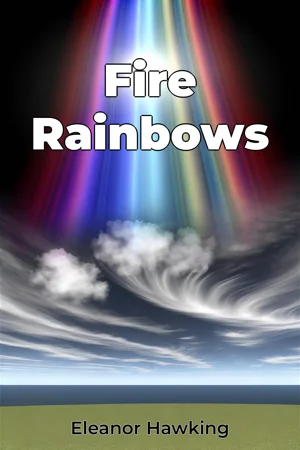
When a brilliant array of colors appears horizontally in the sky, seemingly painted across cirrus clouds, observers witness one of nature's most captivating optical phenomena: the circumhorizontal arc, commonly known as the fire rainbow. This comprehensive exploration delves into the precise atmospheric physics and meteorological conditions that create these striking displays. "Fire Rainbows" presents a detailed investigation of these optical phenomena, beginning with the fundamental principles of light refraction and ice crystal formation. The book examines how sunlight interacts with plate-shaped ice crystals suspended in cirrus clouds at specific altitudes, typically occurring when the sun reaches an elevation of 58 degrees or higher above the horizon. This scientific analysis combines principles from meteorology, optics, and crystallography to explain these atmospheric displays. The text is structured in three main sections. The first establishes the physical prerequisites for fire rainbow formation, including detailed discussions of ice crystal geometry and the critical role of temperature and humidity in crystal development. The second section explores the optical physics involved, examining how light enters one vertical face of these hexagonal ice crystals and exits through a horizontal base, separating into its spectrum of colors through refraction. The final section presents a global survey of observation conditions, helping readers understand where and when these phenomena are most likely to occur. Research presented includes data from atmospheric scientists, meteorological stations, and citizen science projects that have documented these events worldwide. The book incorporates high-speed photography and computer modeling to demonstrate the precise mechanisms of light interaction with ice crystals, supported by mathematical formulae that describe these interactions. The interdisciplinary nature of the subject matter connects atmospheric physics with crystallography and optical science, while also touching upon climate science through its examination of high-altitude ice crystal formation. These connections provide readers with a broader understanding of atmospheric phenomena and their relationship to other natural processes. Written in a clear, systematic style that bridges technical expertise with accessibility, the book serves both academic and general audiences interested in atmospheric optics. Technical concepts are carefully explained using analogies and visual aids, making complex physics principles comprehensible to readers with basic scientific knowledge. The target audience includes meteorology students, physics enthusiasts, and natural phenomena observers who seek to understand the mechanisms behind atmospheric optical displays. Professional meteorologists and atmospheric scientists will find value in the comprehensive technical appendices and detailed mathematical models. The book maintains scientific rigor while addressing common misconceptions about fire rainbows, including their relationship to traditional rainbows and other atmospheric optical phenomena. It provides practical guidance for observation, including optimal viewing conditions, photography techniques, and geographical considerations. Current research questions are addressed, such as the potential impacts of climate change on the frequency and distribution of circumhorizontal arcs, and ongoing debates about classification systems for atmospheric optical phenomena. The text also explores recent advances in computational modeling that have enhanced our understanding of ice crystal formation and light interaction. While focused specifically on circumhorizontal arcs, the book acknowledges its scope limitations by briefly contextualizing these phenomena within the broader family of atmospheric optical displays, including sundogs, light pillars, and traditional rainbows, providing readers with a framework for understanding their distinct characteristics and formation processes.
When a brilliant array of colors appears horizontally in the sky, seemingly painted across cirrus clouds, observers witness one of nature's most captivating optical phenomena: the circumhorizontal arc, commonly known as the fire rainbow. This comprehensive exploration delves into the precise atmospheric physics and meteorological conditions that create these striking displays. "Fire Rainbows" presents a detailed investigation of these optical phenomena, beginning with the fundamental principles of light refraction and ice crystal formation. The book examines how sunlight interacts with plate-shaped ice crystals suspended in cirrus clouds at specific altitudes, typically occurring when the sun reaches an elevation of 58 degrees or higher above the horizon. This scientific analysis combines principles from meteorology, optics, and crystallography to explain these atmospheric displays. The text is structured in three main sections. The first establishes the physical prerequisites for fire rainbow formation, including detailed discussions of ice crystal geometry and the critical role of temperature and humidity in crystal development. The second section explores the optical physics involved, examining how light enters one vertical face of these hexagonal ice crystals and exits through a horizontal base, separating into its spectrum of colors through refraction. The final section presents a global survey of observation conditions, helping readers understand where and when these phenomena are most likely to occur. Research presented includes data from atmospheric scientists, meteorological stations, and citizen science projects that have documented these events worldwide. The book incorporates high-speed photography and computer modeling to demonstrate the precise mechanisms of light interaction with ice crystals, supported by mathematical formulae that describe these interactions. The interdisciplinary nature of the subject matter connects atmospheric physics with crystallography and optical science, while also touching upon climate science through its examination of high-altitude ice crystal formation. These connections provide readers with a broader understanding of atmospheric phenomena and their relationship to other natural processes. Written in a clear, systematic style that bridges technical expertise with accessibility, the book serves both academic and general audiences interested in atmospheric optics. Technical concepts are carefully explained using analogies and visual aids, making complex physics principles comprehensible to readers with basic scientific knowledge. The target audience includes meteorology students, physics enthusiasts, and natural phenomena observers who seek to understand the mechanisms behind atmospheric optical displays. Professional meteorologists and atmospheric scientists will find value in the comprehensive technical appendices and detailed mathematical models. The book maintains scientific rigor while addressing common misconceptions about fire rainbows, including their relationship to traditional rainbows and other atmospheric optical phenomena. It provides practical guidance for observation, including optimal viewing conditions, photography techniques, and geographical considerations. Current research questions are addressed, such as the potential impacts of climate change on the frequency and distribution of circumhorizontal arcs, and ongoing debates about classification systems for atmospheric optical phenomena. The text also explores recent advances in computational modeling that have enhanced our understanding of ice crystal formation and light interaction. While focused specifically on circumhorizontal arcs, the book acknowledges its scope limitations by briefly contextualizing these phenomena within the broader family of atmospheric optical displays, including sundogs, light pillars, and traditional rainbows, providing readers with a framework for understanding their distinct characteristics and formation processes.
"Fire Rainbows" unveils the mesmerizing world of circumhorizontal arcs, those spectacular horizontal bands of color that appear painted across cirrus clouds. This natural phenomenon, often mistaken for a traditional rainbow, occurs through a precise interaction between sunlight and plate-shaped ice crystals suspended high in the atmosphere, requiring specific conditions including a sun elevation of 58 degrees or higher above the horizon. The book progresses systematically through three main sections, beginning with the fundamental requirements for fire rainbow formation, including detailed explanations of ice crystal geometry and atmospheric conditions. It then explores the fascinating physics behind these displays, explaining how light enters and exits hexagonal ice crystals to create the brilliant spectral display. The final section provides practical information about optimal viewing conditions and locations, making this complex atmospheric phenomenon accessible to observers worldwide. What sets this work apart is its ability to bridge technical expertise with accessibility, using clear explanations and visual aids to make complex physics comprehensible to both academic and general audiences. Drawing from atmospheric science, meteorology, and crystallography, the book combines high-speed photography and computer modeling to demonstrate these atmospheric optics principles. It also addresses current research questions, including the potential impacts of climate change on these stunning natural displays, while maintaining scientific rigor throughout its comprehensive examination of this captivating optical phenomenon.
Book Details
ISBN
9788233957865
Publisher
Publifye AS
Your Licenses
You don't own any licenses for this book
Purchase a license below to unlock this book and download the EPUB.
Purchase License
Select a tier to unlock this book
Need bulk licensing?
Contact us for enterprise agreements.