
About This Book
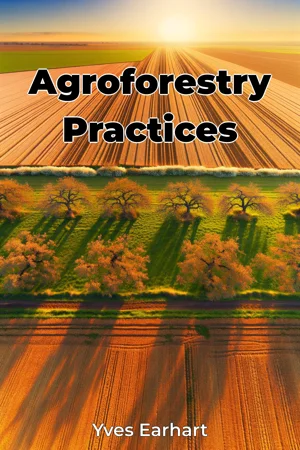
In an era where sustainable agriculture faces mounting challenges, "Agroforestry Practices" presents a comprehensive examination of how the strategic integration of trees into agricultural landscapes can revolutionize farming systems while supporting ecological balance. This evidence-based guide explores the science and implementation of agroforestry, demonstrating how this time-tested approach combines traditional farming wisdom with modern agricultural science. The book builds its case through three main sections: the ecological foundations of agroforestry, implementation strategies, and documented outcomes from global case studies. The text begins by establishing the fundamental principles of agroforestry systems, explaining how trees interact with crops and livestock in agricultural settings. Readers learn about the complex root systems that enhance soil structure, the canopy effects that create microclimate advantages, and the biological interactions that support beneficial insects and natural pest control. Central to the book's argument is the demonstration that agroforestry creates resilient agricultural systems capable of withstanding climate volatility while maintaining productive yields. Through detailed analysis of long-term studies from five continents, the authors present data showing increased soil organic matter, improved water retention, and enhanced crop productivity in properly designed agroforestry systems. The implementation section provides practical guidance for farmers, land managers, and agricultural advisors. It includes detailed protocols for selecting appropriate tree species, determining optimal spacing patterns, and managing tree-crop interactions across different climatic zones. Special attention is given to the economic aspects, with cost-benefit analyses and marketing strategies for diversified agricultural products. The research foundation draws from a combination of academic studies, field trials, and farmer experiences, presenting both quantitative data and qualitative observations. The authors incorporate findings from soil science, ecology, hydrology, and agricultural economics to build a multi-disciplinary understanding of agroforestry systems. The book connects agricultural productivity with biodiversity conservation, climate change mitigation, and rural development. It examines how agroforestry practices contribute to carbon sequestration, provide wildlife habitat, and support pollinator populations while maintaining agricultural productivity. Written in a clear, technical style accessible to both practitioners and academics, the text includes detailed diagrams, soil analysis guides, and species selection tables. While maintaining scientific rigor, the authors present complex ecological concepts in practical terms relevant to working farmers and land managers. The target audience includes agricultural professionals, environmental consultants, farm planners, and students of sustainable agriculture. The book serves as both a practical manual and a comprehensive reference work, suitable for both implementation planning and academic study. Within the current context of regenerative agriculture debates, the book addresses controversies surrounding productivity claims in alternative farming systems. It presents evidence-based responses to common concerns about tree competition with crops and long-term economic viability. The scope encompasses both temperate and tropical systems, though it acknowledges regional limitations and the need for local adaptation of general principles. The final chapters explore emerging opportunities in carbon markets and ecosystem service payments, providing guidance for farmers interested in accessing these new revenue streams.
In an era where sustainable agriculture faces mounting challenges, "Agroforestry Practices" presents a comprehensive examination of how the strategic integration of trees into agricultural landscapes can revolutionize farming systems while supporting ecological balance. This evidence-based guide explores the science and implementation of agroforestry, demonstrating how this time-tested approach combines traditional farming wisdom with modern agricultural science. The book builds its case through three main sections: the ecological foundations of agroforestry, implementation strategies, and documented outcomes from global case studies. The text begins by establishing the fundamental principles of agroforestry systems, explaining how trees interact with crops and livestock in agricultural settings. Readers learn about the complex root systems that enhance soil structure, the canopy effects that create microclimate advantages, and the biological interactions that support beneficial insects and natural pest control. Central to the book's argument is the demonstration that agroforestry creates resilient agricultural systems capable of withstanding climate volatility while maintaining productive yields. Through detailed analysis of long-term studies from five continents, the authors present data showing increased soil organic matter, improved water retention, and enhanced crop productivity in properly designed agroforestry systems. The implementation section provides practical guidance for farmers, land managers, and agricultural advisors. It includes detailed protocols for selecting appropriate tree species, determining optimal spacing patterns, and managing tree-crop interactions across different climatic zones. Special attention is given to the economic aspects, with cost-benefit analyses and marketing strategies for diversified agricultural products. The research foundation draws from a combination of academic studies, field trials, and farmer experiences, presenting both quantitative data and qualitative observations. The authors incorporate findings from soil science, ecology, hydrology, and agricultural economics to build a multi-disciplinary understanding of agroforestry systems. The book connects agricultural productivity with biodiversity conservation, climate change mitigation, and rural development. It examines how agroforestry practices contribute to carbon sequestration, provide wildlife habitat, and support pollinator populations while maintaining agricultural productivity. Written in a clear, technical style accessible to both practitioners and academics, the text includes detailed diagrams, soil analysis guides, and species selection tables. While maintaining scientific rigor, the authors present complex ecological concepts in practical terms relevant to working farmers and land managers. The target audience includes agricultural professionals, environmental consultants, farm planners, and students of sustainable agriculture. The book serves as both a practical manual and a comprehensive reference work, suitable for both implementation planning and academic study. Within the current context of regenerative agriculture debates, the book addresses controversies surrounding productivity claims in alternative farming systems. It presents evidence-based responses to common concerns about tree competition with crops and long-term economic viability. The scope encompasses both temperate and tropical systems, though it acknowledges regional limitations and the need for local adaptation of general principles. The final chapters explore emerging opportunities in carbon markets and ecosystem service payments, providing guidance for farmers interested in accessing these new revenue streams.
"Agroforestry Practices" offers a groundbreaking exploration of how integrating trees into agricultural landscapes can transform farming while promoting ecological sustainability. The book bridges traditional farming wisdom with modern agricultural science, presenting a comprehensive analysis of agroforestry systems that work in harmony with nature while maintaining productive yields. Through detailed case studies spanning five continents, the text demonstrates how properly designed agroforestry systems consistently show improvements in soil organic matter, water retention, and crop productivity. The book progresses logically from fundamental ecological principles to practical implementation strategies, making complex concepts accessible to both practitioners and academics. It examines fascinating interactions between trees and crops, such as how tree root systems enhance soil structure and how canopy effects create beneficial microclimates for agricultural production. The implementation section provides concrete guidance on tree species selection, spacing patterns, and management techniques across different climatic zones, while incorporating crucial economic considerations and marketing strategies for diversified agricultural products. What sets this resource apart is its evidence-based approach to addressing common concerns about tree-crop competition and economic viability, backed by extensive research from soil science, ecology, hydrology, and agricultural economics. The book concludes by exploring emerging opportunities in carbon markets and ecosystem service payments, making it an invaluable guide for agricultural professionals, environmental consultants, and anyone interested in sustainable farming practices that contribute to both food production and environmental conservation.
Book Details
ISBN
9788233957827
Publisher
Publifye AS
Your Licenses
You don't own any licenses for this book
Purchase a license below to unlock this book and download the EPUB.
Purchase License
Select a tier to unlock this book
Need bulk licensing?
Contact us for enterprise agreements.