
About This Book
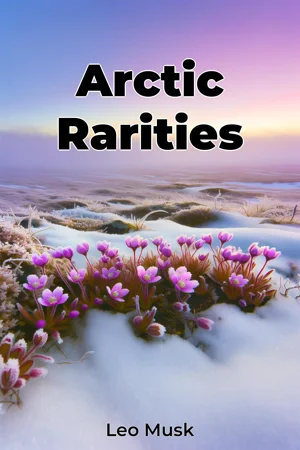
In the harsh wilderness of the Arctic circle, where temperatures plummet far below freezing, a remarkable community of plant species not only survives but thrives, demonstrating nature's capacity for adaptation in extreme conditions. "Arctic Rarities" delves into the intricate world of cold-climate flora and their vital role in maintaining the delicate balance of polar ecosystems. The book presents a detailed examination of Arctic plant adaptations, focusing on three primary aspects: physiological modifications that enable survival in extreme cold, the complex relationships between Arctic plants and their environment, and their critical role in supporting wildlife and maintaining permafrost stability. Through extensive field research and long-term scientific studies, readers gain insight into how these plants have developed specialized mechanisms to photosynthesize under limited light conditions and protect themselves from frost damage. Drawing from decades of botanical research and environmental studies, "Arctic Rarities" explores the unique characteristics of key species such as Arctic willow, purple saxifrage, and cotton grass. The text examines how these plants maintain metabolic processes at low temperatures and their strategic growth patterns that maximize survival in the brief growing season. The book incorporates recent findings from climate research stations across the Arctic circle, providing current data on plant responses to environmental changes. The work is structured in three main sections. The first establishes the fundamental principles of Arctic plant biology and the specific challenges of polar environments. The second section examines the intricate relationships between plants and other organisms, including their role in supporting caribou populations and providing shelter for smaller animals. The final section addresses the broader implications of Arctic plant communities in global climate systems and their importance as indicators of environmental change. "Arctic Rarities" connects botanical science with climate studies, geology, and zoology, demonstrating how Arctic plants influence soil composition, affect permafrost stability, and contribute to global carbon cycles. The book presents detailed case studies of specific locations across the Arctic region, from Siberia to Greenland, illustrating how plant communities vary across different polar environments. Written in an academic yet accessible style, the book incorporates detailed botanical illustrations, photographs, and data visualizations to help readers understand complex biological processes. The text maintains scientific rigor while ensuring that technical concepts are explained clearly for readers with a basic understanding of biology. The work is particularly relevant for researchers, environmental scientists, and graduate students in botanical and polar studies, but it also serves as a comprehensive resource for conservation professionals and informed general readers interested in Arctic ecosystems. It addresses current debates regarding the impact of climate change on Arctic flora and the potential consequences for global biodiversity. The book's scope encompasses both macro and micro perspectives, from cellular adaptations to ecosystem-wide impacts. While focusing primarily on vascular plants, it also includes significant discussion of mosses and lichens, which play crucial roles in Arctic environments. The research presented has practical applications for conservation efforts, climate change monitoring, and understanding plant adaptations in extreme conditions. Through methodical analysis and evidence-based discussion, "Arctic Rarities" provides a comprehensive understanding of how Arctic plants maintain life in one of Earth's most challenging environments, while highlighting their significance in global ecological systems.
In the harsh wilderness of the Arctic circle, where temperatures plummet far below freezing, a remarkable community of plant species not only survives but thrives, demonstrating nature's capacity for adaptation in extreme conditions. "Arctic Rarities" delves into the intricate world of cold-climate flora and their vital role in maintaining the delicate balance of polar ecosystems. The book presents a detailed examination of Arctic plant adaptations, focusing on three primary aspects: physiological modifications that enable survival in extreme cold, the complex relationships between Arctic plants and their environment, and their critical role in supporting wildlife and maintaining permafrost stability. Through extensive field research and long-term scientific studies, readers gain insight into how these plants have developed specialized mechanisms to photosynthesize under limited light conditions and protect themselves from frost damage. Drawing from decades of botanical research and environmental studies, "Arctic Rarities" explores the unique characteristics of key species such as Arctic willow, purple saxifrage, and cotton grass. The text examines how these plants maintain metabolic processes at low temperatures and their strategic growth patterns that maximize survival in the brief growing season. The book incorporates recent findings from climate research stations across the Arctic circle, providing current data on plant responses to environmental changes. The work is structured in three main sections. The first establishes the fundamental principles of Arctic plant biology and the specific challenges of polar environments. The second section examines the intricate relationships between plants and other organisms, including their role in supporting caribou populations and providing shelter for smaller animals. The final section addresses the broader implications of Arctic plant communities in global climate systems and their importance as indicators of environmental change. "Arctic Rarities" connects botanical science with climate studies, geology, and zoology, demonstrating how Arctic plants influence soil composition, affect permafrost stability, and contribute to global carbon cycles. The book presents detailed case studies of specific locations across the Arctic region, from Siberia to Greenland, illustrating how plant communities vary across different polar environments. Written in an academic yet accessible style, the book incorporates detailed botanical illustrations, photographs, and data visualizations to help readers understand complex biological processes. The text maintains scientific rigor while ensuring that technical concepts are explained clearly for readers with a basic understanding of biology. The work is particularly relevant for researchers, environmental scientists, and graduate students in botanical and polar studies, but it also serves as a comprehensive resource for conservation professionals and informed general readers interested in Arctic ecosystems. It addresses current debates regarding the impact of climate change on Arctic flora and the potential consequences for global biodiversity. The book's scope encompasses both macro and micro perspectives, from cellular adaptations to ecosystem-wide impacts. While focusing primarily on vascular plants, it also includes significant discussion of mosses and lichens, which play crucial roles in Arctic environments. The research presented has practical applications for conservation efforts, climate change monitoring, and understanding plant adaptations in extreme conditions. Through methodical analysis and evidence-based discussion, "Arctic Rarities" provides a comprehensive understanding of how Arctic plants maintain life in one of Earth's most challenging environments, while highlighting their significance in global ecological systems.
"Arctic Rarities" explores the fascinating world of plants that thrive in one of Earth's most extreme environments - the Arctic circle. This comprehensive study reveals how these remarkable species have evolved to survive in conditions where temperatures plunge below freezing and daylight is scarce for much of the year. The book masterfully weaves together botanical science, environmental studies, and climate research to present a complete picture of Arctic flora's crucial role in polar ecosystems. Through detailed examinations of species like Arctic willow, purple saxifrage, and cotton grass, the book illuminates the extraordinary adaptations these plants have developed. These include specialized mechanisms for photosynthesizing under limited light conditions and protecting against frost damage, while maintaining vital metabolic processes at extremely low temperatures. The text particularly shines in its exploration of how Arctic plants support wildlife, maintain permafrost stability, and influence global carbon cycles. Organized in three comprehensive sections, the book progresses from fundamental Arctic plant biology through complex ecosystem relationships, culminating in a broader discussion of these plants' significance in global climate systems. What sets this work apart is its integration of current research from climate stations across the Arctic circle, combined with detailed botanical illustrations and clear explanations of technical concepts. This approach makes complex biological processes accessible while maintaining scientific rigor, making it valuable for both researchers and informed general readers interested in polar ecosystems.
Book Details
ISBN
9788233957810
Publisher
Publifye AS
Your Licenses
You don't own any licenses for this book
Purchase a license below to unlock this book and download the EPUB.
Purchase License
Select a tier to unlock this book
Need bulk licensing?
Contact us for enterprise agreements.