
About This Book
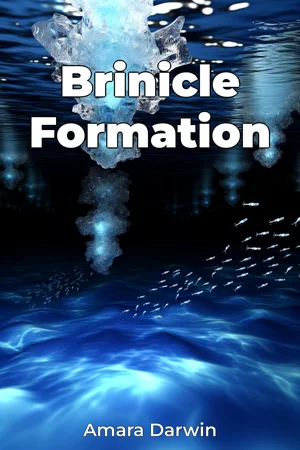
In the depths of Earth's polar oceans, a remarkable phenomenon occurs when supercooled seawater meets warmer waters, creating ice formations that appear to defy gravity. "Brinicle Formation" presents a comprehensive examination of these underwater stalactites, exploring their formation process, ecological impact, and significance in polar marine environments. The book delves into three primary aspects of brinicles: their physical formation mechanisms, their role in marine ecosystems, and their broader implications for understanding climate patterns in polar regions. Through detailed scientific analysis, readers discover how the interaction between different salinity levels and temperatures creates these underwater ice structures, which can form rapidly enough to trap slow-moving marine organisms in their path. Drawing from recent oceanographic research and long-term observational studies, the text presents evidence gathered through advanced underwater imaging technologies and chemical composition analyses. The investigation includes data from both Arctic and Antarctic regions, providing a comparative study of brinicle formation under varying conditions and depths. The book's core argument establishes brinicles as crucial indicators of ocean temperature dynamics and their influence on marine life. Each chapter builds upon this foundation, beginning with the fundamental physics of ice formation in saline environments, progressing through the ecological consequences of brinicle events, and concluding with their role in global ocean circulation patterns. Particular attention is given to the chemical processes that drive brinicle formation, including detailed explanations of brine rejection, thermal gradients, and crystal structure development. The text incorporates findings from marine biology, physical oceanography, and climate science, demonstrating how these ice formations serve as natural laboratories for understanding complex ocean processes. The work connects multiple scientific disciplines, linking physical oceanography with marine biology and climate science. These connections reveal how brinicles influence local ecosystem dynamics and contribute to larger-scale oceanic circulation patterns. The book also explores the relationship between brinicle formation and sea ice dynamics, offering insights into polar region climate changes. Through clear, technically precise language, the text makes complex scientific concepts accessible to readers with a basic understanding of natural sciences. Each chapter includes detailed diagrams, underwater photographs, and data visualizations that illustrate key concepts and findings. The book serves multiple audiences, from marine science students and researchers to environmental professionals and informed general readers interested in polar ecosystems. It provides practical applications for researchers studying marine life adaptation and climate change impacts in polar regions. The scope encompasses both micro and macro perspectives, from molecular-level ice crystal formation to ecosystem-wide effects. While focused primarily on current understanding, the text acknowledges areas where research is ongoing and questions remain unanswered, particularly regarding brinicle formation rates under varying conditions. The work addresses current debates in the field, including discussions about the role of brinicles in nutrient circulation and their potential as indicators of climate change impacts. It concludes by examining the implications of brinicle research for understanding future changes in polar marine environments and their broader effects on global ocean systems.
In the depths of Earth's polar oceans, a remarkable phenomenon occurs when supercooled seawater meets warmer waters, creating ice formations that appear to defy gravity. "Brinicle Formation" presents a comprehensive examination of these underwater stalactites, exploring their formation process, ecological impact, and significance in polar marine environments. The book delves into three primary aspects of brinicles: their physical formation mechanisms, their role in marine ecosystems, and their broader implications for understanding climate patterns in polar regions. Through detailed scientific analysis, readers discover how the interaction between different salinity levels and temperatures creates these underwater ice structures, which can form rapidly enough to trap slow-moving marine organisms in their path. Drawing from recent oceanographic research and long-term observational studies, the text presents evidence gathered through advanced underwater imaging technologies and chemical composition analyses. The investigation includes data from both Arctic and Antarctic regions, providing a comparative study of brinicle formation under varying conditions and depths. The book's core argument establishes brinicles as crucial indicators of ocean temperature dynamics and their influence on marine life. Each chapter builds upon this foundation, beginning with the fundamental physics of ice formation in saline environments, progressing through the ecological consequences of brinicle events, and concluding with their role in global ocean circulation patterns. Particular attention is given to the chemical processes that drive brinicle formation, including detailed explanations of brine rejection, thermal gradients, and crystal structure development. The text incorporates findings from marine biology, physical oceanography, and climate science, demonstrating how these ice formations serve as natural laboratories for understanding complex ocean processes. The work connects multiple scientific disciplines, linking physical oceanography with marine biology and climate science. These connections reveal how brinicles influence local ecosystem dynamics and contribute to larger-scale oceanic circulation patterns. The book also explores the relationship between brinicle formation and sea ice dynamics, offering insights into polar region climate changes. Through clear, technically precise language, the text makes complex scientific concepts accessible to readers with a basic understanding of natural sciences. Each chapter includes detailed diagrams, underwater photographs, and data visualizations that illustrate key concepts and findings. The book serves multiple audiences, from marine science students and researchers to environmental professionals and informed general readers interested in polar ecosystems. It provides practical applications for researchers studying marine life adaptation and climate change impacts in polar regions. The scope encompasses both micro and macro perspectives, from molecular-level ice crystal formation to ecosystem-wide effects. While focused primarily on current understanding, the text acknowledges areas where research is ongoing and questions remain unanswered, particularly regarding brinicle formation rates under varying conditions. The work addresses current debates in the field, including discussions about the role of brinicles in nutrient circulation and their potential as indicators of climate change impacts. It concludes by examining the implications of brinicle research for understanding future changes in polar marine environments and their broader effects on global ocean systems.
"Brinicle Formation" explores one of nature's most fascinating underwater phenomena: the creation of ice stalactites in polar oceans when supercooled seawater meets warmer waters. This comprehensive examination reveals how these ethereal structures form rapidly enough to entrap marine organisms, while also serving as crucial indicators of ocean temperature dynamics and marine ecosystem health. Through a blend of recent oceanographic research and long-term studies, the book illuminates the complex interplay between salinity levels, temperature gradients, and ice crystal formation in both Arctic and Antarctic waters. The narrative progresses systematically from the fundamental physics of ice formation in saline environments to the broader implications for global ocean circulation patterns. Readers discover how brinicles act as natural laboratories for understanding complex ocean processes, with detailed explanations supported by advanced underwater imaging and chemical composition analyses. The book makes these complex concepts accessible through clear language and visual aids, while maintaining scientific rigor throughout its examination of brine rejection, thermal gradients, and crystal structure development. The text uniquely bridges multiple scientific disciplines, demonstrating how brinicles influence everything from local ecosystem dynamics to larger-scale oceanic circulation patterns. By connecting physical oceanography with marine biology and climate science, the book offers valuable insights for both specialists and general readers interested in polar ecosystems. The work's comprehensive approach, combining detailed scientific analysis with practical applications, makes it an essential resource for understanding these remarkable underwater formations and their role in our changing polar environments.
Book Details
ISBN
9788233957803
Publisher
Publifye AS
Your Licenses
You don't own any licenses for this book
Purchase a license below to unlock this book and download the EPUB.
Purchase License
Select a tier to unlock this book
Need bulk licensing?
Contact us for enterprise agreements.