
About This Book
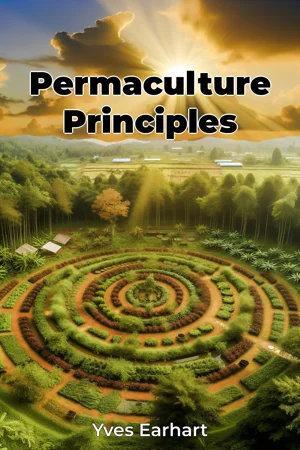
In an era where industrial agriculture faces mounting sustainability challenges, "Permaculture Principles" presents a comprehensive framework for creating resilient, self-sustaining agricultural systems that work in harmony with nature rather than against it. This practical guide delves into the core principles of permaculture design, demonstrating how careful observation of natural ecosystems can inform the development of productive, low-maintenance farming systems. The book establishes three fundamental pillars: ecological design principles, water management strategies, and soil regeneration techniques, each contributing to the creation of sustainable agricultural landscapes. Drawing from four decades of permaculture research and implementation across diverse climates, the book presents evidence-based approaches to agricultural design. It traces the evolution of permaculture from its origins in 1970s Australia to its current global applications, providing readers with essential context for understanding modern sustainable farming practices. The central thesis maintains that by mimicking natural ecosystem patterns, farmers and gardeners can create productive landscapes that require minimal external inputs while building soil fertility, conserving water, and supporting biodiversity. This argument is systematically developed through practical examples and case studies from successful permaculture systems worldwide. The book's structure progresses logically from foundational concepts to practical implementation. Initial chapters cover ecosystem observation and analysis, teaching readers to identify beneficial relationships between plants, animals, and landscape elements. Middle sections detail specific design strategies, including food forest creation, water harvesting systems, and integrated pest management. Final chapters address implementation challenges and long-term maintenance considerations. Research evidence is drawn from both traditional ecological knowledge and contemporary agricultural science, incorporating soil biology studies, watershed management research, and documented permaculture project outcomes. The methodology combines systematic observation with measurable results from established permaculture sites. The content bridges multiple disciplines, connecting agricultural science with ecology, hydrology, and soil biology. This interdisciplinary approach enables readers to understand how various natural systems interact and how to optimize these interactions for agricultural productivity. Written in an instructional yet accessible style, the book serves both newcomers to sustainable agriculture and experienced practitioners seeking to deepen their understanding. Technical concepts are explained clearly, supported by illustrations, diagrams, and practical examples that demonstrate real-world applications. The target audience includes small-scale farmers, homesteaders, urban gardeners, and agricultural professionals interested in sustainable design. The book provides scalable solutions applicable to various settings, from urban gardens to large rural properties. Specific attention is given to climate-appropriate design strategies, acknowledging that permaculture principles must be adapted to local conditions. The book addresses common challenges in different climate zones, offering tailored solutions for arid, tropical, and temperate regions. Rather than presenting permaculture as a rigid system, the book emphasizes adaptable principles that can be modified for specific contexts. It addresses ongoing debates within the sustainable agriculture community regarding the scalability of permaculture methods and their integration with existing agricultural systems. The book concludes with implementation guidelines, helping readers transition from conventional growing methods to permaculture systems while avoiding common pitfalls. It provides practical planning tools, design checklists, and troubleshooting guides for various stages of project development.
In an era where industrial agriculture faces mounting sustainability challenges, "Permaculture Principles" presents a comprehensive framework for creating resilient, self-sustaining agricultural systems that work in harmony with nature rather than against it. This practical guide delves into the core principles of permaculture design, demonstrating how careful observation of natural ecosystems can inform the development of productive, low-maintenance farming systems. The book establishes three fundamental pillars: ecological design principles, water management strategies, and soil regeneration techniques, each contributing to the creation of sustainable agricultural landscapes. Drawing from four decades of permaculture research and implementation across diverse climates, the book presents evidence-based approaches to agricultural design. It traces the evolution of permaculture from its origins in 1970s Australia to its current global applications, providing readers with essential context for understanding modern sustainable farming practices. The central thesis maintains that by mimicking natural ecosystem patterns, farmers and gardeners can create productive landscapes that require minimal external inputs while building soil fertility, conserving water, and supporting biodiversity. This argument is systematically developed through practical examples and case studies from successful permaculture systems worldwide. The book's structure progresses logically from foundational concepts to practical implementation. Initial chapters cover ecosystem observation and analysis, teaching readers to identify beneficial relationships between plants, animals, and landscape elements. Middle sections detail specific design strategies, including food forest creation, water harvesting systems, and integrated pest management. Final chapters address implementation challenges and long-term maintenance considerations. Research evidence is drawn from both traditional ecological knowledge and contemporary agricultural science, incorporating soil biology studies, watershed management research, and documented permaculture project outcomes. The methodology combines systematic observation with measurable results from established permaculture sites. The content bridges multiple disciplines, connecting agricultural science with ecology, hydrology, and soil biology. This interdisciplinary approach enables readers to understand how various natural systems interact and how to optimize these interactions for agricultural productivity. Written in an instructional yet accessible style, the book serves both newcomers to sustainable agriculture and experienced practitioners seeking to deepen their understanding. Technical concepts are explained clearly, supported by illustrations, diagrams, and practical examples that demonstrate real-world applications. The target audience includes small-scale farmers, homesteaders, urban gardeners, and agricultural professionals interested in sustainable design. The book provides scalable solutions applicable to various settings, from urban gardens to large rural properties. Specific attention is given to climate-appropriate design strategies, acknowledging that permaculture principles must be adapted to local conditions. The book addresses common challenges in different climate zones, offering tailored solutions for arid, tropical, and temperate regions. Rather than presenting permaculture as a rigid system, the book emphasizes adaptable principles that can be modified for specific contexts. It addresses ongoing debates within the sustainable agriculture community regarding the scalability of permaculture methods and their integration with existing agricultural systems. The book concludes with implementation guidelines, helping readers transition from conventional growing methods to permaculture systems while avoiding common pitfalls. It provides practical planning tools, design checklists, and troubleshooting guides for various stages of project development.
"Permaculture Principles" offers a transformative approach to sustainable agriculture by presenting a comprehensive framework that aligns farming practices with natural ecosystem patterns. This practical guide demonstrates how observing and working with nature can create resilient, self-sustaining agricultural systems that require minimal external input while maximizing productivity. The book's unique strength lies in its integration of four decades of research and real-world applications across diverse climates, making it valuable for both beginners and experienced practitioners. The book systematically develops its core concepts through three fundamental pillars: ecological design principles, water management strategies, and soil regeneration techniques. Drawing from both traditional ecological knowledge and contemporary agricultural science, it presents evidence-based approaches through practical examples and case studies from successful permaculture systems worldwide. Readers learn to identify beneficial relationships between plants, animals, and landscape elements, creating productive environments that support biodiversity and build soil fertility naturally. Moving from foundational concepts to practical implementation, the book addresses specific design strategies such as food forest creation, water harvesting systems, and integrated pest management. It particularly excels in providing climate-appropriate solutions for different regions, acknowledging that permaculture principles must be adapted to local conditions. The content remains accessible throughout, using clear explanations and practical examples to bridge the gap between complex ecological concepts and their real-world applications in various settings, from urban gardens to large rural properties.
Book Details
ISBN
9788233957667
Publisher
Publifye AS
Your Licenses
You don't own any licenses for this book
Purchase a license below to unlock this book and download the EPUB.
Purchase License
Select a tier to unlock this book
Need bulk licensing?
Contact us for enterprise agreements.