
About This Book
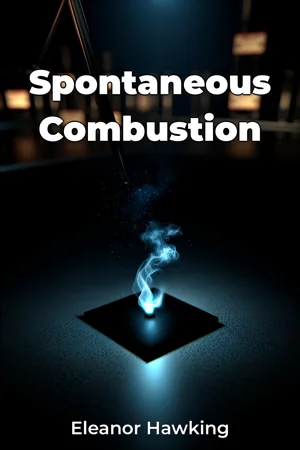
What causes a human body or inanimate object to suddenly burst into flames without an apparent ignition source? "Spontaneous Combustion" delves into the documented cases, scientific analyses, and theoretical frameworks that attempt to explain these rare but perplexing phenomena. The book systematically examines both historical and contemporary cases of spontaneous human combustion (SHC) and spontaneous material combustion (SMC), presenting a rigorous scientific investigation of these occurrences. Through detailed analysis of physical evidence, witness accounts, and laboratory studies, the text bridges the gap between observed incidents and their potential scientific explanations. Beginning with a comprehensive review of documented cases dating back to the 17th century, the book establishes patterns and commonalities among reported incidents. The analysis includes detailed examinations of notable cases, such as the Mary Reeser incident of 1951 and the John Irving Bentley case of 1966, using modern forensic techniques to reassess the available evidence. The core of the book focuses on three main areas: the physics of combustion processes, the chemistry of organic materials, and the biological factors that might contribute to such events. Each chapter builds upon established scientific principles to explore possible mechanisms behind spontaneous combustion. The text examines theories ranging from the "wick effect" hypothesis to the role of static electricity accumulation, and the potential influence of biochemical reactions within living organisms. Supporting evidence comes from multiple sources, including forensic investigations, laboratory experiments, and computational models. The book presents new research data from thermal imaging studies, chemical analysis of residues, and controlled experiments designed to test various theoretical explanations. The investigation extends beyond pure physics to incorporate insights from chemistry, biology, and forensic science. This interdisciplinary approach helps readers understand how different scientific fields contribute to our understanding of spontaneous combustion. The book also addresses the practical implications for fire safety, forensic investigation, and risk assessment in both domestic and industrial settings. Written in a methodical, evidence-based style, the text maintains scientific rigor while remaining accessible to readers with a basic understanding of physics and chemistry. Each chapter includes detailed diagrams, photographs, and data visualizations to illustrate key concepts and findings. The book specifically targets science professionals, forensic investigators, and educated general readers interested in unusual physical phenomena. It provides practical frameworks for investigating suspected cases of spontaneous combustion and evaluating the credibility of reported incidents. While acknowledging the skepticism surrounding spontaneous combustion, the book takes an objective approach to examining the evidence. It addresses both supporting and contradicting data, allowing readers to evaluate different explanations based on scientific merit rather than sensationalism. The scope encompasses both theoretical understanding and practical applications, including preventive measures for potentially at-risk materials and environments. The book concludes with recommendations for future research directions and standardized investigation protocols for suspected cases of spontaneous combustion. The text maintains a balanced perspective throughout, neither dismissing unexplained cases nor accepting unsubstantiated claims. Instead, it focuses on building a framework for understanding these phenomena through the lens of established scientific principles and methodologies.
What causes a human body or inanimate object to suddenly burst into flames without an apparent ignition source? "Spontaneous Combustion" delves into the documented cases, scientific analyses, and theoretical frameworks that attempt to explain these rare but perplexing phenomena. The book systematically examines both historical and contemporary cases of spontaneous human combustion (SHC) and spontaneous material combustion (SMC), presenting a rigorous scientific investigation of these occurrences. Through detailed analysis of physical evidence, witness accounts, and laboratory studies, the text bridges the gap between observed incidents and their potential scientific explanations. Beginning with a comprehensive review of documented cases dating back to the 17th century, the book establishes patterns and commonalities among reported incidents. The analysis includes detailed examinations of notable cases, such as the Mary Reeser incident of 1951 and the John Irving Bentley case of 1966, using modern forensic techniques to reassess the available evidence. The core of the book focuses on three main areas: the physics of combustion processes, the chemistry of organic materials, and the biological factors that might contribute to such events. Each chapter builds upon established scientific principles to explore possible mechanisms behind spontaneous combustion. The text examines theories ranging from the "wick effect" hypothesis to the role of static electricity accumulation, and the potential influence of biochemical reactions within living organisms. Supporting evidence comes from multiple sources, including forensic investigations, laboratory experiments, and computational models. The book presents new research data from thermal imaging studies, chemical analysis of residues, and controlled experiments designed to test various theoretical explanations. The investigation extends beyond pure physics to incorporate insights from chemistry, biology, and forensic science. This interdisciplinary approach helps readers understand how different scientific fields contribute to our understanding of spontaneous combustion. The book also addresses the practical implications for fire safety, forensic investigation, and risk assessment in both domestic and industrial settings. Written in a methodical, evidence-based style, the text maintains scientific rigor while remaining accessible to readers with a basic understanding of physics and chemistry. Each chapter includes detailed diagrams, photographs, and data visualizations to illustrate key concepts and findings. The book specifically targets science professionals, forensic investigators, and educated general readers interested in unusual physical phenomena. It provides practical frameworks for investigating suspected cases of spontaneous combustion and evaluating the credibility of reported incidents. While acknowledging the skepticism surrounding spontaneous combustion, the book takes an objective approach to examining the evidence. It addresses both supporting and contradicting data, allowing readers to evaluate different explanations based on scientific merit rather than sensationalism. The scope encompasses both theoretical understanding and practical applications, including preventive measures for potentially at-risk materials and environments. The book concludes with recommendations for future research directions and standardized investigation protocols for suspected cases of spontaneous combustion. The text maintains a balanced perspective throughout, neither dismissing unexplained cases nor accepting unsubstantiated claims. Instead, it focuses on building a framework for understanding these phenomena through the lens of established scientific principles and methodologies.
"Spontaneous Combustion" presents a comprehensive scientific investigation into one of nature's most puzzling phenomena: the sudden ignition of objects and human bodies without apparent external heat sources. This meticulously researched work bridges the gap between documented incidents and their potential scientific explanations, examining both historical cases dating back to the 17th century and contemporary occurrences through the lens of modern forensic science. The book takes readers on a systematic journey through three fundamental areas: combustion physics, organic chemistry, and biological factors that might contribute to such events. Notable cases, including the Mary Reeser incident of 1951 and the John Irving Bentley case of 1966, are carefully reexamined using modern forensic techniques. Through detailed analysis of physical evidence, laboratory studies, and computational models, the text explores various theories, from the "wick effect" hypothesis to the potential role of static electricity accumulation. What sets this book apart is its interdisciplinary approach, combining insights from physics, chemistry, biology, and forensic science while maintaining scientific rigor and accessibility. The text presents complex concepts through clear diagrams, photographs, and data visualizations, making it valuable for both scientific professionals and educated general readers. Rather than sensationalizing these mysterious events, the book provides a balanced, evidence-based framework for understanding and investigating spontaneous combustion phenomena, complete with practical applications for fire safety and forensic investigation.
Book Details
ISBN
9788233957421
Publisher
Publifye AS
Your Licenses
You don't own any licenses for this book
Purchase a license below to unlock this book and download the EPUB.
Purchase License
Select a tier to unlock this book
Need bulk licensing?
Contact us for enterprise agreements.