
About This Book
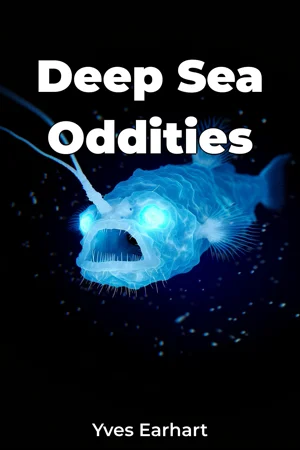
Miles below the ocean's surface, where pressure exceeds 1,000 atmospheres and perpetual darkness reigns, a hidden world of highly adapted organisms challenges our understanding of life itself. "Deep Sea Oddities" takes readers on a meticulously researched journey into the hadal zones and abyssal plains, where life forms have evolved remarkable strategies to survive in Earth's most demanding environments. The book examines three primary aspects of deep-sea life: the physiological adaptations that allow organisms to withstand extreme pressure and cold, the diverse feeding strategies in a food-scarce environment, and the unique symbiotic relationships that have developed in deep-sea ecosystems. Through detailed case studies of organisms like the Pompeii worm, which thrives in 80°C hydrothermal vent waters, and the barreleye fish, with its transparent head and upward-facing eyes, readers gain insight into the mechanisms of survival in these harsh conditions. Drawing from recent scientific expeditions and advanced deep-sea imaging technology, the text presents new findings about bioluminescence as a vital communication and survival tool, pressure-adapted proteins that maintain cellular function at extreme depths, and previously unknown species discovered around deep-sea methane seeps. The research incorporates data from submersible expeditions, satellite tracking, and DNA analysis to provide a comprehensive view of deep-sea biodiversity. The book's structure follows the vertical zones of the ocean, beginning with the twilight zone and descending through the midnight and abyssal zones to the hadal trenches. Each chapter explores the distinct challenges and adaptations found at different depths, while examining the interconnected nature of these ecosystems. Special attention is given to chemosynthetic communities around hydrothermal vents, where life exists independent of sunlight, revolutionizing our understanding of life's requirements. The text bridges multiple scientific disciplines, connecting marine biology with chemistry, geology, and climate science. This interdisciplinary approach helps readers understand how deep-sea organisms influence global nutrient cycles and carbon sequestration, making them crucial players in Earth's climate systems. Written in a clear, technical style that maintains accessibility for educated general readers, the book includes detailed illustrations and scanning electron microscope images that bring microscopic adaptations to life. While primarily targeted at marine science students, researchers, and well-informed enthusiasts, the content remains engaging for anyone interested in marine life and extreme environments. The scope encompasses organisms from microscopic bacteria to deep-sea giants, focusing on species found below 200 meters. Current debates in deep-sea research are addressed, including the impact of deep-sea mining on these vulnerable ecosystems and the potential for discovering novel compounds for medical and industrial applications. The book concludes by examining the implications of deep-sea research for biotechnology, including the development of pressure-stable enzymes for industrial processes and the search for novel pharmaceutical compounds. It also discusses the urgent need for conservation of these largely unexplored ecosystems in the face of increasing industrial interests in deep-sea resources.
Miles below the ocean's surface, where pressure exceeds 1,000 atmospheres and perpetual darkness reigns, a hidden world of highly adapted organisms challenges our understanding of life itself. "Deep Sea Oddities" takes readers on a meticulously researched journey into the hadal zones and abyssal plains, where life forms have evolved remarkable strategies to survive in Earth's most demanding environments. The book examines three primary aspects of deep-sea life: the physiological adaptations that allow organisms to withstand extreme pressure and cold, the diverse feeding strategies in a food-scarce environment, and the unique symbiotic relationships that have developed in deep-sea ecosystems. Through detailed case studies of organisms like the Pompeii worm, which thrives in 80°C hydrothermal vent waters, and the barreleye fish, with its transparent head and upward-facing eyes, readers gain insight into the mechanisms of survival in these harsh conditions. Drawing from recent scientific expeditions and advanced deep-sea imaging technology, the text presents new findings about bioluminescence as a vital communication and survival tool, pressure-adapted proteins that maintain cellular function at extreme depths, and previously unknown species discovered around deep-sea methane seeps. The research incorporates data from submersible expeditions, satellite tracking, and DNA analysis to provide a comprehensive view of deep-sea biodiversity. The book's structure follows the vertical zones of the ocean, beginning with the twilight zone and descending through the midnight and abyssal zones to the hadal trenches. Each chapter explores the distinct challenges and adaptations found at different depths, while examining the interconnected nature of these ecosystems. Special attention is given to chemosynthetic communities around hydrothermal vents, where life exists independent of sunlight, revolutionizing our understanding of life's requirements. The text bridges multiple scientific disciplines, connecting marine biology with chemistry, geology, and climate science. This interdisciplinary approach helps readers understand how deep-sea organisms influence global nutrient cycles and carbon sequestration, making them crucial players in Earth's climate systems. Written in a clear, technical style that maintains accessibility for educated general readers, the book includes detailed illustrations and scanning electron microscope images that bring microscopic adaptations to life. While primarily targeted at marine science students, researchers, and well-informed enthusiasts, the content remains engaging for anyone interested in marine life and extreme environments. The scope encompasses organisms from microscopic bacteria to deep-sea giants, focusing on species found below 200 meters. Current debates in deep-sea research are addressed, including the impact of deep-sea mining on these vulnerable ecosystems and the potential for discovering novel compounds for medical and industrial applications. The book concludes by examining the implications of deep-sea research for biotechnology, including the development of pressure-stable enzymes for industrial processes and the search for novel pharmaceutical compounds. It also discusses the urgent need for conservation of these largely unexplored ecosystems in the face of increasing industrial interests in deep-sea resources.
"Deep Sea Oddities" takes readers on a fascinating journey into Earth's most extreme marine environments, where life thrives despite crushing pressures, perpetual darkness, and near-freezing temperatures. The book systematically explores the ocean's vertical zones, from the twilight realm to the hadal trenches, revealing how organisms have developed extraordinary adaptations to survive in these challenging conditions. Through detailed case studies, readers encounter remarkable creatures like the Pompeii worm, which survives in scalding hydrothermal vent waters, and the barreleye fish, with its uniquely transparent head. The text masterfully weaves together three core themes: physiological adaptations to extreme conditions, innovative feeding strategies in nutrient-poor environments, and the complex web of symbiotic relationships that sustain deep-sea ecosystems. Drawing from cutting-edge research and advanced imaging technology, the book presents groundbreaking discoveries about bioluminescence, pressure-adapted proteins, and previously unknown species around methane seeps. The interdisciplinary approach connects marine biology with chemistry, geology, and climate science, demonstrating how deep-sea organisms influence global environmental systems. Written in clear, technical language that remains accessible to educated general readers, the book bridges the gap between academic research and public understanding. While particularly valuable for marine science students and researchers, it offers anyone interested in ocean life a comprehensive look at these mysterious ecosystems. The inclusion of detailed illustrations and microscope images helps visualize the microscopic adaptations that make survival possible in Earth's most demanding marine environments.
Book Details
ISBN
9788233957391
Publisher
Publifye AS
Your Licenses
You don't own any licenses for this book
Purchase a license below to unlock this book and download the EPUB.
Purchase License
Select a tier to unlock this book
Need bulk licensing?
Contact us for enterprise agreements.