
About This Book
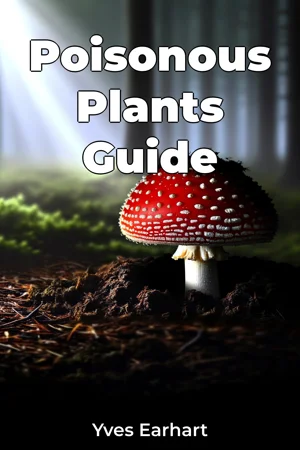
Every year, thousands of emergency room visits result from plant-related poisonings, yet most people cannot identify even the most common toxic plants in their immediate environment. "Poisonous Plants Guide" serves as a comprehensive resource for understanding, identifying, and managing the risks associated with toxic flora in both wild and cultivated settings. This detailed handbook combines botanical science with practical safety applications, focusing on three critical areas: plant identification, toxicology, and emergency response protocols. The book systematically catalogs over 200 poisonous plants commonly found in North American gardens, households, and natural areas, providing readers with vital information about their toxic components and potential health impacts. The work begins with fundamental botanical principles, explaining the evolution of plant toxins and their ecological roles. This foundation helps readers understand why certain plants develop defensive compounds and how these same compounds affect humans and animals differently. The guide then progresses through detailed chapters on major plant families known for toxic members, including the nightshade family, buttercup family, and lily family. Each plant entry features high-resolution photographs of distinguishing characteristics, seasonal variations, and growth stages, accompanied by detailed descriptions of toxic components and their effects. The book incorporates current scientific research on plant biochemistry and medical case studies, providing evidence-based information about toxicity levels and exposure risks. A significant portion of the guide focuses on practical applications, including: - Step-by-step identification techniques using visual keys and botanical features - Specific protocols for protecting children and pets - Seasonal risk assessments for different geographic regions - Emergency response procedures and first-aid measures - Landscape planning strategies for creating safer outdoor spaces The book connects botanical science with veterinary medicine, emergency healthcare, and environmental conservation, offering insights into how these disciplines approach plant toxicity. It addresses current debates in urban landscaping and public space management, discussing the balance between common ornamental plants and public safety. Written in a clear, systematic style, the text combines technical accuracy with accessible explanations, making it valuable for both professionals and general readers. The content is structured to serve as both a reference guide and an educational resource, with each chapter building upon previous knowledge while remaining independently accessible. The guide particularly benefits homeowners, parents, pet owners, landscape professionals, and emergency responders. It includes specialized sections for each group, with targeted recommendations and risk-management strategies. The work's scope encompasses both acute toxic plants requiring immediate medical attention and those causing long-term or cumulative effects. Research presented in the book draws from botanical databases, medical records, and poison control center statistics, providing current data on poisoning incidents and treatment outcomes. This evidence-based approach helps readers understand real-world implications while dispelling common myths about plant toxicity. The book acknowledges its limitations, noting that it focuses primarily on North American species while providing references for information about plants in other regions. It emphasizes the importance of professional medical care and warns against relying solely on the guide in emergency situations. A concluding section addresses emerging issues in plant toxicology, including newly introduced species, climate change effects on plant distribution, and evolving understanding of plant-human interactions. The guide serves as both a practical manual for immediate use and a comprehensive reference for ongoing education in plant safety and environmental awareness.
Every year, thousands of emergency room visits result from plant-related poisonings, yet most people cannot identify even the most common toxic plants in their immediate environment. "Poisonous Plants Guide" serves as a comprehensive resource for understanding, identifying, and managing the risks associated with toxic flora in both wild and cultivated settings. This detailed handbook combines botanical science with practical safety applications, focusing on three critical areas: plant identification, toxicology, and emergency response protocols. The book systematically catalogs over 200 poisonous plants commonly found in North American gardens, households, and natural areas, providing readers with vital information about their toxic components and potential health impacts. The work begins with fundamental botanical principles, explaining the evolution of plant toxins and their ecological roles. This foundation helps readers understand why certain plants develop defensive compounds and how these same compounds affect humans and animals differently. The guide then progresses through detailed chapters on major plant families known for toxic members, including the nightshade family, buttercup family, and lily family. Each plant entry features high-resolution photographs of distinguishing characteristics, seasonal variations, and growth stages, accompanied by detailed descriptions of toxic components and their effects. The book incorporates current scientific research on plant biochemistry and medical case studies, providing evidence-based information about toxicity levels and exposure risks. A significant portion of the guide focuses on practical applications, including: - Step-by-step identification techniques using visual keys and botanical features - Specific protocols for protecting children and pets - Seasonal risk assessments for different geographic regions - Emergency response procedures and first-aid measures - Landscape planning strategies for creating safer outdoor spaces The book connects botanical science with veterinary medicine, emergency healthcare, and environmental conservation, offering insights into how these disciplines approach plant toxicity. It addresses current debates in urban landscaping and public space management, discussing the balance between common ornamental plants and public safety. Written in a clear, systematic style, the text combines technical accuracy with accessible explanations, making it valuable for both professionals and general readers. The content is structured to serve as both a reference guide and an educational resource, with each chapter building upon previous knowledge while remaining independently accessible. The guide particularly benefits homeowners, parents, pet owners, landscape professionals, and emergency responders. It includes specialized sections for each group, with targeted recommendations and risk-management strategies. The work's scope encompasses both acute toxic plants requiring immediate medical attention and those causing long-term or cumulative effects. Research presented in the book draws from botanical databases, medical records, and poison control center statistics, providing current data on poisoning incidents and treatment outcomes. This evidence-based approach helps readers understand real-world implications while dispelling common myths about plant toxicity. The book acknowledges its limitations, noting that it focuses primarily on North American species while providing references for information about plants in other regions. It emphasizes the importance of professional medical care and warns against relying solely on the guide in emergency situations. A concluding section addresses emerging issues in plant toxicology, including newly introduced species, climate change effects on plant distribution, and evolving understanding of plant-human interactions. The guide serves as both a practical manual for immediate use and a comprehensive reference for ongoing education in plant safety and environmental awareness.
"Poisonous Plants Guide" offers a vital resource for understanding and identifying toxic flora, addressing the thousands of annual plant-related poisonings through a comprehensive blend of botanical science and practical safety measures. The book expertly catalogs over 200 poisonous plants common to North American environments, from backyard gardens to wild spaces, while explaining the fundamental principles of plant toxicology and their ecological significance. The guide progresses methodically from basic botanical concepts to detailed examinations of major toxic plant families, including nightshade and buttercup species. Each entry features high-resolution photographs documenting seasonal variations and growth stages, accompanied by evidence-based information about toxic components and their effects on humans and animals. What sets this work apart is its practical approach, combining scientific accuracy with accessible explanations and real-world applications, including step-by-step identification techniques and specific protocols for protecting children and pets. The book's scope extends beyond mere identification, incorporating current research from botanical databases and poison control centers while addressing emerging issues in plant toxicology. It serves multiple audiences, from homeowners and landscape professionals to emergency responders, with specialized sections tailored to each group's needs. The guide particularly excels in connecting various disciplines, including veterinary medicine, emergency healthcare, and environmental conservation, while maintaining a clear focus on practical safety applications and risk management strategies.
Book Details
ISBN
9788233957292
Publisher
Publifye AS
Your Licenses
You don't own any licenses for this book
Purchase a license below to unlock this book and download the EPUB.
Purchase License
Select a tier to unlock this book
Need bulk licensing?
Contact us for enterprise agreements.