
About This Book
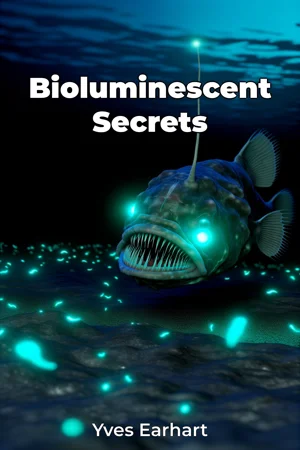
In the depths of the ocean and hidden within forest floors lies one of nature's most captivating phenomena - the ability of living organisms to produce their own light. "Bioluminescent Secrets" delves into the chemical and biological mechanisms that enable creatures from microscopic bacteria to deep-sea fish to generate this living light, exploring how this ability has shaped their evolution and survival. The book presents three core areas of investigation: the biochemistry of light production, the diversity of bioluminescent organisms, and the ecological roles of natural light production. Through detailed examination of the luciferin-luciferase reaction, readers gain understanding of the fundamental chemical processes that enable organisms to produce light efficiently at low temperatures - a feat that human technology has yet to fully replicate. Building on research spanning more than a century, from the early observations of naturalists to modern genetic studies, the text chronicles how scientists unraveled the mysteries of bioluminescence. The book examines the variety of ways organisms utilize this ability, from the defensive mechanisms of dinoflagellates to the elaborate courtship displays of fireflies and the hunting strategies of deep-sea predators. Each chapter combines field research, laboratory findings, and molecular analysis to present a comprehensive view of bioluminescence across different species and environments. The text explores how these light-producing mechanisms evolved independently multiple times throughout history, demonstrating convergent evolution in action. Detailed case studies examine specific organisms, such as the Hawaiian bobtail squid's symbiotic relationship with light-producing bacteria and the chemistry behind the different colors of light produced by various species. The practical applications of bioluminescence research extend beyond basic biology. The book discusses how scientists have adapted these natural light-producing systems for use in medical imaging, environmental monitoring, and biotechnology. These applications demonstrate the broader impact of understanding natural light production mechanisms. Interdisciplinary connections link bioluminescence research to chemistry, physics, and environmental science. The text examines how climate change and ocean acidification may affect marine bioluminescent organisms and the potential consequences for deep-sea ecosystems. Current research into developing bio-inspired lighting technologies and using bioluminescent organisms as biosensors for pollutants shows the practical relevance of this field. Written for science enthusiasts, biology students, and researchers, the book maintains technical accuracy while remaining accessible to readers with a basic understanding of biology and chemistry. The text uses clear explanations and specific examples to illuminate complex concepts, supported by detailed illustrations and photographs that capture bioluminescent phenomena in nature. The scope encompasses both well-studied systems and emerging discoveries, highlighting gaps in current knowledge and ongoing research questions. While focusing primarily on natural bioluminescent systems, the book acknowledges the limitations of current research methods in studying deep-sea organisms and the challenges of maintaining bioluminescent creatures in laboratory conditions. Through careful analysis of current research and historical developments, "Bioluminescent Secrets" provides a solid foundation for understanding this remarkable natural phenomenon while pointing toward future discoveries and applications in this dynamic field of study.
In the depths of the ocean and hidden within forest floors lies one of nature's most captivating phenomena - the ability of living organisms to produce their own light. "Bioluminescent Secrets" delves into the chemical and biological mechanisms that enable creatures from microscopic bacteria to deep-sea fish to generate this living light, exploring how this ability has shaped their evolution and survival. The book presents three core areas of investigation: the biochemistry of light production, the diversity of bioluminescent organisms, and the ecological roles of natural light production. Through detailed examination of the luciferin-luciferase reaction, readers gain understanding of the fundamental chemical processes that enable organisms to produce light efficiently at low temperatures - a feat that human technology has yet to fully replicate. Building on research spanning more than a century, from the early observations of naturalists to modern genetic studies, the text chronicles how scientists unraveled the mysteries of bioluminescence. The book examines the variety of ways organisms utilize this ability, from the defensive mechanisms of dinoflagellates to the elaborate courtship displays of fireflies and the hunting strategies of deep-sea predators. Each chapter combines field research, laboratory findings, and molecular analysis to present a comprehensive view of bioluminescence across different species and environments. The text explores how these light-producing mechanisms evolved independently multiple times throughout history, demonstrating convergent evolution in action. Detailed case studies examine specific organisms, such as the Hawaiian bobtail squid's symbiotic relationship with light-producing bacteria and the chemistry behind the different colors of light produced by various species. The practical applications of bioluminescence research extend beyond basic biology. The book discusses how scientists have adapted these natural light-producing systems for use in medical imaging, environmental monitoring, and biotechnology. These applications demonstrate the broader impact of understanding natural light production mechanisms. Interdisciplinary connections link bioluminescence research to chemistry, physics, and environmental science. The text examines how climate change and ocean acidification may affect marine bioluminescent organisms and the potential consequences for deep-sea ecosystems. Current research into developing bio-inspired lighting technologies and using bioluminescent organisms as biosensors for pollutants shows the practical relevance of this field. Written for science enthusiasts, biology students, and researchers, the book maintains technical accuracy while remaining accessible to readers with a basic understanding of biology and chemistry. The text uses clear explanations and specific examples to illuminate complex concepts, supported by detailed illustrations and photographs that capture bioluminescent phenomena in nature. The scope encompasses both well-studied systems and emerging discoveries, highlighting gaps in current knowledge and ongoing research questions. While focusing primarily on natural bioluminescent systems, the book acknowledges the limitations of current research methods in studying deep-sea organisms and the challenges of maintaining bioluminescent creatures in laboratory conditions. Through careful analysis of current research and historical developments, "Bioluminescent Secrets" provides a solid foundation for understanding this remarkable natural phenomenon while pointing toward future discoveries and applications in this dynamic field of study.
"Bioluminescent Secrets" unveils the fascinating world of natural light production in living organisms, from microscopic bacteria to deep-sea creatures. This comprehensive exploration reveals how various species harness chemical reactions between luciferin and luciferase to generate light efficiently at low temperatures—a remarkable capability that continues to intrigue scientists and inspire technological innovations. The book masterfully weaves together three fundamental aspects: the biochemical mechanisms of light production, the remarkable diversity of bioluminescent organisms, and the ecological significance of this natural phenomenon. Through detailed case studies, readers discover how different species utilize bioluminescence for survival, from the defensive strategies of tiny dinoflagellates to the sophisticated courtship displays of fireflies. Perhaps most fascinating is the revelation that this ability has evolved independently multiple times throughout history, demonstrating nature's remarkable capacity for finding similar solutions to environmental challenges. The text progresses from basic biological principles to cutting-edge applications, showing how bioluminescence research has influenced fields like medical imaging and environmental monitoring. Each chapter builds upon the last, combining field research with laboratory findings to present a complete picture of this natural phenomenon. What sets this book apart is its ability to maintain scientific rigor while remaining accessible to readers with basic biology knowledge, making it an invaluable resource for both science enthusiasts and researchers interested in the mysteries of natural light production.
Book Details
ISBN
9788233957278
Publisher
Publifye AS
Your Licenses
You don't own any licenses for this book
Purchase a license below to unlock this book and download the EPUB.
Purchase License
Select a tier to unlock this book
Need bulk licensing?
Contact us for enterprise agreements.