
About This Book
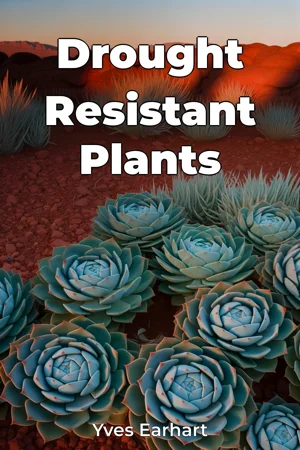
In an era of increasing water scarcity and climate change, understanding how plants naturally adapt to drought conditions has become vital for sustainable landscaping and gardening. "Drought Resistant Plants" presents a comprehensive exploration of xerophytic plants and their practical applications in modern gardening, offering solutions for both home gardeners and landscape professionals. The book examines three fundamental aspects of drought-resistant plants: their biological adaptations, their role in sustainable landscaping, and practical implementation strategies. Through detailed botanical research and case studies, readers learn how these resilient plants develop specialized features such as waxy cuticles, modified root systems, and reduced leaf surfaces to minimize water loss and maximize resource efficiency. Drawing from decades of botanical research and field studies across arid regions worldwide, the text provides an in-depth look at the evolutionary mechanisms that enable certain plants to thrive with minimal water. The book systematically catalogs various drought-resistant species, from succulents and cacti to Mediterranean herbs and native grasses, explaining their specific adaptations and optimal growing conditions. The content is structured in three main sections. The first establishes the scientific foundation, exploring plant physiology and adaptation mechanisms. The second section focuses on practical applications, including soil preparation, irrigation techniques, and plant selection criteria. The final section addresses landscape design principles that incorporate these plants effectively while maintaining aesthetic appeal. Research presented includes water consumption studies, soil analysis data, and long-term survival rates of different species in various climate conditions. The book integrates findings from botanical gardens, academic research centers, and real-world landscaping projects, providing readers with evidence-based recommendations for plant selection and care. The work connects multiple disciplines, including botany, soil science, and climate studies, while incorporating principles of sustainable design and water conservation. These interconnections help readers understand how drought-resistant landscaping fits into broader environmental conservation efforts. The book maintains an instructional tone, balancing technical information with practical guidance. Complex botanical concepts are explained clearly, making the content accessible to both horticultural professionals and dedicated home gardeners. Detailed illustrations and photographs complement the text, demonstrating key concepts and plant characteristics. Particularly valuable is the book's approach to regional considerations, acknowledging that drought resistance varies by climate zone and local conditions. It provides specific guidance for different geographical areas, helping readers select appropriate plants for their specific locations. The work addresses current debates in sustainable landscaping, including the balance between native and adapted non-native species, and the role of drought-resistant plants in urban planning. It presents various perspectives while maintaining focus on evidence-based solutions. Practical applications are emphasized throughout, with detailed guidelines for plant selection, installation, and maintenance. The book includes seasonal care calendars, troubleshooting guides, and design templates that readers can adapt to their needs. Real-world examples demonstrate successful implementations in various settings, from residential gardens to public spaces, providing readers with proven models for their own projects. The text also addresses common challenges and misconceptions about drought-resistant landscaping, offering solutions based on documented experience and research. This resource serves as both a reference guide and practical manual, helping readers create sustainable, water-efficient landscapes without sacrificing visual appeal. It delivers specific, actionable information while contributing to the broader discussion of environmental conservation and sustainable gardening practices.
In an era of increasing water scarcity and climate change, understanding how plants naturally adapt to drought conditions has become vital for sustainable landscaping and gardening. "Drought Resistant Plants" presents a comprehensive exploration of xerophytic plants and their practical applications in modern gardening, offering solutions for both home gardeners and landscape professionals. The book examines three fundamental aspects of drought-resistant plants: their biological adaptations, their role in sustainable landscaping, and practical implementation strategies. Through detailed botanical research and case studies, readers learn how these resilient plants develop specialized features such as waxy cuticles, modified root systems, and reduced leaf surfaces to minimize water loss and maximize resource efficiency. Drawing from decades of botanical research and field studies across arid regions worldwide, the text provides an in-depth look at the evolutionary mechanisms that enable certain plants to thrive with minimal water. The book systematically catalogs various drought-resistant species, from succulents and cacti to Mediterranean herbs and native grasses, explaining their specific adaptations and optimal growing conditions. The content is structured in three main sections. The first establishes the scientific foundation, exploring plant physiology and adaptation mechanisms. The second section focuses on practical applications, including soil preparation, irrigation techniques, and plant selection criteria. The final section addresses landscape design principles that incorporate these plants effectively while maintaining aesthetic appeal. Research presented includes water consumption studies, soil analysis data, and long-term survival rates of different species in various climate conditions. The book integrates findings from botanical gardens, academic research centers, and real-world landscaping projects, providing readers with evidence-based recommendations for plant selection and care. The work connects multiple disciplines, including botany, soil science, and climate studies, while incorporating principles of sustainable design and water conservation. These interconnections help readers understand how drought-resistant landscaping fits into broader environmental conservation efforts. The book maintains an instructional tone, balancing technical information with practical guidance. Complex botanical concepts are explained clearly, making the content accessible to both horticultural professionals and dedicated home gardeners. Detailed illustrations and photographs complement the text, demonstrating key concepts and plant characteristics. Particularly valuable is the book's approach to regional considerations, acknowledging that drought resistance varies by climate zone and local conditions. It provides specific guidance for different geographical areas, helping readers select appropriate plants for their specific locations. The work addresses current debates in sustainable landscaping, including the balance between native and adapted non-native species, and the role of drought-resistant plants in urban planning. It presents various perspectives while maintaining focus on evidence-based solutions. Practical applications are emphasized throughout, with detailed guidelines for plant selection, installation, and maintenance. The book includes seasonal care calendars, troubleshooting guides, and design templates that readers can adapt to their needs. Real-world examples demonstrate successful implementations in various settings, from residential gardens to public spaces, providing readers with proven models for their own projects. The text also addresses common challenges and misconceptions about drought-resistant landscaping, offering solutions based on documented experience and research. This resource serves as both a reference guide and practical manual, helping readers create sustainable, water-efficient landscapes without sacrificing visual appeal. It delivers specific, actionable information while contributing to the broader discussion of environmental conservation and sustainable gardening practices.
"Drought Resistant Plants" offers a timely and comprehensive exploration of water-efficient gardening solutions in an era of increasing climate challenges. This authoritative guide bridges the gap between scientific understanding and practical application, examining how plants naturally adapt to drought conditions and how gardeners can leverage these adaptations in sustainable landscaping. The book's unique three-part structure begins with the fascinating science behind plant adaptation mechanisms, such as waxy cuticles and modified root systems, before moving into hands-on applications for garden design and maintenance. Through a combination of botanical research and real-world case studies, readers learn how to select, install, and care for a wide range of drought-resistant species, from familiar succulents and cacti to Mediterranean herbs and native grasses. The integration of water consumption data and survival rate studies provides evidence-based recommendations that readers can trust. What sets this resource apart is its comprehensive yet accessible approach to regional considerations and practical implementation. Whether you're a professional landscaper or dedicated home gardener, the book provides detailed guidance for creating water-efficient landscapes that maintain visual appeal. The inclusion of seasonal care calendars, troubleshooting guides, and design templates makes it an invaluable resource for anyone interested in sustainable gardening practices, while its foundation in extensive botanical research ensures its recommendations are both practical and scientifically sound.
Book Details
ISBN
9788233957261
Publisher
Publifye AS
Your Licenses
You don't own any licenses for this book
Purchase a license below to unlock this book and download the EPUB.
Purchase License
Select a tier to unlock this book
Need bulk licensing?
Contact us for enterprise agreements.