
About This Book
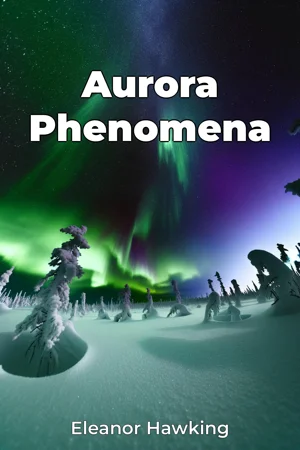
"Aurora Phenomena" investigates the complex interactions between solar activity and Earth's magnetic field that create one of nature's most captivating displays. Through detailed scientific analysis and current research, this comprehensive work illuminates the physics and chemistry behind auroral formations while exploring their broader implications for our understanding of space weather and atmospheric science. The book presents three core areas of study: the solar-terrestrial relationship that drives aurora formation, the various types of auroral displays and their characteristics, and the impact of these phenomena on Earth's atmospheric systems. These interconnected topics provide readers with a thorough understanding of how solar wind particles interact with our planet's magnetosphere to create the distinct patterns and colors observed in auroral displays. Beginning with fundamental plasma physics, the text examines the Sun's role in aurora formation, including solar flares, coronal mass ejections, and the solar wind's journey through space. Readers learn how charged particles from the Sun encounter Earth's magnetic field, leading to the complex processes that generate auroral displays. The book incorporates data from satellite observations, ground-based magnetometers, and atmospheric monitoring stations to provide a complete picture of these interactions. The second section delves into aurora classification, examining both the common aurora borealis and aurora australis, as well as rarer phenomena such as steve (strong thermal emission velocity enhancement) and proton auroras. Through spectroscopic analysis and particle detection data, the text explains how different atmospheric gases produce various auroral colors and shapes, while mathematical models demonstrate the physics behind these processes. The work then explores how auroral activity influences Earth's upper atmosphere, including effects on radio communication, satellite operations, and power grid systems. This practical application of auroral science demonstrates its relevance to modern technology and infrastructure management. The book includes case studies of significant auroral events and their impacts on human activities, providing real-world context for the theoretical concepts presented. Interdisciplinary connections link auroral science to fields including space weather forecasting, climate science, and electromagnetic theory. The text incorporates recent findings from international research programs and space missions, offering readers current scientific understanding while acknowledging areas where questions remain unanswered. Written in a structured, academic style that remains accessible to educated general readers, the book uses clear diagrams, photographs, and data visualizations to illustrate complex concepts. While primarily aimed at undergraduate physics and atmospheric science students, it serves as a valuable reference for professionals in related fields and interested amateur scientists. The book addresses ongoing research questions, such as the relationship between auroral activity and climate patterns, and the potential effects of changing solar cycles on future auroral displays. It concludes with an examination of current monitoring systems and forecasting capabilities, highlighting the practical applications of auroral research in protecting technological infrastructure and advancing our understanding of Earth's space environment. This systematic exploration of aurora phenomena combines observational data, theoretical frameworks, and practical applications to provide a comprehensive resource for understanding these atmospheric displays and their significance in the broader context of Earth-space interactions.
"Aurora Phenomena" investigates the complex interactions between solar activity and Earth's magnetic field that create one of nature's most captivating displays. Through detailed scientific analysis and current research, this comprehensive work illuminates the physics and chemistry behind auroral formations while exploring their broader implications for our understanding of space weather and atmospheric science. The book presents three core areas of study: the solar-terrestrial relationship that drives aurora formation, the various types of auroral displays and their characteristics, and the impact of these phenomena on Earth's atmospheric systems. These interconnected topics provide readers with a thorough understanding of how solar wind particles interact with our planet's magnetosphere to create the distinct patterns and colors observed in auroral displays. Beginning with fundamental plasma physics, the text examines the Sun's role in aurora formation, including solar flares, coronal mass ejections, and the solar wind's journey through space. Readers learn how charged particles from the Sun encounter Earth's magnetic field, leading to the complex processes that generate auroral displays. The book incorporates data from satellite observations, ground-based magnetometers, and atmospheric monitoring stations to provide a complete picture of these interactions. The second section delves into aurora classification, examining both the common aurora borealis and aurora australis, as well as rarer phenomena such as steve (strong thermal emission velocity enhancement) and proton auroras. Through spectroscopic analysis and particle detection data, the text explains how different atmospheric gases produce various auroral colors and shapes, while mathematical models demonstrate the physics behind these processes. The work then explores how auroral activity influences Earth's upper atmosphere, including effects on radio communication, satellite operations, and power grid systems. This practical application of auroral science demonstrates its relevance to modern technology and infrastructure management. The book includes case studies of significant auroral events and their impacts on human activities, providing real-world context for the theoretical concepts presented. Interdisciplinary connections link auroral science to fields including space weather forecasting, climate science, and electromagnetic theory. The text incorporates recent findings from international research programs and space missions, offering readers current scientific understanding while acknowledging areas where questions remain unanswered. Written in a structured, academic style that remains accessible to educated general readers, the book uses clear diagrams, photographs, and data visualizations to illustrate complex concepts. While primarily aimed at undergraduate physics and atmospheric science students, it serves as a valuable reference for professionals in related fields and interested amateur scientists. The book addresses ongoing research questions, such as the relationship between auroral activity and climate patterns, and the potential effects of changing solar cycles on future auroral displays. It concludes with an examination of current monitoring systems and forecasting capabilities, highlighting the practical applications of auroral research in protecting technological infrastructure and advancing our understanding of Earth's space environment. This systematic exploration of aurora phenomena combines observational data, theoretical frameworks, and practical applications to provide a comprehensive resource for understanding these atmospheric displays and their significance in the broader context of Earth-space interactions.
"Aurora Phenomena" offers a comprehensive exploration of one of nature's most mesmerizing displays, delving into the intricate dance between solar activity and Earth's magnetic field. The book masterfully explains how charged particles from solar winds interact with our planet's magnetosphere to create the spectacular light shows known as auroras, while connecting these processes to broader implications in space weather and atmospheric science. Through a systematic progression, the book first establishes the fundamental physics behind aurora formation, examining solar flares and coronal mass ejections that initiate these displays. Readers discover how different atmospheric gases produce the characteristic colors and patterns of auroral displays, supported by data from satellite observations and ground-based monitoring stations. The text skillfully breaks down complex concepts using clear diagrams and real-world examples, making advanced physics accessible to both students and enthusiasts. The book's unique strength lies in its holistic approach, moving beyond mere description to explore practical implications for modern technology, including effects on satellite operations and power grids. By incorporating recent findings from international research programs and addressing ongoing questions about climate relationships and solar cycles, it serves as both a current academic resource and a fascinating journey through one of Earth's most captivating atmospheric phenomena. The combination of theoretical frameworks with practical applications makes this an invaluable resource for understanding Earth-space interactions.
Book Details
ISBN
9788233957247
Publisher
Publifye AS
Your Licenses
You don't own any licenses for this book
Purchase a license below to unlock this book and download the EPUB.
Purchase License
Select a tier to unlock this book
Need bulk licensing?
Contact us for enterprise agreements.