
About This Book
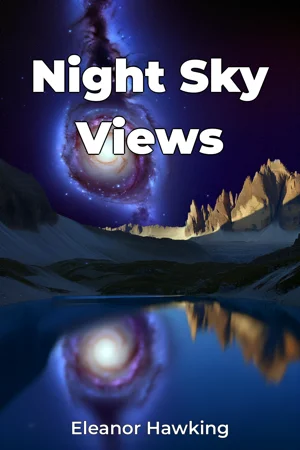
Beneath the darkened skies of Earth's most remote locations lies a connection to the cosmos that has captivated humans for millennia. "Night Sky Views" presents a comprehensive exploration of celestial observation opportunities across the globe, combining scientific precision with practical travel guidance. The book examines the intricate relationship between geographical locations and optimal stargazing conditions, detailing how factors such as altitude, atmospheric clarity, and light pollution influence celestial visibility. Through detailed analysis of over 50 premier observation sites across six continents, readers gain understanding of both the physics behind astronomical phenomena and the practical aspects of witnessing them. Structured in three main sections, the book first establishes the fundamental principles of astronomical observation, including the mechanics of planetary motion, stellar evolution, and atmospheric optics. The second section provides detailed profiles of specific destinations, from the high-altitude observatories in Chile's Atacama Desert to the dark sky preserves of New Zealand. The final section outlines a calendar of celestial events and optimal viewing locations, enabling readers to plan their travels around specific astronomical phenomena. The research draws from collaborative data collected by international observatories, atmospheric scientists, and travel experts. It incorporates recent findings from dark sky quality measurements, weather pattern analyses, and astronomical timing calculations to provide readers with current, actionable information for planning their astronomical adventures. The book bridges multiple disciplines, connecting physics and astronomy with meteorology, geography, and environmental science. This interdisciplinary approach helps readers understand how various natural factors combine to create ideal viewing conditions. The text maintains an academic foundation while remaining accessible to educated general readers, using clear explanations and relevant examples to illuminate complex concepts. Practical applications include detailed guidance for photography techniques under different atmospheric conditions, equipment recommendations for various locations, and strategies for adapting to different climate zones while stargazing. The book addresses common challenges travelers face when planning astronomical observations, from dealing with varying weather patterns to managing equipment in remote locations. Special attention is given to the impact of climate change and increasing light pollution on celestial visibility, examining how these factors affect traditional stargazing locations and highlighting the importance of dark sky preservation efforts worldwide. The book includes current research on light pollution mitigation techniques and their implementation in various regions. Written for both amateur astronomers and travel enthusiasts, "Night Sky Views" serves as a practical guide for those seeking to combine their interest in astronomy with global exploration. The content is particularly valuable for photographers, science educators, and tourism professionals who want to understand both the scientific principles and logistical considerations of astronomical tourism. The scope encompasses both well-known phenomena like solar eclipses and meteor showers, and less familiar events such as planetary conjunctions and zodiacal light observations. While focusing primarily on naked-eye and amateur telescope observation opportunities, the book acknowledges its limitations by directing readers to additional resources for more specialized astronomical pursuits. Throughout the text, scientific accuracy is maintained while emphasizing the practical aspects of astronomical observation in various travel contexts. The book provides specific coordinates, timing information, and local considerations for each featured location, ensuring readers can effectively plan their astronomical adventures with confidence.
Beneath the darkened skies of Earth's most remote locations lies a connection to the cosmos that has captivated humans for millennia. "Night Sky Views" presents a comprehensive exploration of celestial observation opportunities across the globe, combining scientific precision with practical travel guidance. The book examines the intricate relationship between geographical locations and optimal stargazing conditions, detailing how factors such as altitude, atmospheric clarity, and light pollution influence celestial visibility. Through detailed analysis of over 50 premier observation sites across six continents, readers gain understanding of both the physics behind astronomical phenomena and the practical aspects of witnessing them. Structured in three main sections, the book first establishes the fundamental principles of astronomical observation, including the mechanics of planetary motion, stellar evolution, and atmospheric optics. The second section provides detailed profiles of specific destinations, from the high-altitude observatories in Chile's Atacama Desert to the dark sky preserves of New Zealand. The final section outlines a calendar of celestial events and optimal viewing locations, enabling readers to plan their travels around specific astronomical phenomena. The research draws from collaborative data collected by international observatories, atmospheric scientists, and travel experts. It incorporates recent findings from dark sky quality measurements, weather pattern analyses, and astronomical timing calculations to provide readers with current, actionable information for planning their astronomical adventures. The book bridges multiple disciplines, connecting physics and astronomy with meteorology, geography, and environmental science. This interdisciplinary approach helps readers understand how various natural factors combine to create ideal viewing conditions. The text maintains an academic foundation while remaining accessible to educated general readers, using clear explanations and relevant examples to illuminate complex concepts. Practical applications include detailed guidance for photography techniques under different atmospheric conditions, equipment recommendations for various locations, and strategies for adapting to different climate zones while stargazing. The book addresses common challenges travelers face when planning astronomical observations, from dealing with varying weather patterns to managing equipment in remote locations. Special attention is given to the impact of climate change and increasing light pollution on celestial visibility, examining how these factors affect traditional stargazing locations and highlighting the importance of dark sky preservation efforts worldwide. The book includes current research on light pollution mitigation techniques and their implementation in various regions. Written for both amateur astronomers and travel enthusiasts, "Night Sky Views" serves as a practical guide for those seeking to combine their interest in astronomy with global exploration. The content is particularly valuable for photographers, science educators, and tourism professionals who want to understand both the scientific principles and logistical considerations of astronomical tourism. The scope encompasses both well-known phenomena like solar eclipses and meteor showers, and less familiar events such as planetary conjunctions and zodiacal light observations. While focusing primarily on naked-eye and amateur telescope observation opportunities, the book acknowledges its limitations by directing readers to additional resources for more specialized astronomical pursuits. Throughout the text, scientific accuracy is maintained while emphasizing the practical aspects of astronomical observation in various travel contexts. The book provides specific coordinates, timing information, and local considerations for each featured location, ensuring readers can effectively plan their astronomical adventures with confidence.
"Night Sky Views" masterfully combines astronomy, physics, and travel guidance to create an authoritative resource for anyone seeking to experience Earth's most spectacular celestial vistas. This comprehensive guide explores the intricate relationship between geographical locations and optimal stargazing conditions, examining how factors like altitude, atmospheric clarity, and light pollution impact our ability to observe the cosmos. The book progresses logically through three main sections, beginning with fundamental astronomical principles and atmospheric physics, then diving into detailed profiles of over 50 premier observation sites across six continents, and concluding with a practical calendar of celestial events. From Chile's Atacama Desert to New Zealand's dark sky preserves, readers discover scientifically-vetted locations for witnessing everything from meteor showers to zodiacal light phenomena. What sets this book apart is its interdisciplinary approach, combining data from international observatories, atmospheric scientists, and travel experts to provide actionable guidance for astronomical tourism. The text addresses practical challenges like equipment management in remote locations and photography techniques under varying atmospheric conditions, while maintaining scientific accuracy. Special attention is given to contemporary issues like climate change and light pollution, making this guide particularly relevant for modern stargazers seeking to plan meaningful astronomical adventures.
Book Details
ISBN
9788233957155
Publisher
Publifye AS
Your Licenses
You don't own any licenses for this book
Purchase a license below to unlock this book and download the EPUB.
Purchase License
Select a tier to unlock this book
Need bulk licensing?
Contact us for enterprise agreements.