
About This Book
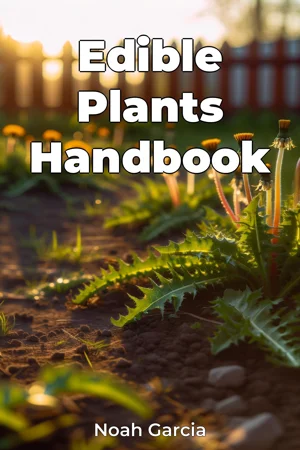
Have you ever wondered how many plants in your backyard or local park could transform your meals and health? *Edible Plants Handbook* bridges the gap between the natural world and the kitchen, offering a science-backed guide to identifying, harvesting, and utilizing wild and cultivated edible flora. Blending principles from botany, nutrition, and culinary arts, this book serves as both a field manual and a cookbook, designed to empower readers with the knowledge to safely integrate nature’s bounty into their diets. **Main Topics and Context** The book centers on three pillars: plant identification, nutritional analysis, and culinary application. With over 30,000 known edible plant species globally—many overlooked in modern diets—understanding how to distinguish safe, nutrient-rich varieties is critical. Historically, foraging sustained human populations, but industrialization shifted reliance to a narrow selection of crops. Recent interest in sustainable living and nutrient-dense foods has revived foraging, yet misinformation and safety concerns persist. The text grounds its lessons in botanical research, including morphological markers (leaf patterns, root structures) and chemical profiles to avoid toxic look-alikes. **Central Thesis** *Edible Plants Handbook* argues that reconnecting with edible flora enhances dietary diversity, reduces environmental impact, and fosters self-sufficiency. By prioritizing common, regionally adaptable species, the book demystifies foraging, positioning it as an accessible practice rather than a niche skill. This approach addresses contemporary issues like food insecurity and the ecological costs of industrial agriculture. **Structure and Evidence** The book opens with a primer on plant biology, clarifying terms like “umbels” and “lobed leaves,” followed by a global survey of 50 key edible plants—from dandelions to elderberries—each accompanied by range maps, seasonal guides, and toxicity warnings. Subsequent chapters analyze their vitamins, minerals, and phytonutrients, citing clinical studies on benefits such as anti-inflammatory properties or glycemic control. The final section transitions to recipes, emphasizing preservation techniques (fermentation, drying) and flavor pairings, such as incorporating wild garlic into pesto or amaranth greens into stir-fries. Research draws from ethnobotanical archives, peer-reviewed nutritional journals, and field tests conducted by the authors across temperate and subtropical regions. Case studies feature collaborations with Indigenous communities, whose traditional knowledge underscores sustainable harvesting practices. **Interdisciplinary Connections** The book intersects with ecology by detailing plants’ roles in local ecosystems—for example, how clover species fix soil nitrogen—and encourages readers to forage in ways that support biodiversity. Nutritional science threads connect wild plants’ higher micronutrient densities compared to farmed produce, while culinary segments adapt professional techniques for home kitchens, such as infusing oils with foraged herbs. **Unique Approach** Unlike guides that focus solely on identification or recipes, this handbook integrates ecology, safety, and gastronomy. It introduces a “Forager’s Calendar,” a tool correlating plant life cycles with harvest times, and a risk-assessment flowchart to avoid toxic species. Emphasizing ethical harvesting, it advocates the “1-in-20” rule: take only 5% of a patch to ensure regrowth. **Tone and Audience** Written in clear, jargon-free prose, the book balances academic rigor with approachable guidance. Photographs with diagnostic arrows and tables comparing nutrient profiles cater to visual learners. Target readers include gardeners, hikers, and home cooks seeking to diversify ingredients, as well as educators and sustainability advocates. **Scope and Applications** Focusing on North America and Europe, the book excludes rare or legally protected species to prevent overharvesting. Practical applications span from creating wild herb gardens to reducing grocery expenses. A dedicated chapter addresses urban foraging, identifying edible weeds thriving in cities, like plantain or purslane. **Addressing Controversies** The book acknowledges debates around foraging’s ecological impact, providing guidelines to differentiate invasive species (e.g., garlic mustard) from native ones. It also cautions against misidentification risks, advising cross-referencing multiple features and using certified apps. By merging science with practicality, *Edible Plants Handbook* redefines how we interact with the plant world, offering tools to nourish both people and ecosystems. ———
Have you ever wondered how many plants in your backyard or local park could transform your meals and health? *Edible Plants Handbook* bridges the gap between the natural world and the kitchen, offering a science-backed guide to identifying, harvesting, and utilizing wild and cultivated edible flora. Blending principles from botany, nutrition, and culinary arts, this book serves as both a field manual and a cookbook, designed to empower readers with the knowledge to safely integrate nature’s bounty into their diets. **Main Topics and Context** The book centers on three pillars: plant identification, nutritional analysis, and culinary application. With over 30,000 known edible plant species globally—many overlooked in modern diets—understanding how to distinguish safe, nutrient-rich varieties is critical. Historically, foraging sustained human populations, but industrialization shifted reliance to a narrow selection of crops. Recent interest in sustainable living and nutrient-dense foods has revived foraging, yet misinformation and safety concerns persist. The text grounds its lessons in botanical research, including morphological markers (leaf patterns, root structures) and chemical profiles to avoid toxic look-alikes. **Central Thesis** *Edible Plants Handbook* argues that reconnecting with edible flora enhances dietary diversity, reduces environmental impact, and fosters self-sufficiency. By prioritizing common, regionally adaptable species, the book demystifies foraging, positioning it as an accessible practice rather than a niche skill. This approach addresses contemporary issues like food insecurity and the ecological costs of industrial agriculture. **Structure and Evidence** The book opens with a primer on plant biology, clarifying terms like “umbels” and “lobed leaves,” followed by a global survey of 50 key edible plants—from dandelions to elderberries—each accompanied by range maps, seasonal guides, and toxicity warnings. Subsequent chapters analyze their vitamins, minerals, and phytonutrients, citing clinical studies on benefits such as anti-inflammatory properties or glycemic control. The final section transitions to recipes, emphasizing preservation techniques (fermentation, drying) and flavor pairings, such as incorporating wild garlic into pesto or amaranth greens into stir-fries. Research draws from ethnobotanical archives, peer-reviewed nutritional journals, and field tests conducted by the authors across temperate and subtropical regions. Case studies feature collaborations with Indigenous communities, whose traditional knowledge underscores sustainable harvesting practices. **Interdisciplinary Connections** The book intersects with ecology by detailing plants’ roles in local ecosystems—for example, how clover species fix soil nitrogen—and encourages readers to forage in ways that support biodiversity. Nutritional science threads connect wild plants’ higher micronutrient densities compared to farmed produce, while culinary segments adapt professional techniques for home kitchens, such as infusing oils with foraged herbs. **Unique Approach** Unlike guides that focus solely on identification or recipes, this handbook integrates ecology, safety, and gastronomy. It introduces a “Forager’s Calendar,” a tool correlating plant life cycles with harvest times, and a risk-assessment flowchart to avoid toxic species. Emphasizing ethical harvesting, it advocates the “1-in-20” rule: take only 5% of a patch to ensure regrowth. **Tone and Audience** Written in clear, jargon-free prose, the book balances academic rigor with approachable guidance. Photographs with diagnostic arrows and tables comparing nutrient profiles cater to visual learners. Target readers include gardeners, hikers, and home cooks seeking to diversify ingredients, as well as educators and sustainability advocates. **Scope and Applications** Focusing on North America and Europe, the book excludes rare or legally protected species to prevent overharvesting. Practical applications span from creating wild herb gardens to reducing grocery expenses. A dedicated chapter addresses urban foraging, identifying edible weeds thriving in cities, like plantain or purslane. **Addressing Controversies** The book acknowledges debates around foraging’s ecological impact, providing guidelines to differentiate invasive species (e.g., garlic mustard) from native ones. It also cautions against misidentification risks, advising cross-referencing multiple features and using certified apps. By merging science with practicality, *Edible Plants Handbook* redefines how we interact with the plant world, offering tools to nourish both people and ecosystems. ———
*Edible Plants Handbook* merges the worlds of nature and cuisine, offering a practical roadmap for safely identifying, harvesting, and cooking with wild flora. Centered on three pillars—plant identification, nutritional science, and culinary creativity—the book addresses modern challenges like food sustainability and nutrient density. With over 30,000 edible plant species worldwide, many overlooked in industrial agriculture, the guide emphasizes common, regionally adaptable plants such as dandelions and elderberries. It pairs botanical precision (like distinguishing leaf patterns or root structures) with historical context, revealing how foraging sustained past generations and could reduce reliance on ecologically costly food systems. Unique in its interdisciplinary approach, the handbook combines ecology, safety protocols, and recipes. A standout feature is the "Forager’s Calendar," which aligns harvest times with plant life cycles, while the "1-in-20 rule" promotes ethical harvesting by limiting takings to 5% of any patch. The book progresses from plant biology basics to global species profiles, nutrient analyses, and inventive recipes like wild garlic pesto. It integrates Indigenous knowledge and urban foraging tips, acknowledging debates around ecological impact and offering tools to avoid toxic species. Balancing academic rigor with accessibility, *Edible Plants Handbook* empowers readers to transform overlooked weeds into nutrient-rich meals. Its fusion of science, tradition, and practicality makes it equally valuable for gardeners, cooks, and sustainability advocates seeking to deepen their connection with nature’s edible bounty.
Book Details
ISBN
9788233956776
Publisher
Publifye AS
Your Licenses
You don't own any licenses for this book
Purchase a license below to unlock this book and download the EPUB.
Purchase License
Select a tier to unlock this book
Need bulk licensing?
Contact us for enterprise agreements.