
About This Book
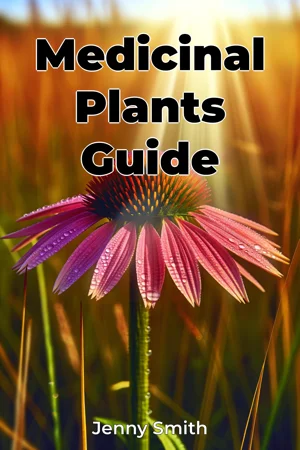
What if the remedies to many modern health challenges have been growing silently in forests, fields, and even backyard gardens for millennia? *Medicinal Plants Guide* bridges the gap between ancient herbal wisdom and contemporary scientific understanding, offering a thorough exploration of plants that have shaped human health for generations. This book serves as both a historical record and a practical manual, emphasizing the enduring relevance of botanical medicine in an era dominated by synthetic solutions. The book begins by examining humanity’s long-standing relationship with medicinal plants, tracing their use across cultures—from Ayurveda in India to Indigenous North American healing practices. It highlights how these traditions relied on empirical observation and oral knowledge, laying the groundwork for modern pharmacology. For instance, the willow bark used by ancient Greeks to reduce inflammation contains salicin, the precursor to aspirin. Such examples underscore a central thesis: plants are not relics of the past but living allies whose biochemical complexity offers solutions still relevant today. Three core themes structure the book. First, it details the historical and cultural contexts of 15 widely used medicinal plants, such as echinacea, turmeric, and elderberry, explaining their roles in traditional wellness systems. Second, it presents current scientific research validating their efficacy, including clinical trials and phytochemical analyses. Third, it provides actionable guidance for safely integrating these plants into daily life, from teas and tinctures to topical applications. Each chapter interweaves ethnobotanical narratives with data, ensuring readers appreciate both the “why” and “how” of plant-based remedies. A key strength of the book lies in its interdisciplinary approach. It connects botany with pharmacology, illustrating how compounds like curcumin or hypericin interact with human physiology. It also addresses ecology, discussing sustainable harvesting practices to prevent overexploitation, and cultural anthropology, exploring how globalization has both eroded and revitalized herbal traditions. By merging these fields, the text argues that preserving plant diversity is inseparable from preserving human health. The book distinguishes itself by balancing reverence for tradition with scientific rigor. While many guides focus solely on folklore or modern chemistry, this work synthesizes both, offering readers a nuanced perspective. For example, a chapter on adaptogens like ginseng and ashwagandha details their use in Siberian longevity practices while explaining their mechanisms in regulating stress hormones. Practical sections include dosage charts, contraindications, and tips for growing plants at home, ensuring accessibility for novices and seasoned herbalists alike. Written in clear, jargon-free prose, the tone is authoritative yet approachable. Complex concepts like bioavailability or synergistic effects are explained through analogies, such as comparing plant compounds to an orchestra whose collective effect surpasses individual contributions. The book avoids romanticizing nature, instead presenting evidence-based conclusions: while some plants, like garlic, have robust immune-boosting data, others, such as certain detoxifying herbs, require more research. Targeted at health-conscious readers, gardeners, and eco-advocates, the book appeals to those seeking alternatives to synthetic pharmaceuticals or wishing to reduce their environmental footprint. It also serves as a resource for wellness practitioners looking to expand their toolkit with evidence-supported botanicals. Acknowledging limitations, the book focuses on well-documented species rather than exhaustive listings, prioritizing safety and reliability. It cautions against self-diagnosis and emphasizes consulting healthcare providers, particularly for those on medications—a critical point given potential interactions, such as St. John’s wort affecting antidepressant efficacy. In its final chapters, the book confronts controversies, including debates over standardization in herbal supplements and the ethical implications of bioprospecting Indigenous knowledge. It advocates for equitable partnerships in researching traditional remedies, ensuring communities benefit from their intellectual heritage. By the conclusion, readers will view medicinal plants not as quaint folklore but as dynamic components of global health. *Medicinal Plants Guide* ultimately argues that reconnecting with nature’s pharmacy requires respect—for the science that explains it, the traditions that honor it, and the ecosystems that sustain it.
What if the remedies to many modern health challenges have been growing silently in forests, fields, and even backyard gardens for millennia? *Medicinal Plants Guide* bridges the gap between ancient herbal wisdom and contemporary scientific understanding, offering a thorough exploration of plants that have shaped human health for generations. This book serves as both a historical record and a practical manual, emphasizing the enduring relevance of botanical medicine in an era dominated by synthetic solutions. The book begins by examining humanity’s long-standing relationship with medicinal plants, tracing their use across cultures—from Ayurveda in India to Indigenous North American healing practices. It highlights how these traditions relied on empirical observation and oral knowledge, laying the groundwork for modern pharmacology. For instance, the willow bark used by ancient Greeks to reduce inflammation contains salicin, the precursor to aspirin. Such examples underscore a central thesis: plants are not relics of the past but living allies whose biochemical complexity offers solutions still relevant today. Three core themes structure the book. First, it details the historical and cultural contexts of 15 widely used medicinal plants, such as echinacea, turmeric, and elderberry, explaining their roles in traditional wellness systems. Second, it presents current scientific research validating their efficacy, including clinical trials and phytochemical analyses. Third, it provides actionable guidance for safely integrating these plants into daily life, from teas and tinctures to topical applications. Each chapter interweaves ethnobotanical narratives with data, ensuring readers appreciate both the “why” and “how” of plant-based remedies. A key strength of the book lies in its interdisciplinary approach. It connects botany with pharmacology, illustrating how compounds like curcumin or hypericin interact with human physiology. It also addresses ecology, discussing sustainable harvesting practices to prevent overexploitation, and cultural anthropology, exploring how globalization has both eroded and revitalized herbal traditions. By merging these fields, the text argues that preserving plant diversity is inseparable from preserving human health. The book distinguishes itself by balancing reverence for tradition with scientific rigor. While many guides focus solely on folklore or modern chemistry, this work synthesizes both, offering readers a nuanced perspective. For example, a chapter on adaptogens like ginseng and ashwagandha details their use in Siberian longevity practices while explaining their mechanisms in regulating stress hormones. Practical sections include dosage charts, contraindications, and tips for growing plants at home, ensuring accessibility for novices and seasoned herbalists alike. Written in clear, jargon-free prose, the tone is authoritative yet approachable. Complex concepts like bioavailability or synergistic effects are explained through analogies, such as comparing plant compounds to an orchestra whose collective effect surpasses individual contributions. The book avoids romanticizing nature, instead presenting evidence-based conclusions: while some plants, like garlic, have robust immune-boosting data, others, such as certain detoxifying herbs, require more research. Targeted at health-conscious readers, gardeners, and eco-advocates, the book appeals to those seeking alternatives to synthetic pharmaceuticals or wishing to reduce their environmental footprint. It also serves as a resource for wellness practitioners looking to expand their toolkit with evidence-supported botanicals. Acknowledging limitations, the book focuses on well-documented species rather than exhaustive listings, prioritizing safety and reliability. It cautions against self-diagnosis and emphasizes consulting healthcare providers, particularly for those on medications—a critical point given potential interactions, such as St. John’s wort affecting antidepressant efficacy. In its final chapters, the book confronts controversies, including debates over standardization in herbal supplements and the ethical implications of bioprospecting Indigenous knowledge. It advocates for equitable partnerships in researching traditional remedies, ensuring communities benefit from their intellectual heritage. By the conclusion, readers will view medicinal plants not as quaint folklore but as dynamic components of global health. *Medicinal Plants Guide* ultimately argues that reconnecting with nature’s pharmacy requires respect—for the science that explains it, the traditions that honor it, and the ecosystems that sustain it.
"Medicinal Plants Guide" reveals how nature’s pharmacy has supported human health for millennia, blending ancient wisdom with modern science. This comprehensive guide explores 15 key plants—like echinacea, turmeric, and elderberry—that have shaped traditional healing systems worldwide, from Ayurveda to Indigenous practices. The book uncovers fascinating links between historical uses and contemporary research: willow bark, once chewed for pain relief, contains salicin, the chemical ancestor of aspirin, while adaptogens like ginseng balance stress hormones through mechanisms now validated by clinical studies. By weaving ethnobotanical stories with phytochemical analysis, the book positions plants as dynamic allies, not outdated remedies, in addressing modern health challenges. Written for both curious beginners and seasoned herbalists, the guide balances reverence for tradition with scientific rigor. Chapters progress from cultural histories to practical advice, offering dosage charts, recipes for teas and tinctures, and tips for sustainable harvesting. Unique interdisciplinary insights connect ecology and ethics—like how overharvesting threatens species—while analogies simplify complex concepts, comparing plant compounds to an orchestra whose synergy enhances healing. The book also prioritizes safety, cautioning against self-diagnosis and highlighting interactions, such as St. John’s wort’s effects on medications. By championing equitable partnerships to protect Indigenous knowledge and ecosystems, "Medicinal Plants Guide" redefines natural health as a fusion of respect for tradition, science, and environmental stewardship.
Book Details
ISBN
9788233956769
Publisher
Publifye AS
Your Licenses
You don't own any licenses for this book
Purchase a license below to unlock this book and download the EPUB.
Purchase License
Select a tier to unlock this book
Need bulk licensing?
Contact us for enterprise agreements.