
About This Book
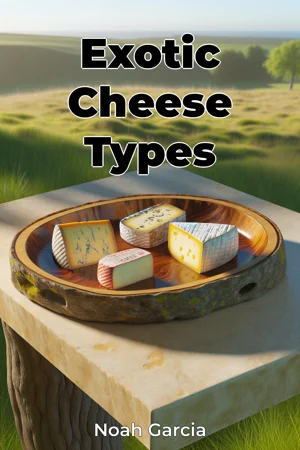
What if the key to understanding a culture lies not in its language or landmarks, but in its cheese? *Exotic Cheese Types* invites readers on a global journey to explore rare, culturally significant cheeses, revealing how centuries-old traditions, microbial science, and regional ecosystems converge to create edible art. This book bridges gastronomy and anthropology, offering a meticulous examination of cheeses that defy mass production, emphasizing their role in preserving biodiversity and human heritage. The book anchors its exploration in three core themes: the symbiotic relationship between geography and cheese production, the scientific innovations sustaining traditional methods, and the socioeconomic challenges facing artisanal cheesemakers. These topics are framed through case studies spanning six continents, from the camel-milk-aged *Caravane* of Mauritania to Japan’s fermented *Sakura* cheese, wrapped in cherry leaves. By contextualizing cheese as a product of place, the work underscores how climate, soil, and local customs shape flavors—a concept termed *terroir* in winemaking, here applied to dairy. Historical context begins with the origins of cheese-making 7,500 years ago, tracing how nomadic societies transformed surplus milk into preservable curds. The book contrasts this with modern industrial practices, highlighting how mechanization risks erasing regional diversity. Readers require no prior expertise, though an interest in food history or microbiology enriches engagement. The central thesis argues that rare cheeses are irreplaceable cultural artifacts, offering insights into sustainability and community resilience. Their preservation, the text contends, is as much about safeguarding ecosystems as it is about celebrating taste. Structurally, the book opens with a primer on cheese chemistry—exploring enzymes, aging processes, and microbial ecosystems. Subsequent chapters delve into specific regions: Europe’s alpine traditions (e.g., Switzerland’s *Hobelkäse*), North Africa’s nomadic methods, and Southeast Asia’s use of tropical molds. A pivotal chapter analyzes dairy research from institutions like the Norwegian Food Research Institute, detailing how genetic studies of indigenous livestock inform cheese quality. The final sections address practical applications: pairing exotic cheeses with ingredients, incorporating them into recipes, and advocating for ethical sourcing. Evidence draws from peer-reviewed dairy studies, interviews with cheesemakers, and the author’s fieldwork in remote dairies. Unique data includes spectral analysis of pasture grasses’ impact on milk composition and oral histories from aging artisans in Georgia’s Caucasus Mountains. Interdisciplinary links connect cheesemaking to climate science (e.g., how Alpine warming affects grazing patterns) and anthropology (rituals surrounding Mongolian *aaruul* cheese). Such connections position cheese as a lens for examining globalization’s ecological and cultural trade-offs. The book distinguishes itself by merging narrative-driven storytelling with scientific rigor. Each chapter profiles a cheesemaker, humanizing the data—readers meet Maria in Sardinia, battling EU hygiene regulations to preserve *Casu Marzu*, and Kenyan herders fermenting *Mursik* with ash from acacia trees. This approach balances technical detail with emotional resonance. Written in an accessible, journalistic tone, the text avoids jargon without sacrificing depth. Target audiences include culinary professionals seeking novel ingredients, travelers interested in foodways, and sustainability advocates. Genre conventions of food writing are honored through vivid sensory descriptions (e.g., the “pungent, mossy aroma” of French *Époisses*), while cooking elements appear in recipe sidebars, such as using Icelandic *Skyr* in baked goods. The scope prioritizes breadth over encyclopedic depth, focusing on 20 cheeses as exemplars of broader themes. Limitations include the exclusion of heavily commercialized varieties and a focus on rural over urban production. Practical applications encourage readers to seek out imports, experiment with fermentation, or support cooperatives reviving endangered techniques. Controversies are addressed candidly: debates over raw-milk safety, ethical concerns in animal husbandry, and the cultural appropriation of traditional knowledge by multinational corporations. By the conclusion, *Exotic Cheese Types* positions itself as both a guide and a manifesto. It urges readers to view cheese not as a commodity, but as a testament to humanity’s ingenuity—and a fragile resource worth protecting.
What if the key to understanding a culture lies not in its language or landmarks, but in its cheese? *Exotic Cheese Types* invites readers on a global journey to explore rare, culturally significant cheeses, revealing how centuries-old traditions, microbial science, and regional ecosystems converge to create edible art. This book bridges gastronomy and anthropology, offering a meticulous examination of cheeses that defy mass production, emphasizing their role in preserving biodiversity and human heritage. The book anchors its exploration in three core themes: the symbiotic relationship between geography and cheese production, the scientific innovations sustaining traditional methods, and the socioeconomic challenges facing artisanal cheesemakers. These topics are framed through case studies spanning six continents, from the camel-milk-aged *Caravane* of Mauritania to Japan’s fermented *Sakura* cheese, wrapped in cherry leaves. By contextualizing cheese as a product of place, the work underscores how climate, soil, and local customs shape flavors—a concept termed *terroir* in winemaking, here applied to dairy. Historical context begins with the origins of cheese-making 7,500 years ago, tracing how nomadic societies transformed surplus milk into preservable curds. The book contrasts this with modern industrial practices, highlighting how mechanization risks erasing regional diversity. Readers require no prior expertise, though an interest in food history or microbiology enriches engagement. The central thesis argues that rare cheeses are irreplaceable cultural artifacts, offering insights into sustainability and community resilience. Their preservation, the text contends, is as much about safeguarding ecosystems as it is about celebrating taste. Structurally, the book opens with a primer on cheese chemistry—exploring enzymes, aging processes, and microbial ecosystems. Subsequent chapters delve into specific regions: Europe’s alpine traditions (e.g., Switzerland’s *Hobelkäse*), North Africa’s nomadic methods, and Southeast Asia’s use of tropical molds. A pivotal chapter analyzes dairy research from institutions like the Norwegian Food Research Institute, detailing how genetic studies of indigenous livestock inform cheese quality. The final sections address practical applications: pairing exotic cheeses with ingredients, incorporating them into recipes, and advocating for ethical sourcing. Evidence draws from peer-reviewed dairy studies, interviews with cheesemakers, and the author’s fieldwork in remote dairies. Unique data includes spectral analysis of pasture grasses’ impact on milk composition and oral histories from aging artisans in Georgia’s Caucasus Mountains. Interdisciplinary links connect cheesemaking to climate science (e.g., how Alpine warming affects grazing patterns) and anthropology (rituals surrounding Mongolian *aaruul* cheese). Such connections position cheese as a lens for examining globalization’s ecological and cultural trade-offs. The book distinguishes itself by merging narrative-driven storytelling with scientific rigor. Each chapter profiles a cheesemaker, humanizing the data—readers meet Maria in Sardinia, battling EU hygiene regulations to preserve *Casu Marzu*, and Kenyan herders fermenting *Mursik* with ash from acacia trees. This approach balances technical detail with emotional resonance. Written in an accessible, journalistic tone, the text avoids jargon without sacrificing depth. Target audiences include culinary professionals seeking novel ingredients, travelers interested in foodways, and sustainability advocates. Genre conventions of food writing are honored through vivid sensory descriptions (e.g., the “pungent, mossy aroma” of French *Époisses*), while cooking elements appear in recipe sidebars, such as using Icelandic *Skyr* in baked goods. The scope prioritizes breadth over encyclopedic depth, focusing on 20 cheeses as exemplars of broader themes. Limitations include the exclusion of heavily commercialized varieties and a focus on rural over urban production. Practical applications encourage readers to seek out imports, experiment with fermentation, or support cooperatives reviving endangered techniques. Controversies are addressed candidly: debates over raw-milk safety, ethical concerns in animal husbandry, and the cultural appropriation of traditional knowledge by multinational corporations. By the conclusion, *Exotic Cheese Types* positions itself as both a guide and a manifesto. It urges readers to view cheese not as a commodity, but as a testament to humanity’s ingenuity—and a fragile resource worth protecting.
*Exotic Cheese Types* unravels how rare cheeses serve as edible archives of human history, blending food anthropology with practical gastronomy. The book positions cheese as a cultural compass, revealing how geography, microbiology, and tradition intersect to create unique dairy artifacts. Through vivid case studies—like Mauritania’s camel-milk *Caravane* and Japan’s cherry leaf-wrapped *Sakura*—it introduces the concept of “cheese terroir,” showing how soil, climate, and local customs shape flavors as distinctly as in winemaking. Readers discover cheeses preserved through nomadic ingenuity, such as 7,500-year-old fermentation techniques that transformed surplus milk into durable nutrition, contrasting sharply with modern industrial methods threatening these traditions. Structured as a global odyssey, the book opens with cheese chemistry basics before journeying through six continents. It profiles artisans like Sardinia’s Maria, defending maggot-infested *Casu Marzu* against EU regulations, and Kenyan herders crafting ash-fermented *Mursik*. Scientific insights—such as spectral analyses linking pasture grasses to milk composition—merge with human stories, balancing rigor and emotional resonance. Later chapters offer recipes and pairings, encouraging readers to use Icelandic *Skyr* in baking or ethically source rare varieties. What sets this work apart is its dual lens: it’s both a manifesto for preserving biodiversity and a tactile guide to sustainable eating. By framing cheeses as endangered cultural legacies, the book challenges readers to taste not just flavors, but the resilience of ecosystems and communities. Its accessible tone demystifies complex science while celebrating artisanship, making global foodways tangible for cooks, travelers, and eco-conscious readers alike.
Book Details
ISBN
9788233956721
Publisher
Publifye AS
Your Licenses
You don't own any licenses for this book
Purchase a license below to unlock this book and download the EPUB.
Purchase License
Select a tier to unlock this book
Need bulk licensing?
Contact us for enterprise agreements.