
About This Book
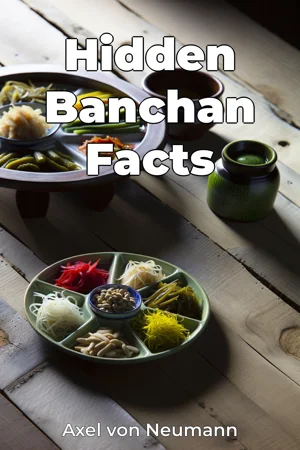
What if the smallest dishes on a Korean table hold the deepest secrets of the nation’s culinary past? *Hidden Banchan Facts* delves into the often-overlooked world of Korean side dishes, or *banchan*, unearthing their historical roots, regional variations, and cultural significance. Drawing from centuries-old cooking manuscripts, royal court records, and oral traditions, this book reveals how these humble accompaniments—far more than mere garnishes—reflect Korea’s agricultural practices, social hierarchies, and philosophical values. The book begins by situating banchan within Korea’s culinary ecosystem. Unlike the dominant focus on main dishes like kimchi or bibimbap, it shifts attention to side dishes such as *jangajji* (pickled vegetables), *sukjunamul* (mung bean sprout salad), and *gujeolpan* (a nine-sectioned platter of delicacies). These dishes, though modest in portion, served as markers of seasonal rhythms, regional identity, and even political symbolism during the Joseon Dynasty. By examining their evolution, the text argues that banchan offers a unique lens through which to understand Korea’s gastronomic and social history. Historical context forms the backbone of the narrative. The book references texts like the 17th-century *Jeungbo Sallim Gyeongje*, a farming manual detailing preservation techniques, and royal kitchen logs from the Joseon era, which reveal how banchan ingredients denoted status—for instance, pine nuts in royal dishes versus wild herbs in peasant fare. It also explores how Buddhist temple cuisine and Confucian rituals influenced preparation methods, emphasizing balance and harmony. Structurally, the book is divided into three core sections. The first traces the origins of banchan, linking their development to Korea’s agrarian society and the need to preserve food through harsh winters. The second analyzes regional distinctions: coastal areas favored seafood-based banchan like *myeolchi-jeot* (fermented anchovies), while mountainous regions relied on foraged greens and roots. The final section examines banchan’s role in contemporary Korean dining, addressing shifts in preparation due to urbanization and globalization. Research draws from interdisciplinary sources, including culinary anthropology, historical climatology, and folklore studies. Unique materials, such as 19th-century household journals and interviews with temple chefs, provide granular insights. For example, a 1798 journal entry from a rural physician describes using *gochujang* (chili paste) to medicate banchan, illustrating early understandings of fermentation’s health benefits. The book’s approach bridges academia and accessibility. While it cites scholarly works like *Korean Food and Foodways* by Hwang Gyo-ik, it also incorporates step-by-step recreations of historical recipes, allowing readers to taste the past. A chapter on *sikhye* (sweet rice drink) contrasts its role as a royal digestive aid with its current status as a commercial beverage, prompting reflection on culinary commodification. Interdisciplinary connections enrich the analysis. Environmental studies clarify how ingredient availability shaped regional banchan, while gender studies highlight women’s roles in perpetuating culinary traditions. The book also engages with global food movements, comparing Korean preservation techniques to Nordic pickling practices or Japanese *tsukemono*. Targeted at food historians, home cooks, and cultural enthusiasts, *Hidden Banchan Facts* balances rigorous research with engaging storytelling. It avoids romanticizing tradition, instead acknowledging debates—such as controversies over “authentic” recipes in modern fusion cuisine—and encourages readers to view banchan as dynamic, evolving creations. Practical appendices include a glossary of historical terms and adapted recipes for contemporary kitchens, such as a simplified version of *gyeongdan* (flower-patterned rice cakes) once served in royal courts. By limiting its scope to lesser-known dishes, the book intentionally sidesteps exhaustive catalogs of banchan, focusing instead on narrative depth. Its tone is authoritative yet inviting, avoiding jargon without sacrificing nuance. Ultimately, it posits that understanding these small dishes is key to appreciating Korea’s culinary philosophy: that every meal, no matter how simple, is an opportunity for artistry and connection.
What if the smallest dishes on a Korean table hold the deepest secrets of the nation’s culinary past? *Hidden Banchan Facts* delves into the often-overlooked world of Korean side dishes, or *banchan*, unearthing their historical roots, regional variations, and cultural significance. Drawing from centuries-old cooking manuscripts, royal court records, and oral traditions, this book reveals how these humble accompaniments—far more than mere garnishes—reflect Korea’s agricultural practices, social hierarchies, and philosophical values. The book begins by situating banchan within Korea’s culinary ecosystem. Unlike the dominant focus on main dishes like kimchi or bibimbap, it shifts attention to side dishes such as *jangajji* (pickled vegetables), *sukjunamul* (mung bean sprout salad), and *gujeolpan* (a nine-sectioned platter of delicacies). These dishes, though modest in portion, served as markers of seasonal rhythms, regional identity, and even political symbolism during the Joseon Dynasty. By examining their evolution, the text argues that banchan offers a unique lens through which to understand Korea’s gastronomic and social history. Historical context forms the backbone of the narrative. The book references texts like the 17th-century *Jeungbo Sallim Gyeongje*, a farming manual detailing preservation techniques, and royal kitchen logs from the Joseon era, which reveal how banchan ingredients denoted status—for instance, pine nuts in royal dishes versus wild herbs in peasant fare. It also explores how Buddhist temple cuisine and Confucian rituals influenced preparation methods, emphasizing balance and harmony. Structurally, the book is divided into three core sections. The first traces the origins of banchan, linking their development to Korea’s agrarian society and the need to preserve food through harsh winters. The second analyzes regional distinctions: coastal areas favored seafood-based banchan like *myeolchi-jeot* (fermented anchovies), while mountainous regions relied on foraged greens and roots. The final section examines banchan’s role in contemporary Korean dining, addressing shifts in preparation due to urbanization and globalization. Research draws from interdisciplinary sources, including culinary anthropology, historical climatology, and folklore studies. Unique materials, such as 19th-century household journals and interviews with temple chefs, provide granular insights. For example, a 1798 journal entry from a rural physician describes using *gochujang* (chili paste) to medicate banchan, illustrating early understandings of fermentation’s health benefits. The book’s approach bridges academia and accessibility. While it cites scholarly works like *Korean Food and Foodways* by Hwang Gyo-ik, it also incorporates step-by-step recreations of historical recipes, allowing readers to taste the past. A chapter on *sikhye* (sweet rice drink) contrasts its role as a royal digestive aid with its current status as a commercial beverage, prompting reflection on culinary commodification. Interdisciplinary connections enrich the analysis. Environmental studies clarify how ingredient availability shaped regional banchan, while gender studies highlight women’s roles in perpetuating culinary traditions. The book also engages with global food movements, comparing Korean preservation techniques to Nordic pickling practices or Japanese *tsukemono*. Targeted at food historians, home cooks, and cultural enthusiasts, *Hidden Banchan Facts* balances rigorous research with engaging storytelling. It avoids romanticizing tradition, instead acknowledging debates—such as controversies over “authentic” recipes in modern fusion cuisine—and encourages readers to view banchan as dynamic, evolving creations. Practical appendices include a glossary of historical terms and adapted recipes for contemporary kitchens, such as a simplified version of *gyeongdan* (flower-patterned rice cakes) once served in royal courts. By limiting its scope to lesser-known dishes, the book intentionally sidesteps exhaustive catalogs of banchan, focusing instead on narrative depth. Its tone is authoritative yet inviting, avoiding jargon without sacrificing nuance. Ultimately, it posits that understanding these small dishes is key to appreciating Korea’s culinary philosophy: that every meal, no matter how simple, is an opportunity for artistry and connection.
*Hidden Banchan Facts* uncovers the rich cultural and historical tapestry woven into Korea’s often-overlooked side dishes, or *banchan*. Moving beyond main dishes like kimchi, the book explores how these small plates—from pickled vegetables to intricate nine-sectioned platters—reveal Korea’s agricultural rhythms, social hierarchies, and philosophical values. By analyzing royal court logs, Buddhist temple practices, and peasant cooking methods, the text shows how ingredients like pine nuts or wild herbs signaled status during the Joseon Dynasty, while preservation techniques like fermentation mirrored survival strategies in harsh climates. Structured into three sections, the book traces banchan’s origins in agrarian life, regional variations (seafood-based dishes on coasts versus mountain-foraged greens), and modern adaptations amid urbanization. It draws on rare sources, such as 19th-century household journals detailing medicinal uses of chili paste, and compares Korean pickling to global traditions like Nordic preserves. Unlike typical cookbooks, it blends scholarly rigor with approachable storytelling, offering historical recipe recreations alongside discussions on culinary commodification—like how *sikhye* transformed from royal digestive aid to mass-produced drink. What sets this work apart is its interdisciplinary lens, weaving culinary anthropology, gender studies, and environmental history into a cohesive narrative. By focusing on banchan’s evolution rather than static traditions, the book invites readers to see these dishes as dynamic expressions of identity. Practical appendices, including adapted royal recipes, bridge past and present, making *Hidden Banchan Facts* both a historical deep dive and an invitation to savor Korea’s culinary philosophy: that even the smallest dishes carry stories worth sharing.
Book Details
ISBN
9788233956714
Publisher
Publifye AS
Your Licenses
You don't own any licenses for this book
Purchase a license below to unlock this book and download the EPUB.
Purchase License
Select a tier to unlock this book
Need bulk licensing?
Contact us for enterprise agreements.