
About This Book
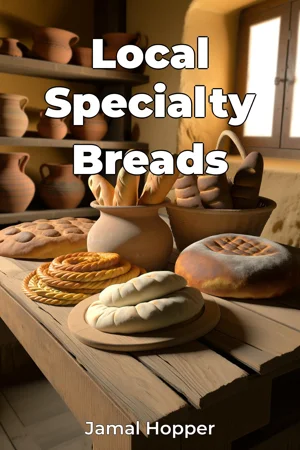
What if a single food could reveal the soul of a culture? *Local Specialty Breads* delves into this question by examining how bread—simple in its core ingredients yet infinitely varied in form—serves as a lens into the traditions, landscapes, and ingenuity of communities worldwide. This book combines meticulous research with hands-on exploration to catalog over 30 regional breads, from the tangy sourdoughs of San Francisco to the airy injera of Ethiopia, while dissecting the techniques and histories that make each unique. The book’s central thesis argues that local breads are not merely sustenance but cultural artifacts shaped by geography, climate, and societal values. By analyzing how communities adapt to environmental constraints—such as the use of volcanic ash in Icelandic *rugbrauð* or the preservation of ancient grain varieties in Indian *naan*—the text underscores bread’s role as a marker of resilience and identity. This perspective bridges culinary practice with anthropology, asserting that preserving these traditions is vital to understanding human innovation. Structured into three sections, the book first introduces foundational baking principles, including the science of fermentation and the impact of regional ingredients like heirloom grains or mineral-rich waters. The second section travels through eight global regions, each chapter pairing a bread with its cultural narrative: for instance, Japan’s *shokupan* reflects post-war industrialization, while Mexico’s *pan de muerto* intertwines with rituals honoring ancestors. The final section addresses modern challenges, such as industrial agriculture’s threat to heritage grains and efforts by artisan bakers to revive endangered recipes. Evidence draws from diverse sources: archaeological records detailing Mesopotamian ovens, oral histories from Moroccan *ferrani* (communal oven tenders), and contemporary case studies of bakeries integrating technology without sacrificing tradition. The book also incorporates soil science data to explain how terroir influences flour composition, alongside economic analyses of how globalization homogenizes or diversifies bread culture. Interdisciplinary connections enrich the narrative. Environmental science clarifies how droughts or soil depletion alter recipes over time, while socioeconomics frames bread as both a daily necessity and a political symbol, as seen in Egypt’s subsidized *aish baladi*. Additionally, the text highlights how migration spreads techniques, such as the Portuguese influence on Brazilian *pão de queijo*. A unique feature is its dual focus on storytelling and practicality. Each regional profile includes a simplified recipe, allowing readers to replicate methods like shaping German *vollkornbrot* or maintaining a Lebanese *saj* oven. The tone balances accessible explanations of technical processes—such as enzymatic reactions in rye dough—with vivid descriptions of bustling bazaars or family-run bakeries. Targeted at both food enthusiasts and academically inclined readers, the book appeals to those curious about gastronomy’s intersection with history and ecology. It avoids romanticizing traditions, instead presenting breadmaking as a dynamic practice shaped by necessity and creativity. For instance, a chapter on Scandinavian crispbread examines how famine spurred preservation techniques, while another on French *pain de campagne* critiques the modern “artisan” label’s commercialization. Limitations are acknowledged: the focus leans toward breads with documented historical roots, omitting newer fusion varieties. However, this narrow scope allows depth, particularly in regions like the Middle East and Central Asia, where bread is central to communal identity. Controversies, such as debates over “authenticity” in replicated recipes, are addressed through interviews with bakers negotiating tradition and innovation. Ultimately, *Local Specialty Breads* positions itself as both a reference and a call to action. It urges readers to appreciate local bakeries as cultural repositories and to consider their choices—such as supporting heritage grain initiatives—as steps toward preserving global culinary diversity. By the final page, the humble loaf emerges not just as food, but as a testament to humanity’s resourcefulness and interconnectedness.
What if a single food could reveal the soul of a culture? *Local Specialty Breads* delves into this question by examining how bread—simple in its core ingredients yet infinitely varied in form—serves as a lens into the traditions, landscapes, and ingenuity of communities worldwide. This book combines meticulous research with hands-on exploration to catalog over 30 regional breads, from the tangy sourdoughs of San Francisco to the airy injera of Ethiopia, while dissecting the techniques and histories that make each unique. The book’s central thesis argues that local breads are not merely sustenance but cultural artifacts shaped by geography, climate, and societal values. By analyzing how communities adapt to environmental constraints—such as the use of volcanic ash in Icelandic *rugbrauð* or the preservation of ancient grain varieties in Indian *naan*—the text underscores bread’s role as a marker of resilience and identity. This perspective bridges culinary practice with anthropology, asserting that preserving these traditions is vital to understanding human innovation. Structured into three sections, the book first introduces foundational baking principles, including the science of fermentation and the impact of regional ingredients like heirloom grains or mineral-rich waters. The second section travels through eight global regions, each chapter pairing a bread with its cultural narrative: for instance, Japan’s *shokupan* reflects post-war industrialization, while Mexico’s *pan de muerto* intertwines with rituals honoring ancestors. The final section addresses modern challenges, such as industrial agriculture’s threat to heritage grains and efforts by artisan bakers to revive endangered recipes. Evidence draws from diverse sources: archaeological records detailing Mesopotamian ovens, oral histories from Moroccan *ferrani* (communal oven tenders), and contemporary case studies of bakeries integrating technology without sacrificing tradition. The book also incorporates soil science data to explain how terroir influences flour composition, alongside economic analyses of how globalization homogenizes or diversifies bread culture. Interdisciplinary connections enrich the narrative. Environmental science clarifies how droughts or soil depletion alter recipes over time, while socioeconomics frames bread as both a daily necessity and a political symbol, as seen in Egypt’s subsidized *aish baladi*. Additionally, the text highlights how migration spreads techniques, such as the Portuguese influence on Brazilian *pão de queijo*. A unique feature is its dual focus on storytelling and practicality. Each regional profile includes a simplified recipe, allowing readers to replicate methods like shaping German *vollkornbrot* or maintaining a Lebanese *saj* oven. The tone balances accessible explanations of technical processes—such as enzymatic reactions in rye dough—with vivid descriptions of bustling bazaars or family-run bakeries. Targeted at both food enthusiasts and academically inclined readers, the book appeals to those curious about gastronomy’s intersection with history and ecology. It avoids romanticizing traditions, instead presenting breadmaking as a dynamic practice shaped by necessity and creativity. For instance, a chapter on Scandinavian crispbread examines how famine spurred preservation techniques, while another on French *pain de campagne* critiques the modern “artisan” label’s commercialization. Limitations are acknowledged: the focus leans toward breads with documented historical roots, omitting newer fusion varieties. However, this narrow scope allows depth, particularly in regions like the Middle East and Central Asia, where bread is central to communal identity. Controversies, such as debates over “authenticity” in replicated recipes, are addressed through interviews with bakers negotiating tradition and innovation. Ultimately, *Local Specialty Breads* positions itself as both a reference and a call to action. It urges readers to appreciate local bakeries as cultural repositories and to consider their choices—such as supporting heritage grain initiatives—as steps toward preserving global culinary diversity. By the final page, the humble loaf emerges not just as food, but as a testament to humanity’s resourcefulness and interconnectedness.
*Local Specialty Breads* explores how regional breads serve as edible archives of human culture, blending culinary practice with anthropology to reveal how simple loaves encapsulate history, ecology, and community values. The book argues that bread is more than sustenance—it’s a cultural artifact shaped by geography, necessity, and tradition. Through vivid examples like Iceland’s ash-baked *rugbrauð* (born from volcanic landscapes) and India’s heritage grain *naan*, the text demonstrates how ingredients and techniques reflect resilience, from ancient famine workarounds to modern artisan revivals. Structured in three parts, the book begins with baking science, explaining fermentation and terroir’s role in flour composition. A global tour follows, pairing breads with their stories: Japan’s pillowy *shokupan* mirrors post-war industrialization, while Mexico’s *pan de muerto* honors ancestral rituals. The final section confronts threats like industrial agriculture, spotlighting bakers preserving endangered recipes. Interdisciplinary insights—from soil data to oral histories—anchor each chapter, while simplified recipes (like shaping German *vollkornbrot*) bridge theory and practice. What sets *Local Specialty Breads* apart is its dual lens: it celebrates bread as both cultural symbol and tactile craft. The tone avoids nostalgia, instead framing traditions as dynamic—seen in critiques of commercialized “artisan” labels or debates over recipe authenticity. By linking personal choices (like supporting heritage grains) to global diversity, the book transforms everyday bread into a call to safeguard humanity’s culinary legacy.
Book Details
ISBN
9788233956707
Publisher
Publifye AS
Your Licenses
You don't own any licenses for this book
Purchase a license below to unlock this book and download the EPUB.
Purchase License
Select a tier to unlock this book
Need bulk licensing?
Contact us for enterprise agreements.