
About This Book
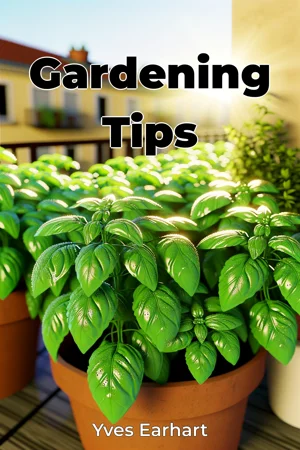
Have you ever considered how a few minutes spent tending to plants each day could reshape your relationship with nature—and yourself? *Gardening Tips* bridges the gap between modern life’s demands and the timeless human need to connect with the earth, offering science-backed, practical strategies for integrating gardening into daily routines. This book positions gardening not as a chore or hobby for the privileged, but as an accessible, therapeutic practice that fosters mental clarity, physical well-being, and environmental stewardship. **Main Topics and Context** The book centers on three pillars: *micro-gardening* (small-scale, daily tasks), the psychological benefits of plant care, and sustainable practices for urban and suburban spaces. These topics are rooted in historical and contemporary contexts, from ancient Mesopotamian terrace gardens to modern studies on horticultural therapy. Gardening’s role in human health is supported by research, such as a 2021 *Journal of Environmental Psychology* study linking daily plant interaction to reduced cortisol levels. The rise of urban gardening—30% of U.S. households now grow food at home—reflects a societal shift toward self-sufficiency and eco-conscious living. **Thesis and Structure** The core argument is simple yet profound: Consistent, small acts of gardening yield disproportionate benefits for individuals and ecosystems. The book is structured to guide readers from theory to action. Early chapters introduce the science of soil health, plant biology, and the neuroscience of gardening’s calming effects. Middle sections delve into practical advice, such as designing balcony gardens, selecting low-maintenance plants, and creating composting systems. The final chapters synthesize these ideas, illustrating how daily gardening rituals contribute to broader goals like biodiversity and food security. **Evidence and Interdisciplinary Insights** Data from agricultural extensions, peer-reviewed psychology journals, and case studies from urban farming initiatives underpin the book’s claims. For example, NASA’s Clean Air Study is cited to explain how houseplants like spider lilies purify indoor air. The narrative also intersects with disciplines like behavioral psychology (habit formation through “five-minute gardening”) and environmental science (water conservation techniques). These connections reinforce gardening’s relevance to climate resilience and personal health. **Unique Perspective** *Gardening Tips* distinguishes itself by prioritizing *adaptability*. Unlike guides focused on large plots or seasonal harvests, it champions “micro-actions”: deadheading flowers while morning coffee brews, propagating herbs in jars, or observing pollinators during lunch breaks. This approach democratizes gardening, making it viable for apartment dwellers, busy parents, or those with physical limitations. A chapter on “guerrilla gardening” even explores revitalizing neglected urban spaces—a concept blending civic engagement with ecology. **Tone and Audience** Written in clear, encouraging prose, the book avoids technical jargon without sacrificing depth. Analogies—comparing root systems to neural networks, for instance—make complex ideas relatable. The target audience spans novice gardeners seeking stress relief, eco-conscious families aiming to reduce food waste, and retirees looking for purposeful routines. Sidebars with quick-reference tips (“Weekend Projects for Winter”) cater to time-strapped readers. **Scope and Applications** While the focus is on daily, manageable tasks, the book acknowledges limitations. It does not delve into commercial agriculture or advanced botany but instead equips readers to troubleshoot common issues (e.g., pest control without chemicals). Real-world applications are emphasized: converting kitchen scraps into fertilizer, creating habitats for endangered bees, or using garden yields to cook simple, nutrient-rich meals. **Engaging Debates** The book addresses tensions within gardening communities, such as the native-vs.-non-native plant debate, presenting balanced arguments. It encourages readers to weigh ecological impact against personal preferences, fostering informed choices rather than prescribing rigid rules. By reframing gardening as a series of mindful, daily interactions, *Gardening Tips* invites readers to cultivate resilience—both in their green spaces and within themselves. It is a manifesto for reimagining our place in nature, one seed, one moment, at a time.
Have you ever considered how a few minutes spent tending to plants each day could reshape your relationship with nature—and yourself? *Gardening Tips* bridges the gap between modern life’s demands and the timeless human need to connect with the earth, offering science-backed, practical strategies for integrating gardening into daily routines. This book positions gardening not as a chore or hobby for the privileged, but as an accessible, therapeutic practice that fosters mental clarity, physical well-being, and environmental stewardship. **Main Topics and Context** The book centers on three pillars: *micro-gardening* (small-scale, daily tasks), the psychological benefits of plant care, and sustainable practices for urban and suburban spaces. These topics are rooted in historical and contemporary contexts, from ancient Mesopotamian terrace gardens to modern studies on horticultural therapy. Gardening’s role in human health is supported by research, such as a 2021 *Journal of Environmental Psychology* study linking daily plant interaction to reduced cortisol levels. The rise of urban gardening—30% of U.S. households now grow food at home—reflects a societal shift toward self-sufficiency and eco-conscious living. **Thesis and Structure** The core argument is simple yet profound: Consistent, small acts of gardening yield disproportionate benefits for individuals and ecosystems. The book is structured to guide readers from theory to action. Early chapters introduce the science of soil health, plant biology, and the neuroscience of gardening’s calming effects. Middle sections delve into practical advice, such as designing balcony gardens, selecting low-maintenance plants, and creating composting systems. The final chapters synthesize these ideas, illustrating how daily gardening rituals contribute to broader goals like biodiversity and food security. **Evidence and Interdisciplinary Insights** Data from agricultural extensions, peer-reviewed psychology journals, and case studies from urban farming initiatives underpin the book’s claims. For example, NASA’s Clean Air Study is cited to explain how houseplants like spider lilies purify indoor air. The narrative also intersects with disciplines like behavioral psychology (habit formation through “five-minute gardening”) and environmental science (water conservation techniques). These connections reinforce gardening’s relevance to climate resilience and personal health. **Unique Perspective** *Gardening Tips* distinguishes itself by prioritizing *adaptability*. Unlike guides focused on large plots or seasonal harvests, it champions “micro-actions”: deadheading flowers while morning coffee brews, propagating herbs in jars, or observing pollinators during lunch breaks. This approach democratizes gardening, making it viable for apartment dwellers, busy parents, or those with physical limitations. A chapter on “guerrilla gardening” even explores revitalizing neglected urban spaces—a concept blending civic engagement with ecology. **Tone and Audience** Written in clear, encouraging prose, the book avoids technical jargon without sacrificing depth. Analogies—comparing root systems to neural networks, for instance—make complex ideas relatable. The target audience spans novice gardeners seeking stress relief, eco-conscious families aiming to reduce food waste, and retirees looking for purposeful routines. Sidebars with quick-reference tips (“Weekend Projects for Winter”) cater to time-strapped readers. **Scope and Applications** While the focus is on daily, manageable tasks, the book acknowledges limitations. It does not delve into commercial agriculture or advanced botany but instead equips readers to troubleshoot common issues (e.g., pest control without chemicals). Real-world applications are emphasized: converting kitchen scraps into fertilizer, creating habitats for endangered bees, or using garden yields to cook simple, nutrient-rich meals. **Engaging Debates** The book addresses tensions within gardening communities, such as the native-vs.-non-native plant debate, presenting balanced arguments. It encourages readers to weigh ecological impact against personal preferences, fostering informed choices rather than prescribing rigid rules. By reframing gardening as a series of mindful, daily interactions, *Gardening Tips* invites readers to cultivate resilience—both in their green spaces and within themselves. It is a manifesto for reimagining our place in nature, one seed, one moment, at a time.
"Gardening Tips" reimagines gardening as a daily practice of small, mindful interactions with nature, offering profound benefits for mental health and the environment. Centered on micro-gardening—bite-sized tasks like tending herbs on a windowsill or composting kitchen scraps—the book bridges ancient wisdom and modern science. It highlights striking insights: a 2021 study linking daily plant care to reduced stress hormones, and NASA research showing how common houseplants purify indoor air. With 30% of U.S. households now growing food at home, the book frames gardening as a tool for eco-conscious living and food security, accessible to urban dwellers and busy families alike. Structured to guide readers from theory to action, early chapters explore the neuroscience behind gardening’s calming effects and soil health basics. Practical sections detail balcony garden designs, low-maintenance plants, and composting systems, while later chapters connect these routines to broader goals like biodiversity. Unique for its focus on adaptability, the book champions “micro-actions”—like reviving neglected urban spaces or observing pollinators during a lunch break—making gardening viable for all. Clear analogies, such as comparing root networks to neural pathways, simplify complex ideas without jargon. By balancing ecological debates (like native vs. non-native plants) and emphasizing habit formation, "Gardening Tips" becomes both a practical toolkit and a call to cultivate resilience—in green spaces and daily life.
Book Details
ISBN
9788233956691
Publisher
Publifye AS
Your Licenses
You don't own any licenses for this book
Purchase a license below to unlock this book and download the EPUB.
Purchase License
Select a tier to unlock this book
Need bulk licensing?
Contact us for enterprise agreements.