
About This Book
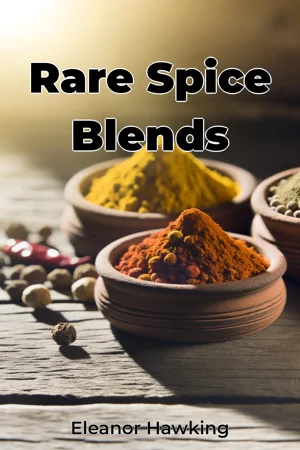
What if the key to unlocking a world of forgotten flavors lies not in a single spice, but in the alchemy of blends crafted by cultures over millennia? *Rare Spice Blends: A Journey Through Flavor and Tradition* delves into the hidden stories of uncommon spice combinations, weaving ethnobotanical research with culinary practice to reveal how these mixtures reflect human ingenuity, ecology, and heritage. This book is a systematic exploration of blends that have shaped—and continue to transform—global cuisines, offering readers both a historical lens and a practical guide to integrating these traditions into modern kitchens. **Main Themes and Significance** The book centers on three interconnected themes: the cultural symbolism of spice blends, their role in historical trade and migration, and their potential to address contemporary culinary homogenization. By examining blends like Ethiopia’s *berbere* (a complex mix of chilies, fenugreek, and korarima) or the smoked pepper-based *ras el hanout* of North Africa, the text argues that these combinations are more than flavor enhancers—they are encoded narratives of geography, ritual, and survival. Understanding their composition and context, the book posits, fosters appreciation for biodiversity and cultural preservation in an era of industrialized food systems. **Context and Background** Spice blends have long served as cornerstones of regional identity. The book traces their origins to ancient trade networks, such as the Silk Road and Indian Ocean routes, where spices like cardamom, clove, and turmeric circulated as currency and status symbols. Colonialism’s impact on spice monopolies and the subsequent erosion of traditional knowledge systems form a critical backdrop, highlighting how globalization both disseminated and diluted these practices. Ethnobotanical studies reveal how indigenous communities historically selected spices for preservation, medicine, and spiritual rites, creating blends tailored to local ecosystems. **Structure and Content** The book opens with a primer on spice chemistry, explaining how volatile oils and compound interactions create distinct flavor profiles. Subsequent chapters analyze case studies: 1. **Historical Blends**: Examining pre-colonial mixtures from Mesoamerica (e.g., *recado rojo*, incorporating annatto and oregano) and their adaptation post-European contact. 2. **Ecological Adaptation**: How blends like Nepal’s *timur ko chop* (with Sichuan pepper and mustard seed) reflect adaptation to high-altitude flora. 3. **Modern Revival**: Profiles of chefs and home cooks reviving endangered blends, such as Georgia’s *kmeli suneli*, through collaborations with botanists. The final section provides guidelines for crafting blends using underutilized spices (e.g., grains of paradise, long pepper), emphasizing sustainable sourcing and cross-cultural experimentation. **Research and Interdisciplinary Insights** Drawing from ethnobotanical fieldwork, colonial trade records, and molecular gastronomy studies, the book bridges culinary arts and environmental science. For instance, chromatographic analysis of Yemeni *zhug* demonstrates how its antioxidant-rich ingredients align with traditional claims of digestive benefits. By integrating oral histories from spice growers and genomic data on heirloom cultivars, the text underscores the fragility of these traditions in the face of climate change and monoculture farming. **Unique Perspective** Unlike conventional spice guides, this book positions blends as dynamic artifacts shaped by human and ecological pressures. It challenges the notion of “authenticity” by documenting how diaspora communities adapt recipes—such as Trinidadian curry blends incorporating Caribbean ginger—while maintaining core cultural meanings. **Tone and Audience** Written in an accessible yet rigorously researched style, the book caters to culinary professionals, food historians, and adventurous home cooks. Technical terms are explained in context, and recipes are framed as starting points for innovation rather than rigid formulas. **Practical Applications and Ethical Considerations** Readers will learn to source spices ethically, decode historical recipes for modern palates, and pair blends with seasonal ingredients. The book also engages debates over cultural appropriation, advocating for credit to origin communities and partnerships with small-scale producers. **Scope and Limitations** Focusing on 15 blends from Africa, Asia, and the Americas, the book acknowledges the impossibility of global comprehensiveness. It emphasizes depth over breadth, using each case study to illustrate broader principles of cultural and ecological interdependence. *Rare Spice Blends* ultimately invites readers to view their spice cabinets as repositories of human resilience and creativity—a testament to how flavor can preserve memory and biodiversity in an ever-changing world.
What if the key to unlocking a world of forgotten flavors lies not in a single spice, but in the alchemy of blends crafted by cultures over millennia? *Rare Spice Blends: A Journey Through Flavor and Tradition* delves into the hidden stories of uncommon spice combinations, weaving ethnobotanical research with culinary practice to reveal how these mixtures reflect human ingenuity, ecology, and heritage. This book is a systematic exploration of blends that have shaped—and continue to transform—global cuisines, offering readers both a historical lens and a practical guide to integrating these traditions into modern kitchens. **Main Themes and Significance** The book centers on three interconnected themes: the cultural symbolism of spice blends, their role in historical trade and migration, and their potential to address contemporary culinary homogenization. By examining blends like Ethiopia’s *berbere* (a complex mix of chilies, fenugreek, and korarima) or the smoked pepper-based *ras el hanout* of North Africa, the text argues that these combinations are more than flavor enhancers—they are encoded narratives of geography, ritual, and survival. Understanding their composition and context, the book posits, fosters appreciation for biodiversity and cultural preservation in an era of industrialized food systems. **Context and Background** Spice blends have long served as cornerstones of regional identity. The book traces their origins to ancient trade networks, such as the Silk Road and Indian Ocean routes, where spices like cardamom, clove, and turmeric circulated as currency and status symbols. Colonialism’s impact on spice monopolies and the subsequent erosion of traditional knowledge systems form a critical backdrop, highlighting how globalization both disseminated and diluted these practices. Ethnobotanical studies reveal how indigenous communities historically selected spices for preservation, medicine, and spiritual rites, creating blends tailored to local ecosystems. **Structure and Content** The book opens with a primer on spice chemistry, explaining how volatile oils and compound interactions create distinct flavor profiles. Subsequent chapters analyze case studies: 1. **Historical Blends**: Examining pre-colonial mixtures from Mesoamerica (e.g., *recado rojo*, incorporating annatto and oregano) and their adaptation post-European contact. 2. **Ecological Adaptation**: How blends like Nepal’s *timur ko chop* (with Sichuan pepper and mustard seed) reflect adaptation to high-altitude flora. 3. **Modern Revival**: Profiles of chefs and home cooks reviving endangered blends, such as Georgia’s *kmeli suneli*, through collaborations with botanists. The final section provides guidelines for crafting blends using underutilized spices (e.g., grains of paradise, long pepper), emphasizing sustainable sourcing and cross-cultural experimentation. **Research and Interdisciplinary Insights** Drawing from ethnobotanical fieldwork, colonial trade records, and molecular gastronomy studies, the book bridges culinary arts and environmental science. For instance, chromatographic analysis of Yemeni *zhug* demonstrates how its antioxidant-rich ingredients align with traditional claims of digestive benefits. By integrating oral histories from spice growers and genomic data on heirloom cultivars, the text underscores the fragility of these traditions in the face of climate change and monoculture farming. **Unique Perspective** Unlike conventional spice guides, this book positions blends as dynamic artifacts shaped by human and ecological pressures. It challenges the notion of “authenticity” by documenting how diaspora communities adapt recipes—such as Trinidadian curry blends incorporating Caribbean ginger—while maintaining core cultural meanings. **Tone and Audience** Written in an accessible yet rigorously researched style, the book caters to culinary professionals, food historians, and adventurous home cooks. Technical terms are explained in context, and recipes are framed as starting points for innovation rather than rigid formulas. **Practical Applications and Ethical Considerations** Readers will learn to source spices ethically, decode historical recipes for modern palates, and pair blends with seasonal ingredients. The book also engages debates over cultural appropriation, advocating for credit to origin communities and partnerships with small-scale producers. **Scope and Limitations** Focusing on 15 blends from Africa, Asia, and the Americas, the book acknowledges the impossibility of global comprehensiveness. It emphasizes depth over breadth, using each case study to illustrate broader principles of cultural and ecological interdependence. *Rare Spice Blends* ultimately invites readers to view their spice cabinets as repositories of human resilience and creativity—a testament to how flavor can preserve memory and biodiversity in an ever-changing world.
"Rare Spice Blends: A Journey Through Flavor and Tradition" uncovers the hidden stories behind uncommon spice combinations, revealing how these mixtures embody cultural heritage, ecological wisdom, and human creativity. At its core, the book explores how blends like Ethiopia’s fiery *berbere* or North Africa’s aromatic *ras el hanout* serve as edible archives—encoding histories of trade routes, colonial upheavals, and regional identity. By bridging ethnobotanical research and culinary practice, it demonstrates how spice blends have shaped global cuisines while resisting modern homogenization, offering readers both a historical compass and a toolkit for kitchen experimentation. The book stands out by treating spice blends as dynamic artifacts, not static recipes. It traces their evolution through vivid case studies: Mesoamerican *recado rojo* adapted post-colonialism, Nepal’s *timur ko chop* tailored to mountain ecosystems, and diaspora-driven innovations like Trinidadian curry blends. Scientific insights add depth—chromatography reveals why Yemeni *zhug*’s antioxidant-rich ingredients aid digestion, aligning with traditional knowledge. Structured to mirror discovery, early chapters dissect spice chemistry and ancient trade networks, while later sections spotlight modern revivals, such as Georgian chefs preserving *kmeli suneli* with botanists. Practical yet principled, the guide empowers cooks to ethically source ingredients like long pepper or grains of paradise, adapt historical recipes, and avoid cultural appropriation. By framing blends as living traditions shaped by migration and ecology, *Rare Spice Blends* transforms everyday cooking into an act of cultural preservation—proving that flavor, when rooted in memory and place, can nourish both body and biodiversity.
Book Details
ISBN
9788233956608
Publisher
Publifye AS
Your Licenses
You don't own any licenses for this book
Purchase a license below to unlock this book and download the EPUB.
Purchase License
Select a tier to unlock this book
Need bulk licensing?
Contact us for enterprise agreements.