
About This Book
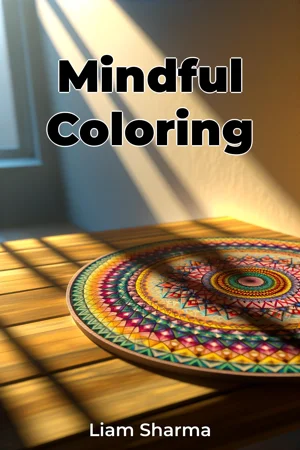
In a world where stress is a constant companion, could the simple act of coloring offer a path to calm? *Mindful Coloring: A Guide to Reducing Anxiety and Igniting Creativity* bridges the gap between artistic expression and mental well-being, presenting a research-backed case for coloring as a tool for modern stress management. This book merges the principles of mindfulness with the tactile pleasure of creative activity, offering readers a practical, accessible method to cultivate inner peace. **Main Topics and Context** The book centers on three core themes: the neuroscience of mindfulness, the therapeutic role of art in emotional regulation, and the integration of creativity into daily self-care routines. These topics are grounded in historical and scientific context, beginning with coloring’s roots in early 20th-century art therapy—such as Carl Jung’s use of mandalas for introspection—and expanding into contemporary neuroscience. Research shows that mindfulness practices reduce activity in the amygdala, the brain’s fear center, while enhancing focus and emotional resilience. Coloring, as a structured yet open-ended activity, naturally aligns with these effects, providing a “gateway” to mindfulness for those who struggle with traditional meditation. **Central Thesis** The book argues that mindful coloring is not merely a leisure activity but a deliberate practice that can rewire stress responses, foster creativity, and improve overall mental health. Unlike passive relaxation techniques, coloring engages multiple cognitive processes—attention, decision-making, and sensory awareness—making it uniquely effective for grounding the mind in the present moment. **Structure and Evidence** The book opens by demystifying mindfulness, linking its ancient origins to modern psychological frameworks. Subsequent chapters delve into the symbiotic relationship between art and mental health, citing clinical studies where coloring reduced anxiety in adults by up to 30% compared to unstructured free drawing. The final sections provide actionable strategies, such as designing personalized coloring routines and selecting patterns that align with emotional goals (e.g., geometric shapes for focus, nature scenes for calm). Evidence includes peer-reviewed psychology research, MRI studies on mindfulness, and testimonials from art therapists. The book also references comparative analyses of coloring’s impact versus other stress-management techniques, such as journaling or breathing exercises. **Interdisciplinary Insights** By connecting art therapy, neuroscience, and cognitive-behavioral principles, the book positions mindful coloring as a multidisciplinary practice. For instance, the rhythmic repetition in coloring mirrors techniques used in EMDR therapy to process trauma, while color choice analysis draws from color psychology’s insights into mood modulation. These intersections reinforce coloring’s versatility as both a creative and therapeutic tool. **Practical Applications and Audience** Tailored for adults navigating stress, creative blocks, or burnout, the book emphasizes real-world usability. Readers learn to adapt coloring for short “mental resets” during workdays, collaborative sessions in group therapy, or as a nightly ritual to unwind. Templates, pattern libraries, and guidance on material selection (e.g., colored pencils vs. markers) ensure accessibility for novices and seasoned artists alike. **Genre and Scope** As a hybrid of self-help and crafts guide, the book balances instructional content (e.g., step-by-step exercises) with reflective prompts to personalize the practice. It intentionally focuses on non-clinical audiences, clarifying that while coloring complements therapy, it is not a substitute for professional mental healthcare. **Addressing Skepticism** The book acknowledges critiques of “adult coloring” as a fleeting trend, countering with longitudinal studies showing sustained benefits when paired with intentional mindfulness. It distinguishes casual coloring from the deliberate practice it advocates—one that requires consistency and self-awareness. **Tone and Approach** Written in clear, jargon-free prose, the book prioritizes approachability without sacrificing scientific rigor. Personal anecdotes from the author’s journey with anxiety add relatability, while citations from experts like Jon Kabat-Zinn and Cathy Malchiodi anchor claims in authority. *Mindful Coloring* ultimately redefines a childhood pastime as a transformative practice, empowering readers to reclaim agency over their mental health through the stroke of a colored pencil. Its blend of empirical evidence and hands-on guidance makes it a timely resource for anyone seeking serenity in an increasingly chaotic world.
In a world where stress is a constant companion, could the simple act of coloring offer a path to calm? *Mindful Coloring: A Guide to Reducing Anxiety and Igniting Creativity* bridges the gap between artistic expression and mental well-being, presenting a research-backed case for coloring as a tool for modern stress management. This book merges the principles of mindfulness with the tactile pleasure of creative activity, offering readers a practical, accessible method to cultivate inner peace. **Main Topics and Context** The book centers on three core themes: the neuroscience of mindfulness, the therapeutic role of art in emotional regulation, and the integration of creativity into daily self-care routines. These topics are grounded in historical and scientific context, beginning with coloring’s roots in early 20th-century art therapy—such as Carl Jung’s use of mandalas for introspection—and expanding into contemporary neuroscience. Research shows that mindfulness practices reduce activity in the amygdala, the brain’s fear center, while enhancing focus and emotional resilience. Coloring, as a structured yet open-ended activity, naturally aligns with these effects, providing a “gateway” to mindfulness for those who struggle with traditional meditation. **Central Thesis** The book argues that mindful coloring is not merely a leisure activity but a deliberate practice that can rewire stress responses, foster creativity, and improve overall mental health. Unlike passive relaxation techniques, coloring engages multiple cognitive processes—attention, decision-making, and sensory awareness—making it uniquely effective for grounding the mind in the present moment. **Structure and Evidence** The book opens by demystifying mindfulness, linking its ancient origins to modern psychological frameworks. Subsequent chapters delve into the symbiotic relationship between art and mental health, citing clinical studies where coloring reduced anxiety in adults by up to 30% compared to unstructured free drawing. The final sections provide actionable strategies, such as designing personalized coloring routines and selecting patterns that align with emotional goals (e.g., geometric shapes for focus, nature scenes for calm). Evidence includes peer-reviewed psychology research, MRI studies on mindfulness, and testimonials from art therapists. The book also references comparative analyses of coloring’s impact versus other stress-management techniques, such as journaling or breathing exercises. **Interdisciplinary Insights** By connecting art therapy, neuroscience, and cognitive-behavioral principles, the book positions mindful coloring as a multidisciplinary practice. For instance, the rhythmic repetition in coloring mirrors techniques used in EMDR therapy to process trauma, while color choice analysis draws from color psychology’s insights into mood modulation. These intersections reinforce coloring’s versatility as both a creative and therapeutic tool. **Practical Applications and Audience** Tailored for adults navigating stress, creative blocks, or burnout, the book emphasizes real-world usability. Readers learn to adapt coloring for short “mental resets” during workdays, collaborative sessions in group therapy, or as a nightly ritual to unwind. Templates, pattern libraries, and guidance on material selection (e.g., colored pencils vs. markers) ensure accessibility for novices and seasoned artists alike. **Genre and Scope** As a hybrid of self-help and crafts guide, the book balances instructional content (e.g., step-by-step exercises) with reflective prompts to personalize the practice. It intentionally focuses on non-clinical audiences, clarifying that while coloring complements therapy, it is not a substitute for professional mental healthcare. **Addressing Skepticism** The book acknowledges critiques of “adult coloring” as a fleeting trend, countering with longitudinal studies showing sustained benefits when paired with intentional mindfulness. It distinguishes casual coloring from the deliberate practice it advocates—one that requires consistency and self-awareness. **Tone and Approach** Written in clear, jargon-free prose, the book prioritizes approachability without sacrificing scientific rigor. Personal anecdotes from the author’s journey with anxiety add relatability, while citations from experts like Jon Kabat-Zinn and Cathy Malchiodi anchor claims in authority. *Mindful Coloring* ultimately redefines a childhood pastime as a transformative practice, empowering readers to reclaim agency over their mental health through the stroke of a colored pencil. Its blend of empirical evidence and hands-on guidance makes it a timely resource for anyone seeking serenity in an increasingly chaotic world.
"Mindful Coloring: A Guide to Reducing Anxiety and Igniting Creativity" reimagines coloring as a science-backed tool for mental wellness, blending art therapy with mindfulness to combat modern stress. At its core, the book explores how structured coloring engages the brain’s focus and decision-making centers, reducing amygdala activity linked to fear while fostering emotional resilience. Rooted in historical practices like Carl Jung’s mandala therapy, it bridges ancient mindfulness principles with contemporary neuroscience, showing how rhythmic coloring can lower anxiety by up to 30% compared to unstructured art—a finding supported by clinical studies. The book stands out by merging cognitive-behavioral strategies with hands-on creativity, offering tailored techniques like choosing geometric patterns for concentration or nature scenes for calm. Chapters progress from explaining mindfulness basics to actionable steps, such as designing personalized coloring routines for workday stress relief or collaborative group sessions. Unlike generic self-help guides, it integrates color psychology, trauma-processing methods from EMDR therapy, and material tips (e.g., pencil vs. marker effects) to suit novices and artists alike. By framing coloring as intentional self-care—not just a trend—the guide empowers readers to transform a simple hobby into a daily ritual for emotional balance, backed by both MRI research and relatable anecdotes.
Book Details
ISBN
9788233956592
Publisher
Publifye AS
Your Licenses
You don't own any licenses for this book
Purchase a license below to unlock this book and download the EPUB.
Purchase License
Select a tier to unlock this book
Need bulk licensing?
Contact us for enterprise agreements.