
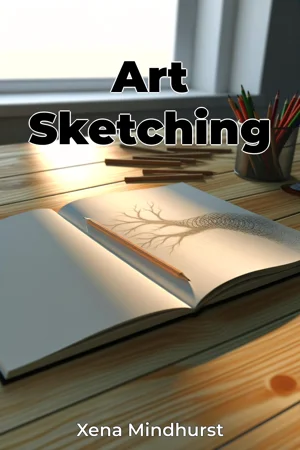
About This Book
Have you ever considered how dedicating just 15 minutes a day to sketching could transform your creativity, mental well-being, and artistic abilities? *Art Sketching: Unlocking Creativity Through Daily Practice* is a fact-based guide that explores the science, history, and practical benefits of integrating sketching into daily life. Rooted in psychological research, art theory, and firsthand testimonials, this book argues that sketching is not merely a hobby for trained artists but a tool for anyone seeking to cultivate mindfulness, innovate creatively, and refine observational skills. The book begins by dismantling the myth that sketching requires innate talent, framing it instead as a learnable skill strengthened through routine. Drawing on historical examples—such as Leonardo da Vinci’s prolific notebooks and the preparatory sketches of modern designers—it establishes sketching as a foundational practice across disciplines. Contemporary studies from fields like neuroscience and behavioral psychology further contextualize its relevance: for instance, research from the University of Westminster links artistic activities to reduced cortisol levels, while a 2019 MIT study correlates daily creative exercises with enhanced problem-solving agility. Central to the book’s thesis is the idea that daily sketching acts as a “cognitive reset,” combining meditative focus with creative experimentation. Three core themes structure this argument: 1. **Creativity as a Habit**: Sketching trains the brain to observe details, recognize patterns, and generate ideas spontaneously. 2. **Stress Reduction Through Flow**: The immersive nature of sketching induces a flow state, akin to mindfulness practices, which mitigates anxiety. 3. **Skill Development via Incremental Progress**: Regular practice sharpens technical abilities, from proportion and shading to dynamic composition. The book’s middle chapters dissect these themes with actionable advice. Readers learn techniques like “gesture drawing” to capture movement quickly, “blind contouring” to enhance hand-eye coordination, and “theme-based journals” to track creative growth. Each method is paired with case studies: urban sketchers who document cities, therapists using sketching in mindfulness programs, and professionals who attribute career breakthroughs to daily visual brainstorming. Interdisciplinary insights enrich the narrative. For example, the book connects sketching to cognitive behavioral therapy (CBT) principles, illustrating how translating emotions into visuals can clarify thought patterns. It also references design thinking methodologies, positioning sketching as a tool for prototyping ideas in business and education. These cross-disciplinary ties reinforce sketching’s versatility beyond traditional art contexts. A standout feature of *Art Sketching* is its balance of theory and practice. While early chapters build a scientific and historical foundation, later sections provide structured 30-day challenges, material guides, and troubleshooting tips for common obstacles (e.g., perfectionism or time constraints). The tone remains conversational, avoiding technical jargon to welcome novices while offering fresh perspectives for seasoned artists. The final chapters address real-world applications, from using sketching to enhance memory retention to fostering intergenerational connections through collaborative art journals. Acknowledging limitations, the book clarifies that it focuses on habit formation rather than advanced technical mastery, directing readers to specialized resources for deeper study. Targeted at self-improvement enthusiasts, educators, and creatively curious readers, *Art Sketching* meets the growing demand for accessible, research-backed strategies to combat digital burnout and nurture hands-on creativity. By demystifying the artistic process and emphasizing incremental progress, it positions daily sketching as a sustainable, enriching ritual—one line at a time.
Have you ever considered how dedicating just 15 minutes a day to sketching could transform your creativity, mental well-being, and artistic abilities? *Art Sketching: Unlocking Creativity Through Daily Practice* is a fact-based guide that explores the science, history, and practical benefits of integrating sketching into daily life. Rooted in psychological research, art theory, and firsthand testimonials, this book argues that sketching is not merely a hobby for trained artists but a tool for anyone seeking to cultivate mindfulness, innovate creatively, and refine observational skills. The book begins by dismantling the myth that sketching requires innate talent, framing it instead as a learnable skill strengthened through routine. Drawing on historical examples—such as Leonardo da Vinci’s prolific notebooks and the preparatory sketches of modern designers—it establishes sketching as a foundational practice across disciplines. Contemporary studies from fields like neuroscience and behavioral psychology further contextualize its relevance: for instance, research from the University of Westminster links artistic activities to reduced cortisol levels, while a 2019 MIT study correlates daily creative exercises with enhanced problem-solving agility. Central to the book’s thesis is the idea that daily sketching acts as a “cognitive reset,” combining meditative focus with creative experimentation. Three core themes structure this argument: 1. **Creativity as a Habit**: Sketching trains the brain to observe details, recognize patterns, and generate ideas spontaneously. 2. **Stress Reduction Through Flow**: The immersive nature of sketching induces a flow state, akin to mindfulness practices, which mitigates anxiety. 3. **Skill Development via Incremental Progress**: Regular practice sharpens technical abilities, from proportion and shading to dynamic composition. The book’s middle chapters dissect these themes with actionable advice. Readers learn techniques like “gesture drawing” to capture movement quickly, “blind contouring” to enhance hand-eye coordination, and “theme-based journals” to track creative growth. Each method is paired with case studies: urban sketchers who document cities, therapists using sketching in mindfulness programs, and professionals who attribute career breakthroughs to daily visual brainstorming. Interdisciplinary insights enrich the narrative. For example, the book connects sketching to cognitive behavioral therapy (CBT) principles, illustrating how translating emotions into visuals can clarify thought patterns. It also references design thinking methodologies, positioning sketching as a tool for prototyping ideas in business and education. These cross-disciplinary ties reinforce sketching’s versatility beyond traditional art contexts. A standout feature of *Art Sketching* is its balance of theory and practice. While early chapters build a scientific and historical foundation, later sections provide structured 30-day challenges, material guides, and troubleshooting tips for common obstacles (e.g., perfectionism or time constraints). The tone remains conversational, avoiding technical jargon to welcome novices while offering fresh perspectives for seasoned artists. The final chapters address real-world applications, from using sketching to enhance memory retention to fostering intergenerational connections through collaborative art journals. Acknowledging limitations, the book clarifies that it focuses on habit formation rather than advanced technical mastery, directing readers to specialized resources for deeper study. Targeted at self-improvement enthusiasts, educators, and creatively curious readers, *Art Sketching* meets the growing demand for accessible, research-backed strategies to combat digital burnout and nurture hands-on creativity. By demystifying the artistic process and emphasizing incremental progress, it positions daily sketching as a sustainable, enriching ritual—one line at a time.
*Art Sketching: Unlocking Creativity Through Daily Practice* redefines sketching as a transformative daily ritual, blending art theory with psychological insights to boost creativity, mental well-being, and observational skills. The book dismantles the myth that artistic talent is innate, arguing instead that consistent practice—even 15 minutes a day—can rewire the brain for innovation and mindfulness. Historical examples, like Leonardo da Vinci’s notebooks, anchor its claims, while modern studies reveal tangible benefits: reduced cortisol levels linked to sketching and enhanced problem-solving agility from creative routines. At its core, the book positions sketching as a “cognitive reset,” merging meditative focus with skill development. The guide balances science and practicality, teaching techniques like gesture drawing (capturing movement swiftly) and blind contouring (sharpening hand-eye coordination) alongside interdisciplinary insights. It connects sketching to cognitive behavioral therapy, showing how visualizing emotions clarifies thought patterns, and aligns with design thinking for prototyping ideas. Structured 30-day challenges and troubleshooting tips for perfectionism or time constraints make the approach accessible. Unlike traditional art manuals, it prioritizes habit formation over technical mastery, offering case studies from urban sketchers to therapists who use sketching for mindfulness. Progressing from foundational theories to real-world applications, the book culminates in strategies to enhance memory, reduce digital burnout, and foster connections through collaborative journals. Its conversational tone welcomes novices while refreshing seasoned artists, proving that daily sketching isn’t about perfection—it’s about progress, one line at a time.
Book Details
ISBN
9788233956578
Publisher
Publifye AS
Your Licenses
You don't own any licenses for this book
Purchase a license below to unlock this book and download the EPUB.
Purchase License
Select a tier to unlock this book
Need bulk licensing?
Contact us for enterprise agreements.