
About This Book
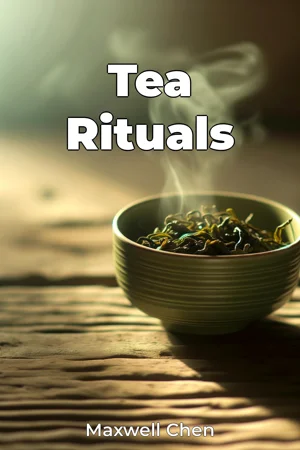
What if a single daily habit could transform your relationship with stress, focus, and connection? *Tea Rituals* posits that the simple act of preparing and savoring tea—a practice embraced globally for millennia—holds untapped potential for modern well-being. Blending self-help strategies with food writing’s sensory richness, this book examines how tea rituals foster mindfulness, strengthen social bonds, and anchor us in life’s fleeting pleasures. Rooted in science, history, and cross-cultural traditions, it offers a roadmap to cultivate intentionality in everyday life. **Main Topics and Context** The book centers on three pillars: the neuroscience of mindfulness, the anthropology of communal tea practices, and the psychology of savoring small joys. These topics are framed within tea’s 5,000-year history, from its medicinal origins in ancient China to its ceremonial role in Japanese chanoyu and British afternoon tea. While no prior tea knowledge is required, readers are guided through foundational concepts, such as how L-theanine in green tea interacts with caffeine to promote calm alertness, and why shared rituals activate brain regions linked to trust and empathy. **Central Thesis** *Tea Rituals* argues that deliberate, daily tea practices—far from mere routine—act as micro-interventions to counteract modern fragmentation. By engaging the senses, slowing time, and creating space for reflection or connection, these rituals repair our fractured attention spans and nurture resilience. This thesis challenges the notion that well-being requires grand gestures, asserting instead that incremental, intentional habits yield profound cumulative effects. **Structure and Evidence** The book opens by deconstructing tea’s cultural and biochemical universality, citing clinical studies on mindfulness and social bonding. Subsequent chapters explore: 1. **Mindful Preparation**: How tactile rituals (measuring leaves, noting water temperature) anchor the present moment, with fMRI studies showing reduced amygdala activity during focused tasks. 2. **Communal Brewing**: Case studies from Morocco’s mint tea traditions to Taiwanese bubble tea hubs illustrate tea’s role in building social capital, supported by sociological data on ritualized group behaviors. 3. **Sensory Appreciation**: The psychology of “micro-joys,” drawing on flavor science and historical texts like Lu Yu’s *The Classic of Tea* (760 CE), which linked taste mindfulness to ethical living. The final section provides actionable steps to design personalized rituals, addressing variables like time constraints, dietary needs, and cultural preferences. **Interdisciplinary Connections** Neuroscience validates tea’s calming effects; anthropology contextualizes its communal role; behavioral psychology frames habit formation. This synthesis bridges empirical research and humanistic traditions, offering a holistic view of ritual’s power. **Unique Perspective** Unlike prescriptive well-being guides, *Tea Rituals* avoids rigid protocols. It instead adapts global traditions into flexible frameworks, acknowledging that a college student’s matcha break and a grandmother’s chai routine can equally embody mindfulness. The book also critiques the commodification of self-care, positioning tea as an accessible, democratic alternative to costly wellness trends. **Tone and Audience** Written in accessible, evocative prose, the book balances storytelling with research citations. It targets overstimulated professionals, parents seeking connection, and anyone skeptical of superficial wellness culture. Food enthusiasts will appreciate tasting notes and brewing techniques; self-help readers gain behavioral tools. **Scope and Applications** While focusing on widely available teas (black, green, herbal), the book acknowledges limitations: it does not delve into rare regional varieties or elaborate ceremonial protocols. Instead, it emphasizes adaptable practices, such as a five-minute morning steep with deliberate breathwork or hosting monthly “tea talks” to deepen relationships. **Addressing Controversies** The book engages debates about cultural appropriation, urging readers to honor traditions without exoticism. It also examines critiques of mindfulness as a passive practice, rebutting that tea rituals’ tactile and social dimensions demand active engagement. By the final page, readers will view their teacup as both a laboratory for self-awareness and a bridge to others—a daily reminder that well-being is steeped in attention, not avoidance.
What if a single daily habit could transform your relationship with stress, focus, and connection? *Tea Rituals* posits that the simple act of preparing and savoring tea—a practice embraced globally for millennia—holds untapped potential for modern well-being. Blending self-help strategies with food writing’s sensory richness, this book examines how tea rituals foster mindfulness, strengthen social bonds, and anchor us in life’s fleeting pleasures. Rooted in science, history, and cross-cultural traditions, it offers a roadmap to cultivate intentionality in everyday life. **Main Topics and Context** The book centers on three pillars: the neuroscience of mindfulness, the anthropology of communal tea practices, and the psychology of savoring small joys. These topics are framed within tea’s 5,000-year history, from its medicinal origins in ancient China to its ceremonial role in Japanese chanoyu and British afternoon tea. While no prior tea knowledge is required, readers are guided through foundational concepts, such as how L-theanine in green tea interacts with caffeine to promote calm alertness, and why shared rituals activate brain regions linked to trust and empathy. **Central Thesis** *Tea Rituals* argues that deliberate, daily tea practices—far from mere routine—act as micro-interventions to counteract modern fragmentation. By engaging the senses, slowing time, and creating space for reflection or connection, these rituals repair our fractured attention spans and nurture resilience. This thesis challenges the notion that well-being requires grand gestures, asserting instead that incremental, intentional habits yield profound cumulative effects. **Structure and Evidence** The book opens by deconstructing tea’s cultural and biochemical universality, citing clinical studies on mindfulness and social bonding. Subsequent chapters explore: 1. **Mindful Preparation**: How tactile rituals (measuring leaves, noting water temperature) anchor the present moment, with fMRI studies showing reduced amygdala activity during focused tasks. 2. **Communal Brewing**: Case studies from Morocco’s mint tea traditions to Taiwanese bubble tea hubs illustrate tea’s role in building social capital, supported by sociological data on ritualized group behaviors. 3. **Sensory Appreciation**: The psychology of “micro-joys,” drawing on flavor science and historical texts like Lu Yu’s *The Classic of Tea* (760 CE), which linked taste mindfulness to ethical living. The final section provides actionable steps to design personalized rituals, addressing variables like time constraints, dietary needs, and cultural preferences. **Interdisciplinary Connections** Neuroscience validates tea’s calming effects; anthropology contextualizes its communal role; behavioral psychology frames habit formation. This synthesis bridges empirical research and humanistic traditions, offering a holistic view of ritual’s power. **Unique Perspective** Unlike prescriptive well-being guides, *Tea Rituals* avoids rigid protocols. It instead adapts global traditions into flexible frameworks, acknowledging that a college student’s matcha break and a grandmother’s chai routine can equally embody mindfulness. The book also critiques the commodification of self-care, positioning tea as an accessible, democratic alternative to costly wellness trends. **Tone and Audience** Written in accessible, evocative prose, the book balances storytelling with research citations. It targets overstimulated professionals, parents seeking connection, and anyone skeptical of superficial wellness culture. Food enthusiasts will appreciate tasting notes and brewing techniques; self-help readers gain behavioral tools. **Scope and Applications** While focusing on widely available teas (black, green, herbal), the book acknowledges limitations: it does not delve into rare regional varieties or elaborate ceremonial protocols. Instead, it emphasizes adaptable practices, such as a five-minute morning steep with deliberate breathwork or hosting monthly “tea talks” to deepen relationships. **Addressing Controversies** The book engages debates about cultural appropriation, urging readers to honor traditions without exoticism. It also examines critiques of mindfulness as a passive practice, rebutting that tea rituals’ tactile and social dimensions demand active engagement. By the final page, readers will view their teacup as both a laboratory for self-awareness and a bridge to others—a daily reminder that well-being is steeped in attention, not avoidance.
*Tea Rituals* explores how the ancient practice of preparing and sharing tea can become a modern toolkit for mindfulness, connection, and joy. Bridging self-help wisdom with rich cultural storytelling, the book reveals how this daily habit—rooted in 5,000 years of global traditions—offers science-backed solutions to contemporary stress. Its central theme argues that small, intentional rituals counteract fragmented living by anchoring us in the present, whether through savoring a single cup alone or bonding over a communal pot. The book stands out by weaving neuroscience, anthropology, and psychology into practical insights. For instance, green tea’s L-theanine combines with caffeine to induce calm alertness—a biochemical boost enhancing focus. Historical examples, from Chinese medicinal brews to British afternoon tea, show how rituals build trust and empathy through shared routines. A unique chapter on “micro-joys” explains how mindful tasting activates sensory appreciation, linking flavor science to Lu Yu’s ancient text connecting tea ethics to daily life. Unlike rigid wellness guides, *Tea Rituals* adapts traditions flexibly: a student’s quick matcha pause or a family’s chai routine both count as meaningful practice. Structured as a journey from theory to action, early chapters unpack tea’s universal appeal through clinical studies and cultural case studies. Later sections offer customizable habits, like five-minute brewing meditations or monthly “tea talks” to deepen relationships. Accessible and inclusive, the book avoids exoticism while addressing cultural appropriation concerns, positioning tea as an democratizing antidote to costly self-care trends. By blending storytelling with actionable steps, it transforms the humble teacup into a portal for resilience—proving well-being grows not from grand gestures, but daily sips of intention.
Book Details
ISBN
9788233956523
Publisher
Publifye AS
Your Licenses
You don't own any licenses for this book
Purchase a license below to unlock this book and download the EPUB.
Purchase License
Select a tier to unlock this book
Need bulk licensing?
Contact us for enterprise agreements.