
About This Book
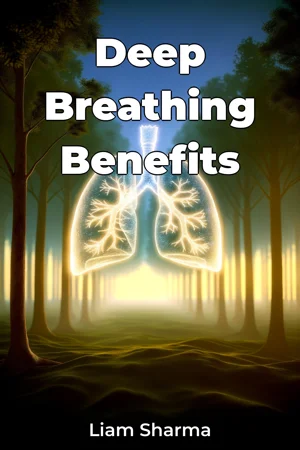
What if the simplest, most accessible tool to combat stress has been hidden in plain sight—inhale by inhale, exhale by exhale? *Deep Breathing Benefits* examines the science and practice of controlled respiration, presenting a compelling case for its role as a cornerstone of stress management and holistic health. Drawing from physiology, psychology, and centuries-old traditions, this book bridges ancient wisdom and modern research to equip readers with actionable strategies for reclaiming calm in a chaotic world. **Main Topics and Significance** The book centers on three pillars: the physiological mechanisms linking breath to stress response, evidence-based breathing techniques, and methods for integrating these practices into daily life. These topics are critical in an era where chronic stress is a pervasive health concern, contributing to conditions like hypertension, anxiety, and burnout. By demystifying how conscious breathing alters nervous system function, the text empowers readers to take direct control of their mental and physical well-being. **Context and Background** Controlled respiration has roots in practices like yoga, meditation, and Tai Chi, but its scientific validation is relatively recent. The book outlines the autonomic nervous system’s role in stress, explaining how deliberate breathing activates the parasympathetic “rest-and-digest” response. It also traces the evolution of breathwork from ancient rituals to clinical applications, such as its use in cognitive behavioral therapy and cardiac rehabilitation. No prior expertise is required—the text introduces concepts like diaphragmatic breathing and heart rate variability in clear, accessible terms. **Central Thesis** The core argument posits that intentional breathing is not merely a relaxation aid but a foundational tool for modulating stress at its source. By consciously altering respiratory patterns, individuals can interrupt the cycle of chronic stress, fostering resilience and enhancing overall health. This perspective challenges the notion that stress management requires complex interventions, emphasizing instead the body’s innate capacity for self-regulation. **Content Overview** The book opens with a primer on the biology of stress and respiration, followed by a deep dive into techniques such as box breathing, 4-7-8 breathing, and alternate-nostril breathing. Later chapters explore the integration of breathwork into routines for sleep, focus, and emotional regulation. Case studies illustrate its application in high-pressure environments, from corporate workplaces to athletic training. The final section provides a 21-day guided program, encouraging gradual habit formation. **Evidence and Research** Findings from neuroscience and physiology form the backbone of the book, including studies on cortisol reduction, improved vagal tone, and enhanced oxygenation. Clinical trials from institutions like the Mayo Clinic and Harvard Medical School are cited, alongside meta-analyses linking breathwork to reduced anxiety symptoms. The text also references biometric data from wearable technology, demonstrating real-time physiological shifts during breathing exercises. **Interdisciplinary Connections** The book intersects with psychology (mind-body connection), neuroscience (brainwave modulation via breath), and holistic medicine (integrative health frameworks). These connections reinforce breathwork’s versatility, showing its relevance to fields as diverse as trauma therapy, athletic performance, and workplace productivity. **Unique Approach** Unlike generic self-help guides, *Deep Breathing Benefits* merges technical precision with practicality. It avoids oversimplification, detailing how specific techniques affect distinct physiological pathways. A standout feature is its “Breath Audit” framework, which helps readers identify stress triggers and select tailored breathing strategies. **Tone and Audience** Written in a clear, conversational style, the book caters to adults seeking science-backed stress management tools. Its blend of research summaries, step-by-step guides, and real-world examples appeals to both skeptics and wellness enthusiasts. **Scope and Applications** While focused on breathing, the text acknowledges it as one component of a broader stress-management toolkit. Practical applications include five-minute desk exercises, pre-sleep routines, and techniques for acute stress episodes. By prioritizing adaptability, the book ensures relevance for readers with varying lifestyles. *Deep Breathing Benefits* does not shy from addressing debates, such as the “ideal” respiration rate or cultural appropriation concerns in Western breathwork trends. It encourages critical thinking, urging readers to personalize practices while respecting their origins. In a world where stress often feels inevitable, this book offers a counterargument: mastery of the breath is mastery of the self. Through methodical exploration and practice, readers learn to harness this universal resource—transforming each breath into an act of renewal.
What if the simplest, most accessible tool to combat stress has been hidden in plain sight—inhale by inhale, exhale by exhale? *Deep Breathing Benefits* examines the science and practice of controlled respiration, presenting a compelling case for its role as a cornerstone of stress management and holistic health. Drawing from physiology, psychology, and centuries-old traditions, this book bridges ancient wisdom and modern research to equip readers with actionable strategies for reclaiming calm in a chaotic world. **Main Topics and Significance** The book centers on three pillars: the physiological mechanisms linking breath to stress response, evidence-based breathing techniques, and methods for integrating these practices into daily life. These topics are critical in an era where chronic stress is a pervasive health concern, contributing to conditions like hypertension, anxiety, and burnout. By demystifying how conscious breathing alters nervous system function, the text empowers readers to take direct control of their mental and physical well-being. **Context and Background** Controlled respiration has roots in practices like yoga, meditation, and Tai Chi, but its scientific validation is relatively recent. The book outlines the autonomic nervous system’s role in stress, explaining how deliberate breathing activates the parasympathetic “rest-and-digest” response. It also traces the evolution of breathwork from ancient rituals to clinical applications, such as its use in cognitive behavioral therapy and cardiac rehabilitation. No prior expertise is required—the text introduces concepts like diaphragmatic breathing and heart rate variability in clear, accessible terms. **Central Thesis** The core argument posits that intentional breathing is not merely a relaxation aid but a foundational tool for modulating stress at its source. By consciously altering respiratory patterns, individuals can interrupt the cycle of chronic stress, fostering resilience and enhancing overall health. This perspective challenges the notion that stress management requires complex interventions, emphasizing instead the body’s innate capacity for self-regulation. **Content Overview** The book opens with a primer on the biology of stress and respiration, followed by a deep dive into techniques such as box breathing, 4-7-8 breathing, and alternate-nostril breathing. Later chapters explore the integration of breathwork into routines for sleep, focus, and emotional regulation. Case studies illustrate its application in high-pressure environments, from corporate workplaces to athletic training. The final section provides a 21-day guided program, encouraging gradual habit formation. **Evidence and Research** Findings from neuroscience and physiology form the backbone of the book, including studies on cortisol reduction, improved vagal tone, and enhanced oxygenation. Clinical trials from institutions like the Mayo Clinic and Harvard Medical School are cited, alongside meta-analyses linking breathwork to reduced anxiety symptoms. The text also references biometric data from wearable technology, demonstrating real-time physiological shifts during breathing exercises. **Interdisciplinary Connections** The book intersects with psychology (mind-body connection), neuroscience (brainwave modulation via breath), and holistic medicine (integrative health frameworks). These connections reinforce breathwork’s versatility, showing its relevance to fields as diverse as trauma therapy, athletic performance, and workplace productivity. **Unique Approach** Unlike generic self-help guides, *Deep Breathing Benefits* merges technical precision with practicality. It avoids oversimplification, detailing how specific techniques affect distinct physiological pathways. A standout feature is its “Breath Audit” framework, which helps readers identify stress triggers and select tailored breathing strategies. **Tone and Audience** Written in a clear, conversational style, the book caters to adults seeking science-backed stress management tools. Its blend of research summaries, step-by-step guides, and real-world examples appeals to both skeptics and wellness enthusiasts. **Scope and Applications** While focused on breathing, the text acknowledges it as one component of a broader stress-management toolkit. Practical applications include five-minute desk exercises, pre-sleep routines, and techniques for acute stress episodes. By prioritizing adaptability, the book ensures relevance for readers with varying lifestyles. *Deep Breathing Benefits* does not shy from addressing debates, such as the “ideal” respiration rate or cultural appropriation concerns in Western breathwork trends. It encourages critical thinking, urging readers to personalize practices while respecting their origins. In a world where stress often feels inevitable, this book offers a counterargument: mastery of the breath is mastery of the self. Through methodical exploration and practice, readers learn to harness this universal resource—transforming each breath into an act of renewal.
"Deep Breathing Benefits" reveals how the simple act of intentional breathing can become a powerful tool to combat stress and enhance overall well-being. Centered on the connection between breath and the body’s stress response, the book bridges ancient practices like yoga with modern science, showing how techniques such as diaphragmatic breathing activate the parasympathetic nervous system—our built-in “calm switch.” By explaining concepts like heart rate variability and cortisol reduction in plain language, it demystifies why methods like 4-7-8 breathing (inhaling for 4 seconds, holding for 7, exhaling for 8) can lower anxiety and improve resilience. What sets this guide apart is its “Breath Audit” framework, helping readers identify stress triggers and choose tailored strategies, from box breathing for focus to alternate-nostril breathing for emotional balance. The book progresses logically, starting with the biology of stress, then detailing step-by-step techniques, and finally offering a 21-day plan to integrate breathwork into daily life. It blends clinical research from institutions like Harvard with relatable examples, such as using five-minute desk exercises to reset during workdays. Unlike generic advice, it emphasizes adaptability, showing how breathwork fits into diverse routines—whether easing insomnia or managing acute stress. By grounding its approach in both physiology and practicality, *Deep Breathing Benefits* transforms an automatic bodily function into a deliberate act of self-regulation, proving that mastering the breath can be a gateway to lasting calm in a chaotic world.
Book Details
ISBN
9788233956158
Publisher
Publifye AS
Your Licenses
You don't own any licenses for this book
Purchase a license below to unlock this book and download the EPUB.
Purchase License
Select a tier to unlock this book
Need bulk licensing?
Contact us for enterprise agreements.