
About This Book
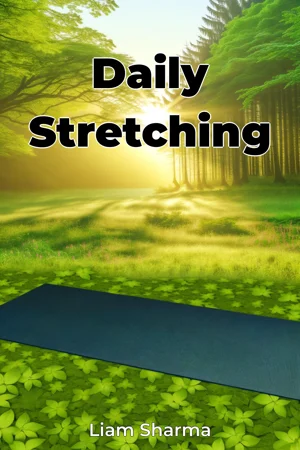
What if dedicating just 10 minutes a day could enhance your physical resilience, sharpen your mental clarity, and protect your body from the wear and tear of modern life? *Daily Stretching: Simple Practices for Lifelong Health* merges scientific research with actionable strategies to demonstrate how incorporating brief, intentional stretching routines can yield profound benefits for both body and mind. This book is grounded in the premise that flexibility and mobility are not exclusive to athletes or yogis—they are attainable, essential components of health for anyone willing to prioritize them. The book opens by dismantling the myth that stretching requires significant time or expertise. Drawing on evolutionary biology, it explains how the human body is inherently designed for movement, yet contemporary sedentary lifestyles have led to widespread stiffness, chronic pain, and reduced functional capacity. By contextualizing stretching within the framework of preventive health, the text establishes its role in mitigating these issues. Three core themes anchor the discussion: the physiological mechanisms behind stretching’s benefits, evidence-based techniques for maximizing efficiency, and the psychological advantages of incorporating mindfulness into movement. Central to the book’s argument is the interplay between connective tissue health and systemic well-being. Chapters dissect the science of fascia, muscles, and joints, citing peer-reviewed studies that link regular stretching to improved circulation, reduced inflammation, and enhanced neuromuscular coordination. For example, research from sports medicine journals illustrates how dynamic stretching before exercise lowers injury risk by preparing tissues for load, while static stretching post-activity accelerates recovery. The text also explores lesser-known benefits, such as stretching’s role in regulating the autonomic nervous system, which can alleviate stress and improve sleep quality. Structurally, *Daily Stretching* progresses from theory to practice. Early chapters introduce foundational concepts, such as the difference between passive and active stretching, and debunk common misconceptions (e.g., the belief that stretching must be painful to be effective). Middle sections provide tailored routines for specific goals: office workers learn desk-friendly stretches to combat posture-related strain, caregivers discover gentle movements to maintain joint mobility, and athletes refine techniques to optimize performance. Each routine is accompanied by anatomical illustrations and time-saving modifications. The final chapters address habit formation, offering strategies to overcome motivational barriers and integrate micro-sessions into existing routines. A unique aspect of the book is its interdisciplinary lens. It bridges sports science, physiotherapy, and behavioral psychology, emphasizing that flexibility is not merely physical—it requires cognitive engagement and emotional awareness. For instance, a chapter on “Mindful Stretching” explores how synchronizing breath with movement can amplify relaxation responses, a concept rooted in mindfulness traditions. Additionally, the book critiques one-size-fits-all fitness culture, advocating instead for personalized approaches that respect individual biomechanics and lifestyle constraints. While the focus remains on practicality, the text does not shy away from addressing controversies. It examines ongoing debates in the fitness community, such as conflicting guidelines on stretching duration and the relative merits of foam rolling versus traditional stretches. By presenting balanced perspectives, the book equips readers to make informed choices. Written in a clear, conversational tone, *Daily Stretching* avoids technical jargon, making it accessible to readers of all fitness levels. Its audience spans busy professionals, aging adults seeking to maintain independence, and fitness enthusiasts aiming to refine their regimens. By combining rigorous research with relatable anecdotes—such as a nurse’s experience using stretching to manage back pain during 12-hour shifts—the book underscores the universality of its message. Limitations are openly acknowledged: the scope excludes advanced flexibility training (e.g., contortion or martial arts) and focuses primarily on low-to-moderate intensity practices. However, this specificity ensures the content remains actionable for the majority of readers. Ultimately, *Daily Stretching* positions itself as a pragmatic guide for reclaiming mobility in an increasingly static world. It argues that small, consistent investments in flexibility can compound into transformative health outcomes—a thesis supported not just by science, but by the lived experiences of those who’ve embraced stretching as a daily ritual.
What if dedicating just 10 minutes a day could enhance your physical resilience, sharpen your mental clarity, and protect your body from the wear and tear of modern life? *Daily Stretching: Simple Practices for Lifelong Health* merges scientific research with actionable strategies to demonstrate how incorporating brief, intentional stretching routines can yield profound benefits for both body and mind. This book is grounded in the premise that flexibility and mobility are not exclusive to athletes or yogis—they are attainable, essential components of health for anyone willing to prioritize them. The book opens by dismantling the myth that stretching requires significant time or expertise. Drawing on evolutionary biology, it explains how the human body is inherently designed for movement, yet contemporary sedentary lifestyles have led to widespread stiffness, chronic pain, and reduced functional capacity. By contextualizing stretching within the framework of preventive health, the text establishes its role in mitigating these issues. Three core themes anchor the discussion: the physiological mechanisms behind stretching’s benefits, evidence-based techniques for maximizing efficiency, and the psychological advantages of incorporating mindfulness into movement. Central to the book’s argument is the interplay between connective tissue health and systemic well-being. Chapters dissect the science of fascia, muscles, and joints, citing peer-reviewed studies that link regular stretching to improved circulation, reduced inflammation, and enhanced neuromuscular coordination. For example, research from sports medicine journals illustrates how dynamic stretching before exercise lowers injury risk by preparing tissues for load, while static stretching post-activity accelerates recovery. The text also explores lesser-known benefits, such as stretching’s role in regulating the autonomic nervous system, which can alleviate stress and improve sleep quality. Structurally, *Daily Stretching* progresses from theory to practice. Early chapters introduce foundational concepts, such as the difference between passive and active stretching, and debunk common misconceptions (e.g., the belief that stretching must be painful to be effective). Middle sections provide tailored routines for specific goals: office workers learn desk-friendly stretches to combat posture-related strain, caregivers discover gentle movements to maintain joint mobility, and athletes refine techniques to optimize performance. Each routine is accompanied by anatomical illustrations and time-saving modifications. The final chapters address habit formation, offering strategies to overcome motivational barriers and integrate micro-sessions into existing routines. A unique aspect of the book is its interdisciplinary lens. It bridges sports science, physiotherapy, and behavioral psychology, emphasizing that flexibility is not merely physical—it requires cognitive engagement and emotional awareness. For instance, a chapter on “Mindful Stretching” explores how synchronizing breath with movement can amplify relaxation responses, a concept rooted in mindfulness traditions. Additionally, the book critiques one-size-fits-all fitness culture, advocating instead for personalized approaches that respect individual biomechanics and lifestyle constraints. While the focus remains on practicality, the text does not shy away from addressing controversies. It examines ongoing debates in the fitness community, such as conflicting guidelines on stretching duration and the relative merits of foam rolling versus traditional stretches. By presenting balanced perspectives, the book equips readers to make informed choices. Written in a clear, conversational tone, *Daily Stretching* avoids technical jargon, making it accessible to readers of all fitness levels. Its audience spans busy professionals, aging adults seeking to maintain independence, and fitness enthusiasts aiming to refine their regimens. By combining rigorous research with relatable anecdotes—such as a nurse’s experience using stretching to manage back pain during 12-hour shifts—the book underscores the universality of its message. Limitations are openly acknowledged: the scope excludes advanced flexibility training (e.g., contortion or martial arts) and focuses primarily on low-to-moderate intensity practices. However, this specificity ensures the content remains actionable for the majority of readers. Ultimately, *Daily Stretching* positions itself as a pragmatic guide for reclaiming mobility in an increasingly static world. It argues that small, consistent investments in flexibility can compound into transformative health outcomes—a thesis supported not just by science, but by the lived experiences of those who’ve embraced stretching as a daily ritual.
"Daily Stretching: Simple Practices for Lifelong Health" challenges the notion that flexibility is only for athletes, arguing that consistent, brief stretching can transform physical and mental health for everyone. Blending science with practicality, the book reveals how 10-minute daily routines improve mobility, reduce chronic pain, and sharpen mental clarity. It dismantles myths—like needing hours of effort—by explaining how modern sedentary lifestyles clash with our evolutionary need for movement. Central themes include the science behind fascia and joint health, mindfulness-enhanced techniques, and stretching’s role in stress reduction. For example, dynamic stretches prep muscles for activity, while post-workout static stretches speed recovery, both backed by sports medicine research. The book progresses from theory to action, starting with physiology (like how stretching regulates the nervous system to improve sleep) before offering tailored routines. Office workers find posture-saving desk stretches, caregivers learn joint-preserving moves, and athletes discover performance-boosting methods. Unique interdisciplinary insights merge physiotherapy with behavioral psychology, emphasizing that mindful breathing during stretches amplifies relaxation. Unlike one-size-fits-all guides, it prioritizes personalization—adapting exercises to individual needs—while addressing controversies like foam rolling vs. traditional stretches. Written in plain language with anatomical illustrations, it empowers readers to build sustainable habits, proving that small, consistent efforts yield lifelong health dividends.
Book Details
ISBN
9788233955977
Publisher
Publifye AS
Your Licenses
You don't own any licenses for this book
Purchase a license below to unlock this book and download the EPUB.
Purchase License
Select a tier to unlock this book
Need bulk licensing?
Contact us for enterprise agreements.