
About This Book
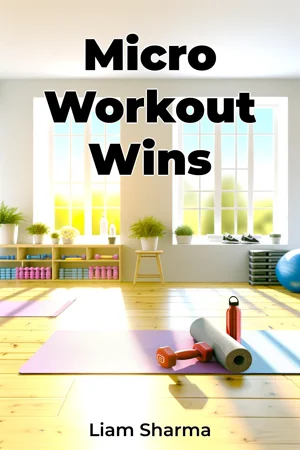
What if everything you’ve been told about exercise is incomplete? *Micro Workout Wins* challenges the assumption that fitness requires hours of weekly gym time, presenting a paradigm shift rooted in peer-reviewed studies and real-world practicality. This book dismantles the myth of the "60-minute workout," arguing that strategic, bite-sized movement—micro workouts—can yield measurable physical, mental, and emotional benefits. Designed for time-strapped individuals seeking sustainable health solutions, it merges exercise physiology, behavioral science, and stress management into an actionable guide for modern life. The book opens by dissecting the cultural obsession with prolonged exercise regimens, tracing its origins to 20th-century fitness trends and gym culture. It contrasts this with emerging research showing that short, intense bursts of activity—as brief as 5–10 minutes—can improve cardiovascular health, muscle strength, and metabolic function. A 2023 meta-analysis published in *Medicine & Science in Sports & Exercise* serves as a cornerstone, revealing that fragmented exercise sessions totaling 30 minutes daily match the benefits of continuous workouts. This revelation reframes fitness as accessible rather than aspirational, particularly for those juggling careers, caregiving, or chronic stress. Central to the book’s thesis is the concept of *movement efficiency*: optimizing minimal time for maximum physiological impact. Three pillars structure this argument. First, *exercise snacking*—scattered 2–5 minute bouts of activity, such as stair climbing or bodyweight squats—is shown to lower blood pressure and enhance insulin sensitivity. Second, micro workouts’ psychological advantages are explored, including stress reduction through endorphin release and improved focus via increased cerebral blood flow. Third, the book addresses habit formation, offering science-backed strategies to embed micro workouts into daily routines without reliance on willpower. Interdisciplinary insights strengthen the case. Behavioral psychology explains how “habit stacking” (pairing exercise with existing tasks, like coffee breaks) increases adherence. Public health data contextualizes the urgency: sedentary lifestyles contribute to 10% of premature deaths globally, yet 25% of adults cite “lack of time” as their primary barrier to exercise. By bridging these fields, the book positions micro workouts as both a personal tool and a societal intervention. Unique to *Micro Workout Wins* is its emphasis on *stress resilience*. Unlike conventional fitness guides, it details how micro workouts regulate cortisol levels and mitigate burnout. A 2022 study from the *Journal of Applied Physiology* demonstrates that brief resistance training sessions reduce workplace stress markers by 19% compared to passive breaks. Real-world case studies—from office workers to stay-at-home parents—illustrate tailored routines, ensuring relevance across demographics. The tone balances academic rigor with approachable clarity. Complex concepts like VO2 max or hypothalamic-pituitary-adrenal axis regulation are simplified through analogies and infographics. Each chapter concludes with “Micro Wins in Action”—concrete steps like “Desk-Based Isometric Exercises” or “High-Intensity Gardening”—to translate theory into practice. While the book focuses on micro workouts, it acknowledges limitations: they complement but don’t replace longer sessions for elite athletic goals. Controversies are addressed head-on, such as debates over minimal effective exercise doses and critiques of “fitness culture lite.” However, robust evidence counters skepticism, including longitudinal data showing participants maintaining weight loss and mental health gains over 18 months. Targeted at adults aged 25–60, the book appeals to novices seeking attainable entry points and fitness enthusiasts interested in optimizing recovery. Its self-help elements—stress reduction techniques, habit frameworks—intersect seamlessly with health science, aligning with genre expectations for actionable, evidence-based guidance. By the final chapter, readers are equipped to design personalized micro workout plans, informed by their physiology, schedules, and goals. The conclusion urges a redefinition of fitness: not as a chore, but as a series of intentional, empowering choices woven into the fabric of daily life. *Micro Workout Wins* doesn’t just offer a fitness strategy—it proposes a sustainable philosophy for thriving in a time-pressed world.
What if everything you’ve been told about exercise is incomplete? *Micro Workout Wins* challenges the assumption that fitness requires hours of weekly gym time, presenting a paradigm shift rooted in peer-reviewed studies and real-world practicality. This book dismantles the myth of the "60-minute workout," arguing that strategic, bite-sized movement—micro workouts—can yield measurable physical, mental, and emotional benefits. Designed for time-strapped individuals seeking sustainable health solutions, it merges exercise physiology, behavioral science, and stress management into an actionable guide for modern life. The book opens by dissecting the cultural obsession with prolonged exercise regimens, tracing its origins to 20th-century fitness trends and gym culture. It contrasts this with emerging research showing that short, intense bursts of activity—as brief as 5–10 minutes—can improve cardiovascular health, muscle strength, and metabolic function. A 2023 meta-analysis published in *Medicine & Science in Sports & Exercise* serves as a cornerstone, revealing that fragmented exercise sessions totaling 30 minutes daily match the benefits of continuous workouts. This revelation reframes fitness as accessible rather than aspirational, particularly for those juggling careers, caregiving, or chronic stress. Central to the book’s thesis is the concept of *movement efficiency*: optimizing minimal time for maximum physiological impact. Three pillars structure this argument. First, *exercise snacking*—scattered 2–5 minute bouts of activity, such as stair climbing or bodyweight squats—is shown to lower blood pressure and enhance insulin sensitivity. Second, micro workouts’ psychological advantages are explored, including stress reduction through endorphin release and improved focus via increased cerebral blood flow. Third, the book addresses habit formation, offering science-backed strategies to embed micro workouts into daily routines without reliance on willpower. Interdisciplinary insights strengthen the case. Behavioral psychology explains how “habit stacking” (pairing exercise with existing tasks, like coffee breaks) increases adherence. Public health data contextualizes the urgency: sedentary lifestyles contribute to 10% of premature deaths globally, yet 25% of adults cite “lack of time” as their primary barrier to exercise. By bridging these fields, the book positions micro workouts as both a personal tool and a societal intervention. Unique to *Micro Workout Wins* is its emphasis on *stress resilience*. Unlike conventional fitness guides, it details how micro workouts regulate cortisol levels and mitigate burnout. A 2022 study from the *Journal of Applied Physiology* demonstrates that brief resistance training sessions reduce workplace stress markers by 19% compared to passive breaks. Real-world case studies—from office workers to stay-at-home parents—illustrate tailored routines, ensuring relevance across demographics. The tone balances academic rigor with approachable clarity. Complex concepts like VO2 max or hypothalamic-pituitary-adrenal axis regulation are simplified through analogies and infographics. Each chapter concludes with “Micro Wins in Action”—concrete steps like “Desk-Based Isometric Exercises” or “High-Intensity Gardening”—to translate theory into practice. While the book focuses on micro workouts, it acknowledges limitations: they complement but don’t replace longer sessions for elite athletic goals. Controversies are addressed head-on, such as debates over minimal effective exercise doses and critiques of “fitness culture lite.” However, robust evidence counters skepticism, including longitudinal data showing participants maintaining weight loss and mental health gains over 18 months. Targeted at adults aged 25–60, the book appeals to novices seeking attainable entry points and fitness enthusiasts interested in optimizing recovery. Its self-help elements—stress reduction techniques, habit frameworks—intersect seamlessly with health science, aligning with genre expectations for actionable, evidence-based guidance. By the final chapter, readers are equipped to design personalized micro workout plans, informed by their physiology, schedules, and goals. The conclusion urges a redefinition of fitness: not as a chore, but as a series of intentional, empowering choices woven into the fabric of daily life. *Micro Workout Wins* doesn’t just offer a fitness strategy—it proposes a sustainable philosophy for thriving in a time-pressed world.
"Micro Workout Wins" revolutionizes the way we think about fitness by proving that effective exercise doesn’t require hours at the gym. The book’s central theme is that short, strategic bursts of activity—micro workouts—can deliver significant health benefits, from improved cardiovascular health to better stress management. Drawing on peer-reviewed studies, it reveals that even 5–10 minutes of intense movement can match the benefits of longer workouts, making fitness accessible for busy individuals. One of the book’s most intriguing insights is the concept of *exercise snacking*—brief, scattered bouts of activity like stair climbing or bodyweight squats—which can lower blood pressure and enhance insulin sensitivity. It also highlights how micro workouts boost mental health by reducing stress and improving focus through increased blood flow to the brain. Additionally, the book offers science-backed strategies for habit formation, such as “habit stacking,” to seamlessly integrate these workouts into daily life. What sets "Micro Workout Wins" apart is its focus on *stress resilience*. Unlike traditional fitness guides, it explains how micro workouts regulate cortisol levels and combat burnout, supported by studies showing a 19% reduction in workplace stress markers. The book balances academic rigor with practical advice, using analogies and infographics to simplify complex concepts. Each chapter ends with actionable steps, making it easy to apply the science to real life. By the end, readers are equipped to design personalized routines that fit their schedules and goals, redefining fitness as a sustainable, empowering part of everyday life.
Book Details
ISBN
9788233955854
Publisher
Publifye AS
Your Licenses
You don't own any licenses for this book
Purchase a license below to unlock this book and download the EPUB.
Purchase License
Select a tier to unlock this book
Need bulk licensing?
Contact us for enterprise agreements.