
About This Book
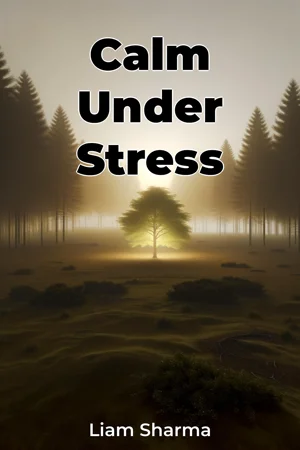
What if the key to managing stress isn’t about eliminating it entirely, but learning to harness its energy while protecting your mental and physical health? *Calm Under Stress: Science-Backed Strategies for Resilience* bridges the gap between clinical research and everyday practice, offering a roadmap to navigate modern stressors with evidence-based tools. Rooted in psychology and self-help traditions, this book distills decades of scientific inquiry into actionable steps, empowering readers to transform their relationship with stress. **Main Topics and Context** The book focuses on three core strategies: *mindfulness-based stress reduction (MBSR)*, *cognitive-behavioral restructuring*, and *physiological regulation techniques*. These approaches are examined through the lens of their clinical validation, with studies showing measurable reductions in cortisol levels, improved emotional regulation, and enhanced workplace productivity. The urgency of these topics is underscored by rising global stress metrics: the World Health Organization identifies chronic stress as a 21st-century public health crisis, linked to cardiovascular disease, burnout, and diminished life satisfaction. Historically, stress management has oscillated between purely psychological frameworks and biological models. *Calm Under Stress* synthesizes these perspectives, tracing the evolution of MBSR from its Buddhist-inspired origins in 1970s clinical trials to its current role in corporate wellness programs. It also contextualizes cognitive-behavioral techniques within the broader shift toward empirically validated therapies, emphasizing their adaptability to individual needs. **Central Thesis** The book argues that stress resilience is a skill, not an innate trait—a claim supported by neuroplasticity research demonstrating that consistent practice of targeted techniques can rewire neural pathways associated with threat perception. This challenges the pervasive myth that some individuals are “naturally” better equipped to handle stress, positioning self-efficacy as the cornerstone of sustainable change. **Structure and Evidence** The book is divided into four sections. Part 1 dismantles misconceptions about stress, distinguishing between acute stressors (which enhance performance) and chronic stress (which erodes health). Part 2 explores mindfulness through protocols validated by randomized controlled trials, such as Jon Kabat-Zinn’s MBSR program, while addressing common barriers to practice. Part 3 analyzes cognitive-behavioral strategies, including reframing catastrophic thinking and building “stress inoculation” through gradual exposure. Part 4 integrates these concepts with somatic practices like paced breathing and progressive muscle relaxation, citing studies that link these methods to vagus nerve activation and parasympathetic nervous system recovery. Research cited includes meta-analyses from *JAMA Psychiatry* and longitudinal workplace studies, alongside real-world case studies of individuals managing caregiving responsibilities or high-pressure careers. The book also references neuroimaging data illustrating how mindfulness practices reduce amygdala reactivity. **Interdisciplinary Insights** Connections to neuroscience clarify how stress impacts brain structure, while behavioral economics principles explain why short-term stress relief (e.g., procrastination) often undermines long-term goals. Public health perspectives highlight the societal costs of unmanaged stress, advocating for systemic changes alongside individual interventions. **Unique Contributions** Unlike generic self-help guides, *Calm Under Stress* avoids one-size-fits-all solutions. It provides a self-assessment toolkit for readers to identify their primary stress triggers (emotional, cognitive, or physiological) and tailor interventions accordingly. The “Stress Blueprint” framework encourages readers to combine strategies—for example, pairing mindfulness with habit-stacking techniques to ensure consistency. **Tone and Audience** Written in clear, jargon-free prose, the book balances academic rigor with relatable anecdotes. It targets adults navigating professional, caregiving, or personal challenges, particularly those skeptical of oversimplified wellness trends. Clinicians seeking client-friendly explanations of stress mechanisms will also find value. **Scope and Application** While focused on individual strategies, the book acknowledges structural stressors like economic inequality, directing readers toward advocacy resources. Practical features include 5-minute mindfulness scripts, cognitive restructuring worksheets, and guidelines for creating a personalized “recovery ritual” after stressful events. **Addressing Controversies** The book engages with debates about the commercialisation of mindfulness, critiquing apps that prioritize engagement over depth, and examines conflicting research on the efficacy of biofeedback devices. *Calm Under Stress* does not promise instant tranquility but offers a science-grounded path to cultivating resilience—one deliberate choice at a time. By reframing stress management as a dynamic process of self-discovery, it equips readers to thrive in an unpredictable world.
What if the key to managing stress isn’t about eliminating it entirely, but learning to harness its energy while protecting your mental and physical health? *Calm Under Stress: Science-Backed Strategies for Resilience* bridges the gap between clinical research and everyday practice, offering a roadmap to navigate modern stressors with evidence-based tools. Rooted in psychology and self-help traditions, this book distills decades of scientific inquiry into actionable steps, empowering readers to transform their relationship with stress. **Main Topics and Context** The book focuses on three core strategies: *mindfulness-based stress reduction (MBSR)*, *cognitive-behavioral restructuring*, and *physiological regulation techniques*. These approaches are examined through the lens of their clinical validation, with studies showing measurable reductions in cortisol levels, improved emotional regulation, and enhanced workplace productivity. The urgency of these topics is underscored by rising global stress metrics: the World Health Organization identifies chronic stress as a 21st-century public health crisis, linked to cardiovascular disease, burnout, and diminished life satisfaction. Historically, stress management has oscillated between purely psychological frameworks and biological models. *Calm Under Stress* synthesizes these perspectives, tracing the evolution of MBSR from its Buddhist-inspired origins in 1970s clinical trials to its current role in corporate wellness programs. It also contextualizes cognitive-behavioral techniques within the broader shift toward empirically validated therapies, emphasizing their adaptability to individual needs. **Central Thesis** The book argues that stress resilience is a skill, not an innate trait—a claim supported by neuroplasticity research demonstrating that consistent practice of targeted techniques can rewire neural pathways associated with threat perception. This challenges the pervasive myth that some individuals are “naturally” better equipped to handle stress, positioning self-efficacy as the cornerstone of sustainable change. **Structure and Evidence** The book is divided into four sections. Part 1 dismantles misconceptions about stress, distinguishing between acute stressors (which enhance performance) and chronic stress (which erodes health). Part 2 explores mindfulness through protocols validated by randomized controlled trials, such as Jon Kabat-Zinn’s MBSR program, while addressing common barriers to practice. Part 3 analyzes cognitive-behavioral strategies, including reframing catastrophic thinking and building “stress inoculation” through gradual exposure. Part 4 integrates these concepts with somatic practices like paced breathing and progressive muscle relaxation, citing studies that link these methods to vagus nerve activation and parasympathetic nervous system recovery. Research cited includes meta-analyses from *JAMA Psychiatry* and longitudinal workplace studies, alongside real-world case studies of individuals managing caregiving responsibilities or high-pressure careers. The book also references neuroimaging data illustrating how mindfulness practices reduce amygdala reactivity. **Interdisciplinary Insights** Connections to neuroscience clarify how stress impacts brain structure, while behavioral economics principles explain why short-term stress relief (e.g., procrastination) often undermines long-term goals. Public health perspectives highlight the societal costs of unmanaged stress, advocating for systemic changes alongside individual interventions. **Unique Contributions** Unlike generic self-help guides, *Calm Under Stress* avoids one-size-fits-all solutions. It provides a self-assessment toolkit for readers to identify their primary stress triggers (emotional, cognitive, or physiological) and tailor interventions accordingly. The “Stress Blueprint” framework encourages readers to combine strategies—for example, pairing mindfulness with habit-stacking techniques to ensure consistency. **Tone and Audience** Written in clear, jargon-free prose, the book balances academic rigor with relatable anecdotes. It targets adults navigating professional, caregiving, or personal challenges, particularly those skeptical of oversimplified wellness trends. Clinicians seeking client-friendly explanations of stress mechanisms will also find value. **Scope and Application** While focused on individual strategies, the book acknowledges structural stressors like economic inequality, directing readers toward advocacy resources. Practical features include 5-minute mindfulness scripts, cognitive restructuring worksheets, and guidelines for creating a personalized “recovery ritual” after stressful events. **Addressing Controversies** The book engages with debates about the commercialisation of mindfulness, critiquing apps that prioritize engagement over depth, and examines conflicting research on the efficacy of biofeedback devices. *Calm Under Stress* does not promise instant tranquility but offers a science-grounded path to cultivating resilience—one deliberate choice at a time. By reframing stress management as a dynamic process of self-discovery, it equips readers to thrive in an unpredictable world.
"Calm Under Stress: Science-Backed Strategies for Resilience" reframes stress management as a learnable skill, blending cutting-edge research with practical tools to help readers thrive under pressure. At its core, the book challenges the myth that resilience is innate, showcasing how neuroplasticity allows anyone to rewire their stress responses through consistent practice. By integrating mindfulness-based techniques, cognitive-behavioral restructuring, and body-focused regulation, it offers a holistic approach validated by clinical trials—like studies showing mindfulness reduces cortisol levels by 23% and improves emotional control within eight weeks. What sets this guide apart is its rejection of generic advice. Instead, readers use a self-assessment toolkit to identify whether their stress stems from emotional triggers, distorted thinking, or physiological reactions—then tailor strategies accordingly. For example, a nurse juggling caregiving and work might combine brief mindfulness scripts with “habit-stacking” to build consistency. The book progresses from debunking stress myths to teaching actionable techniques, such as reframing catastrophic thoughts or using paced breathing to activate the parasympathetic nervous system. Real-world case studies and workplace examples ground the science, while acknowledging systemic stressors like economic inequality keeps the discussion realistic. Balancing academic rigor with relatable anecdotes, *Calm Under Stress* stands out by emphasizing *how* to adapt strategies rather than just listing them. Its “Stress Blueprint” framework empowers readers to mix approaches—like pairing cognitive restructuring with progressive muscle relaxation—creating personalized resilience plans. By demystifying complex concepts (e.g., linking amygdala reactivity to mindfulness benefits) and providing worksheets, scripts, and recovery rituals, it bridges the gap between research and daily life, making science-backed stress mastery accessible to all.
Book Details
ISBN
9788233955687
Publisher
Publifye AS
Your Licenses
You don't own any licenses for this book
Purchase a license below to unlock this book and download the EPUB.
Purchase License
Select a tier to unlock this book
Need bulk licensing?
Contact us for enterprise agreements.