
About This Book
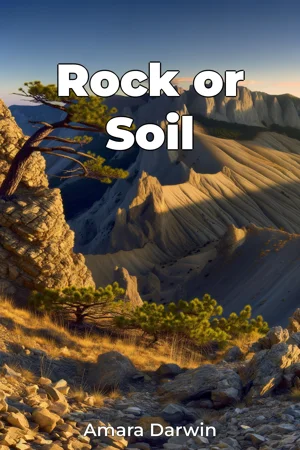
How can a pine tree cling to a barren cliff face while a sunflower drowns in the same rainfall? *Rock or Soil: Life’s Adaptations to Mountains and Plains* explores this paradox, unraveling the biological ingenuity that allows life to thrive in Earth’s most contrasting landscapes. This book bridges the gap between ecological theory and observable reality, offering a rigorous examination of how organisms conquer the extremes of rocky terrains and fertile soils. **Main Topics and Context** The book centers on three core themes: the physiological and behavioral adaptations of species in rocky versus soil-rich habitats, the evolutionary trade-offs these environments impose, and the human-driven changes reshaping both ecosystems. Mountains, shaped by tectonic forces and erosion, present challenges like nutrient scarcity, temperature swings, and unstable substrates. In contrast, fertile soils—products of millennia of organic decay and mineral weathering—support dense, competitive communities where light, water, and space dictate survival. Understanding these systems requires foundational knowledge of biogeochemical cycles, soil stratification, and evolutionary principles like niche partitioning. **Central Thesis** Life’s success in these environments hinges not on superiority of one habitat over another but on specialized strategies to exploit specific niches. From the deep-rooted succulents of alpine scree slopes to the mycorrhizal networks binding prairie grasses, organisms evolve to transform limitations into opportunities. This adaptability underscores the resilience of ecosystems, yet also reveals their vulnerability to human disruption. **Content Overview** The book opens with an introduction to geological and biological processes that create and sustain mountains and plains. Chapter 1 dissects rocky habitats, detailing how plants like saxifrages fracture stone with acidic secretions and animals like pikas hoard lichens to survive winters. Chapter 2 shifts to fertile soils, analyzing rapid nutrient cycling, the role of detritivores like earthworms, and the fierce competition driving vertical growth in forests and grasslands. Chapter 3 explores human impacts: terraced farming’s mimicry of natural slope stabilization versus industrial agriculture’s depletion of soil organic matter. The conclusion ties these threads to conservation, advocating for habitat-specific stewardship. **Evidence and Interdisciplinary Insights** Case studies anchor each argument. For instance, research on Andean cushion plants demonstrates how their dome-shaped growth traps heat and moisture, creating microhabitats for insects and seedlings. Conversely, data from Iowa’s degraded farmlands illustrate how monocultures disrupt soil fungi, reducing crop resilience. The book draws on geology, climatology, and agronomy, emphasizing that soil health and mountain biodiversity are not isolated concerns but pillars of global carbon and water cycles. **Unique Perspective** Rather than treating rocky and fertile habitats as opposites, *Rock or Soil* frames them as endpoints on a continuum of resource availability. This approach clarifies why some species, like mosses, thrive in both contexts by altering their reproductive strategies. The book also challenges the perception of mountains as “fragile” and plains as “robust,” showing how soil compaction and glacial melt equally threaten both systems. **Tone and Audience** Written in clear, jargon-free prose, the book balances academic depth with relatable analogies, comparing root exudates to “chemical lockpicks” and mycorrhizae to “underground stock markets.” It targets ecology students, conservation practitioners, and environmentally engaged readers seeking to understand ecosystem interconnectivity. **Scope and Applications** While focused on terrestrial biomes, the book acknowledges gaps—such as coastal or wetland ecosystems—to maintain depth. Practical applications include guidelines for restoring degraded slopes using native rock-dwelling species and improving soil fertility through crop rotation inspired by grassland diversity. **Controversies Addressed** The book engages debates like the ethics of introducing non-native species to stabilize eroded mountainsides and the feasibility of no-till agriculture in feeding growing populations. These discussions highlight the complexity of balancing ecological integrity with human needs. *Rock or Soil* reframes adaptation as a dialogue between life and landscape, urging readers to see Earth’s varied habitats not as separate worlds but as interconnected theaters of survival. By dissecting the rules of existence in stone and soil, it equips readers to advocate for ecosystems whose quiet tenacity mirrors our own.
How can a pine tree cling to a barren cliff face while a sunflower drowns in the same rainfall? *Rock or Soil: Life’s Adaptations to Mountains and Plains* explores this paradox, unraveling the biological ingenuity that allows life to thrive in Earth’s most contrasting landscapes. This book bridges the gap between ecological theory and observable reality, offering a rigorous examination of how organisms conquer the extremes of rocky terrains and fertile soils. **Main Topics and Context** The book centers on three core themes: the physiological and behavioral adaptations of species in rocky versus soil-rich habitats, the evolutionary trade-offs these environments impose, and the human-driven changes reshaping both ecosystems. Mountains, shaped by tectonic forces and erosion, present challenges like nutrient scarcity, temperature swings, and unstable substrates. In contrast, fertile soils—products of millennia of organic decay and mineral weathering—support dense, competitive communities where light, water, and space dictate survival. Understanding these systems requires foundational knowledge of biogeochemical cycles, soil stratification, and evolutionary principles like niche partitioning. **Central Thesis** Life’s success in these environments hinges not on superiority of one habitat over another but on specialized strategies to exploit specific niches. From the deep-rooted succulents of alpine scree slopes to the mycorrhizal networks binding prairie grasses, organisms evolve to transform limitations into opportunities. This adaptability underscores the resilience of ecosystems, yet also reveals their vulnerability to human disruption. **Content Overview** The book opens with an introduction to geological and biological processes that create and sustain mountains and plains. Chapter 1 dissects rocky habitats, detailing how plants like saxifrages fracture stone with acidic secretions and animals like pikas hoard lichens to survive winters. Chapter 2 shifts to fertile soils, analyzing rapid nutrient cycling, the role of detritivores like earthworms, and the fierce competition driving vertical growth in forests and grasslands. Chapter 3 explores human impacts: terraced farming’s mimicry of natural slope stabilization versus industrial agriculture’s depletion of soil organic matter. The conclusion ties these threads to conservation, advocating for habitat-specific stewardship. **Evidence and Interdisciplinary Insights** Case studies anchor each argument. For instance, research on Andean cushion plants demonstrates how their dome-shaped growth traps heat and moisture, creating microhabitats for insects and seedlings. Conversely, data from Iowa’s degraded farmlands illustrate how monocultures disrupt soil fungi, reducing crop resilience. The book draws on geology, climatology, and agronomy, emphasizing that soil health and mountain biodiversity are not isolated concerns but pillars of global carbon and water cycles. **Unique Perspective** Rather than treating rocky and fertile habitats as opposites, *Rock or Soil* frames them as endpoints on a continuum of resource availability. This approach clarifies why some species, like mosses, thrive in both contexts by altering their reproductive strategies. The book also challenges the perception of mountains as “fragile” and plains as “robust,” showing how soil compaction and glacial melt equally threaten both systems. **Tone and Audience** Written in clear, jargon-free prose, the book balances academic depth with relatable analogies, comparing root exudates to “chemical lockpicks” and mycorrhizae to “underground stock markets.” It targets ecology students, conservation practitioners, and environmentally engaged readers seeking to understand ecosystem interconnectivity. **Scope and Applications** While focused on terrestrial biomes, the book acknowledges gaps—such as coastal or wetland ecosystems—to maintain depth. Practical applications include guidelines for restoring degraded slopes using native rock-dwelling species and improving soil fertility through crop rotation inspired by grassland diversity. **Controversies Addressed** The book engages debates like the ethics of introducing non-native species to stabilize eroded mountainsides and the feasibility of no-till agriculture in feeding growing populations. These discussions highlight the complexity of balancing ecological integrity with human needs. *Rock or Soil* reframes adaptation as a dialogue between life and landscape, urging readers to see Earth’s varied habitats not as separate worlds but as interconnected theaters of survival. By dissecting the rules of existence in stone and soil, it equips readers to advocate for ecosystems whose quiet tenacity mirrors our own.
*Rock or Soil: Life’s Adaptations to Mountains and Plains* explores how life thrives in Earth’s most contrasting landscapes—barren mountains and fertile plains. The book reveals that survival hinges on organisms’ ability to turn environmental limits into opportunities through specialized adaptations. From pine trees anchoring themselves in rocky cliffs to prairie grasses competing for sunlight, the text bridges ecology and evolution to show how niches shape survival strategies. The book contrasts mountain ecosystems, where species like acid-secreting saxifrages crack rocks for nutrients, with soil-rich plains, where earthworms and fungi drive rapid nutrient cycling. Intriguingly, it frames these habitats as endpoints on a resource spectrum rather than opposites. For example, cushion plants in the Andes create microhabitats that shelter entire communities, while degraded farmlands illustrate how human activities disrupt soil health. The narrative progresses from geological processes to conservation solutions, weaving interdisciplinary insights from climatology and agronomy. What sets *Rock or Soil* apart is its emphasis on interconnectivity. It challenges assumptions by showing how soil compaction and glacial melt threaten both mountains and plains equally. Using relatable analogies—like calling root systems “chemical lockpicks”—the book makes complex concepts accessible. By linking niche adaptations to global cycles, it equips readers to advocate for conservation strategies that honor the resilience of these ecosystems.
Book Details
ISBN
9788233955649
Publisher
Publifye AS
Your Licenses
You don't own any licenses for this book
Purchase a license below to unlock this book and download the EPUB.
Purchase License
Select a tier to unlock this book
Need bulk licensing?
Contact us for enterprise agreements.