
About This Book
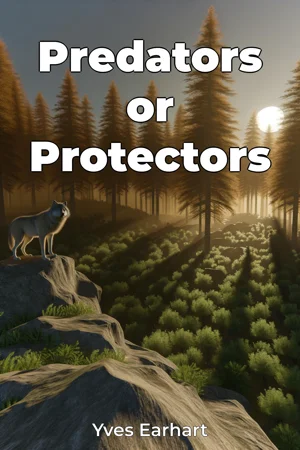
What if the delicate balance of life in our planet’s ecosystems hinges not on dominance, but on negotiation? *Predators or Protectors: The Negotiated Order of Ecosystems* challenges simplistic notions of “hunter versus hunted” by exploring how predator and defender species shape—and are shaped by—the intricate web of relationships that sustain biodiversity. Grounded in contemporary ecological research, this book reframes predators not merely as agents of death but as architects of stability, while defender species emerge as dynamic participants in an evolving biological dialogue. The book centers on three pillars: predator-prey dynamics as drivers of ecosystem health, the underestimated role of defender species (such as prey that alter habitats or behavior to deter threats), and the cascading impacts of human intervention. These topics are critical as climate change and habitat destruction amplify pressures on global ecosystems, forcing a reevaluation of conservation strategies. By synthesizing decades of field studies and ecological modeling, the text argues that predators and defenders exist in a fluid, context-dependent balance, where each group’s survival hinges on mutual adaptation rather than annihilation. Historically, predator-prey relationships were framed through a lens of conflict, epitomized by early 20th-century eradication campaigns against wolves and big cats. Modern ecology, however, reveals a more nuanced picture. The book traces this shift, beginning with Aldo Leopold’s landmark observation that removing predators destabilizes food webs, leading to overgrazing and biodiversity loss. Parallel case studies—from African savannas to coral reefs—illustrate how defender species, like burrowing mammals that create refuges for other animals or plants that deploy chemical deterrents, actively engineer ecosystems to mitigate predation risks. Central to the book’s thesis is the idea that predation and defense are not opposing forces but complementary mechanisms that maintain ecological resilience. For instance, the reintroduction of wolves in Yellowstone National Park not only controlled elk populations but also spurred behavioral changes in prey, indirectly revitalizing riparian zones. Similarly, cleaner fish on coral reefs, which defend themselves by servicing predators, demonstrate how cooperation can emerge from evolutionary arms races. Structured into three sections, the book first establishes foundational concepts in behavioral ecology and trophic cascades. Subsequent chapters analyze case studies across biomes, highlighting how climate change and habitat fragmentation disrupt these balances. The final section addresses applied solutions, such as rewilding initiatives and bioinspired engineering, which mimic natural predator-defender strategies to restore degraded environments. Evidence draws from peer-reviewed studies, long-term ecological monitoring data, and cross-cultural comparisons of indigenous land management practices. Unique to this work is its integration of game theory models to explain how predator and defender behaviors evolve in tandem, as well as its emphasis on “shadow ecosystems”—species interactions that persist even after key players are extinct or displaced. Interdisciplinary links to anthropology, climate science, and robotics underscore the universality of these dynamics. For example, parallels between herd animals’ anti-predator strategies and human crowd behavior reveal shared principles of risk management. Meanwhile, biomimetic technologies inspired by defender species, such as camouflage materials or decentralized swarm algorithms, bridge ecology and engineering. Written in a narrative style that balances scientific rigor with accessible storytelling, *Predators or Protectors* avoids technical jargon without sacrificing depth. Its tone is urgent yet hopeful, emphasizing actionable insights for conservationists, policymakers, and environmentally engaged readers. While focused on terrestrial and marine ecosystems, the book acknowledges limitations in its scope, excluding microbial systems but inviting further exploration. Controversies, such as debates over apex predator reintroduction in human-dominated landscapes, are addressed head-on, weighing ecological benefits against socioeconomic conflicts. The book concludes by advocating for “adaptive stewardship”—policies that recognize ecosystems as negotiated spaces, requiring continuous collaboration between species, scientists, and societies. Targeted at readers of popular science and environmental literature, this book serves as both a primer on ecological interdependence and a call to rethink humanity’s role within it. By reframing predators and defenders as co-creators of balance, *Predators or Protectors* offers a roadmap for fostering resilience in an era of unprecedented ecological change.
What if the delicate balance of life in our planet’s ecosystems hinges not on dominance, but on negotiation? *Predators or Protectors: The Negotiated Order of Ecosystems* challenges simplistic notions of “hunter versus hunted” by exploring how predator and defender species shape—and are shaped by—the intricate web of relationships that sustain biodiversity. Grounded in contemporary ecological research, this book reframes predators not merely as agents of death but as architects of stability, while defender species emerge as dynamic participants in an evolving biological dialogue. The book centers on three pillars: predator-prey dynamics as drivers of ecosystem health, the underestimated role of defender species (such as prey that alter habitats or behavior to deter threats), and the cascading impacts of human intervention. These topics are critical as climate change and habitat destruction amplify pressures on global ecosystems, forcing a reevaluation of conservation strategies. By synthesizing decades of field studies and ecological modeling, the text argues that predators and defenders exist in a fluid, context-dependent balance, where each group’s survival hinges on mutual adaptation rather than annihilation. Historically, predator-prey relationships were framed through a lens of conflict, epitomized by early 20th-century eradication campaigns against wolves and big cats. Modern ecology, however, reveals a more nuanced picture. The book traces this shift, beginning with Aldo Leopold’s landmark observation that removing predators destabilizes food webs, leading to overgrazing and biodiversity loss. Parallel case studies—from African savannas to coral reefs—illustrate how defender species, like burrowing mammals that create refuges for other animals or plants that deploy chemical deterrents, actively engineer ecosystems to mitigate predation risks. Central to the book’s thesis is the idea that predation and defense are not opposing forces but complementary mechanisms that maintain ecological resilience. For instance, the reintroduction of wolves in Yellowstone National Park not only controlled elk populations but also spurred behavioral changes in prey, indirectly revitalizing riparian zones. Similarly, cleaner fish on coral reefs, which defend themselves by servicing predators, demonstrate how cooperation can emerge from evolutionary arms races. Structured into three sections, the book first establishes foundational concepts in behavioral ecology and trophic cascades. Subsequent chapters analyze case studies across biomes, highlighting how climate change and habitat fragmentation disrupt these balances. The final section addresses applied solutions, such as rewilding initiatives and bioinspired engineering, which mimic natural predator-defender strategies to restore degraded environments. Evidence draws from peer-reviewed studies, long-term ecological monitoring data, and cross-cultural comparisons of indigenous land management practices. Unique to this work is its integration of game theory models to explain how predator and defender behaviors evolve in tandem, as well as its emphasis on “shadow ecosystems”—species interactions that persist even after key players are extinct or displaced. Interdisciplinary links to anthropology, climate science, and robotics underscore the universality of these dynamics. For example, parallels between herd animals’ anti-predator strategies and human crowd behavior reveal shared principles of risk management. Meanwhile, biomimetic technologies inspired by defender species, such as camouflage materials or decentralized swarm algorithms, bridge ecology and engineering. Written in a narrative style that balances scientific rigor with accessible storytelling, *Predators or Protectors* avoids technical jargon without sacrificing depth. Its tone is urgent yet hopeful, emphasizing actionable insights for conservationists, policymakers, and environmentally engaged readers. While focused on terrestrial and marine ecosystems, the book acknowledges limitations in its scope, excluding microbial systems but inviting further exploration. Controversies, such as debates over apex predator reintroduction in human-dominated landscapes, are addressed head-on, weighing ecological benefits against socioeconomic conflicts. The book concludes by advocating for “adaptive stewardship”—policies that recognize ecosystems as negotiated spaces, requiring continuous collaboration between species, scientists, and societies. Targeted at readers of popular science and environmental literature, this book serves as both a primer on ecological interdependence and a call to rethink humanity’s role within it. By reframing predators and defenders as co-creators of balance, *Predators or Protectors* offers a roadmap for fostering resilience in an era of unprecedented ecological change.
"Predators or Protectors: The Negotiated Order of Ecosystems" reimagines the role of predators and defender species as co-creators of ecological balance, challenging the myth of nature as a battlefield. The book argues that predator-prey dynamics and defensive adaptations form a fluid, interdependent network crucial for biodiversity and resilience. For instance, Yellowstone’s wolf reintroduction didn’t just curb elk numbers—it altered grazing patterns, reviving forests and rivers. Similarly, cleaner fish on coral reefs avoid predation by offering symbiotic services, showing how cooperation emerges from evolutionary tension. These insights reveal ecosystems as negotiated spaces, where species continuously adapt rather than conquer. Blending behavioral ecology with game theory, the book progresses from foundational concepts—like trophic cascades—to global case studies, including burrowing mammals that engineer habitats and plants deploying chemical defenses. It confronts modern crises like climate change and habitat loss, linking them to disrupted predator-defender balances. The final chapters propose solutions: rewilding initiatives restore apex predators, while bioinspired engineering mimics natural strategies, such as swarm algorithms based on herd behavior. Unique interdisciplinary connections—like parallels between animal risk management and human crowds—highlight universal principles. Written with narrative flair, the book balances scientific rigor with hopeful urgency, advocating “adaptive stewardship” to foster resilience through collaboration between species and societies.
Book Details
ISBN
9788233955632
Publisher
Publifye AS
Your Licenses
You don't own any licenses for this book
Purchase a license below to unlock this book and download the EPUB.
Purchase License
Select a tier to unlock this book
Need bulk licensing?
Contact us for enterprise agreements.