
About This Book
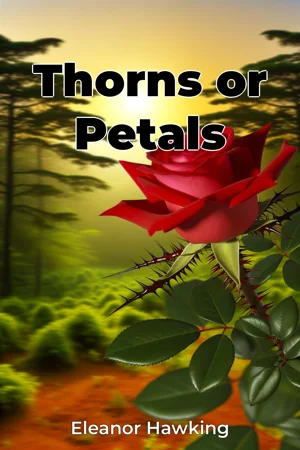
What do a rose’s thorns and its petals have in common? Both are products of an evolutionary dance spanning millions of years, shaped by the relentless pressures of survival and reproduction. *Thorns or Petals: The Dual Strategies of Plant Survival* explores how plants employ physical and chemical traits not just to endure, but to thrive. Bridging botany, ecology, and evolutionary biology, this book uncovers the sophisticated balance between defense and attraction that defines plant life. **Main Themes and Significance** The book focuses on two interconnected themes: the role of defensive adaptations (thorns, toxins, and structural armor) and the mechanisms of attraction (flowers, fragrances, and nutrient-rich fruits). These strategies are examined through the lens of co-evolution—the reciprocal influence between plants and their pollinators, predators, and competitors. Understanding these dynamics is critical for addressing modern challenges such as biodiversity loss, agricultural sustainability, and ecosystem restoration. **Context and Foundations** Plants have evolved for over 470 million years, their survival hinging on their ability to deter herbivores while enticing pollinators. Early chapters establish foundational concepts, including plant morphology, chemical signaling, and the principles of natural selection. The text assumes a basic familiarity with biological terms but clarifies specialized terminology through relatable analogies, such as comparing plant chemical defenses to a “biological arms race.” **Central Thesis** The book argues that defensive and attractive traits in plants are not opposing strategies but complementary facets of an evolutionary continuum. For instance, a cactus’s spines shield its water reserves, while its vibrant blooms lure specific pollinators during brief rainy seasons. This duality underscores a broader truth: survival in the plant kingdom demands both resistance and cooperation. **Structure and Content** The narrative unfolds across three sections. The first dissects plant defenses, detailing how thorns, trichomes (hair-like structures), and alkaloids like nicotine deter predators. Case studies include the acacia tree’s symbiotic relationship with ants and the deadly toxins of oleander. The second section shifts to attraction, analyzing floral color patterns visible to pollinators, scent molecules that mimic insect pheromones, and the nutritional allure of fruits. The final chapters explore how climate change and habitat fragmentation disrupt these age-old strategies, threatening species that cannot adapt rapidly enough. **Research and Evidence** Drawing from peer-reviewed studies, field experiments, and genomic analyses, the book cites examples like the CRISPR-edited wheat strains with enhanced pest resistance and the discovery of fossilized flowers from the Cretaceous period. Ecological data from the Amazon rainforest and African savannas illustrate how plant-animal interactions sustain ecosystems. **Interdisciplinary Insights** The work intersects with biochemistry (plant secondary metabolites), agronomy (crop resilience strategies), and even robotics, where engineers mimic plant structures for biomimetic designs. These connections emphasize that plant survival strategies are not isolated phenomena but integral to broader ecological and human systems. **Unique Perspective** Unlike texts that treat defense and attraction as separate topics, *Thorns or Petals* highlights their interdependence. A chapter on carnivorous plants, for example, reveals how the Venus flytrap uses nectar to attract prey before employing rapid-movement defenses to capture it. This integrated approach challenges readers to rethink simplistic categorizations in nature. **Tone and Accessibility** Written in clear, jargon-free prose, the book balances scientific rigor with narrative flair. Historical anecdotes—such as the 19th-century “Orchid Fever” that drove collectors to obsession—anchor abstract concepts in human stories. **Audience and Application** Targeted at gardeners, ecology students, and conservation advocates, the book offers practical insights. Gardeners learn how companion planting can reduce pesticide use, while policymakers gain frameworks for preserving pollinator corridors. A concluding appendix provides guidelines for creating native plant gardens that support local ecosystems. **Scope and Boundaries** The focus is primarily on angiosperms (flowering plants) and conifers, with limited discussion of algae or fungi. Geographic examples skew toward well-studied regions, though the principles apply globally. **Controversies Addressed** The book engages with debates over “plant intelligence,” clarifying that terms like “communication” or “decision-making” describe biochemical processes, not conscious intent. This distinction avoids anthropomorphism while acknowledging plants’ complex behavioral adaptations. By unraveling the dual imperatives of survival and reproduction, *Thorns or Petals* reveals plants not as passive organisms, but as dynamic players in Earth’s evolutionary story. It invites readers to see every thorn and petal as a testament to life’s resilience—and a call to protect the delicate balance that sustains it.
What do a rose’s thorns and its petals have in common? Both are products of an evolutionary dance spanning millions of years, shaped by the relentless pressures of survival and reproduction. *Thorns or Petals: The Dual Strategies of Plant Survival* explores how plants employ physical and chemical traits not just to endure, but to thrive. Bridging botany, ecology, and evolutionary biology, this book uncovers the sophisticated balance between defense and attraction that defines plant life. **Main Themes and Significance** The book focuses on two interconnected themes: the role of defensive adaptations (thorns, toxins, and structural armor) and the mechanisms of attraction (flowers, fragrances, and nutrient-rich fruits). These strategies are examined through the lens of co-evolution—the reciprocal influence between plants and their pollinators, predators, and competitors. Understanding these dynamics is critical for addressing modern challenges such as biodiversity loss, agricultural sustainability, and ecosystem restoration. **Context and Foundations** Plants have evolved for over 470 million years, their survival hinging on their ability to deter herbivores while enticing pollinators. Early chapters establish foundational concepts, including plant morphology, chemical signaling, and the principles of natural selection. The text assumes a basic familiarity with biological terms but clarifies specialized terminology through relatable analogies, such as comparing plant chemical defenses to a “biological arms race.” **Central Thesis** The book argues that defensive and attractive traits in plants are not opposing strategies but complementary facets of an evolutionary continuum. For instance, a cactus’s spines shield its water reserves, while its vibrant blooms lure specific pollinators during brief rainy seasons. This duality underscores a broader truth: survival in the plant kingdom demands both resistance and cooperation. **Structure and Content** The narrative unfolds across three sections. The first dissects plant defenses, detailing how thorns, trichomes (hair-like structures), and alkaloids like nicotine deter predators. Case studies include the acacia tree’s symbiotic relationship with ants and the deadly toxins of oleander. The second section shifts to attraction, analyzing floral color patterns visible to pollinators, scent molecules that mimic insect pheromones, and the nutritional allure of fruits. The final chapters explore how climate change and habitat fragmentation disrupt these age-old strategies, threatening species that cannot adapt rapidly enough. **Research and Evidence** Drawing from peer-reviewed studies, field experiments, and genomic analyses, the book cites examples like the CRISPR-edited wheat strains with enhanced pest resistance and the discovery of fossilized flowers from the Cretaceous period. Ecological data from the Amazon rainforest and African savannas illustrate how plant-animal interactions sustain ecosystems. **Interdisciplinary Insights** The work intersects with biochemistry (plant secondary metabolites), agronomy (crop resilience strategies), and even robotics, where engineers mimic plant structures for biomimetic designs. These connections emphasize that plant survival strategies are not isolated phenomena but integral to broader ecological and human systems. **Unique Perspective** Unlike texts that treat defense and attraction as separate topics, *Thorns or Petals* highlights their interdependence. A chapter on carnivorous plants, for example, reveals how the Venus flytrap uses nectar to attract prey before employing rapid-movement defenses to capture it. This integrated approach challenges readers to rethink simplistic categorizations in nature. **Tone and Accessibility** Written in clear, jargon-free prose, the book balances scientific rigor with narrative flair. Historical anecdotes—such as the 19th-century “Orchid Fever” that drove collectors to obsession—anchor abstract concepts in human stories. **Audience and Application** Targeted at gardeners, ecology students, and conservation advocates, the book offers practical insights. Gardeners learn how companion planting can reduce pesticide use, while policymakers gain frameworks for preserving pollinator corridors. A concluding appendix provides guidelines for creating native plant gardens that support local ecosystems. **Scope and Boundaries** The focus is primarily on angiosperms (flowering plants) and conifers, with limited discussion of algae or fungi. Geographic examples skew toward well-studied regions, though the principles apply globally. **Controversies Addressed** The book engages with debates over “plant intelligence,” clarifying that terms like “communication” or “decision-making” describe biochemical processes, not conscious intent. This distinction avoids anthropomorphism while acknowledging plants’ complex behavioral adaptations. By unraveling the dual imperatives of survival and reproduction, *Thorns or Petals* reveals plants not as passive organisms, but as dynamic players in Earth’s evolutionary story. It invites readers to see every thorn and petal as a testament to life’s resilience—and a call to protect the delicate balance that sustains it.
"Thorns or Petals: The Dual Strategies of Plant Survival" delves into the evolutionary balancing act plants perform to survive and reproduce. At its core, the book explores how traits like thorns, toxins, and vibrant flowers are not opposing strategies but interconnected tools shaped by millions of years of natural selection. Through the lens of co-evolution, it reveals how plants negotiate relationships with pollinators, predators, and competitors—a dynamic critical to addressing modern challenges like biodiversity loss and ecosystem restoration. The book’s strength lies in its integrated approach. For instance, it contrasts the acacia tree’s ant-attracting nectar with its thorny defenses, showing how survival hinges on both resistance and cooperation. Similarly, carnivorous plants like the Venus flytrap lure insects with sweet secretions before deploying rapid traps. These examples, paired with insights from CRISPR-edited crops and fossilized flowers, highlight plants’ adaptability. Structured in three sections, the narrative moves from defensive adaptations to attraction mechanisms, culminating in how climate change disrupts these strategies. Unlike texts that separate defense and attraction, *Thorns or Petals* frames them as two sides of the same coin, using accessible analogies like “biological arms races” to demystify complex concepts. Written for gardeners, ecologists, and curious readers, the book blends scientific rigor with engaging storytelling. It bridges disciplines—from biochemistry to robotics—and offers practical applications, such as designing pollinator-friendly gardens. By framing plants as active participants in their survival, it challenges readers to see every petal and thorn as a testament to evolution’s ingenuity—and a reminder to safeguard our planet’s delicate ecological web.
Book Details
ISBN
9788233955571
Publisher
Publifye AS
Your Licenses
You don't own any licenses for this book
Purchase a license below to unlock this book and download the EPUB.
Purchase License
Select a tier to unlock this book
Need bulk licensing?
Contact us for enterprise agreements.