
About This Book
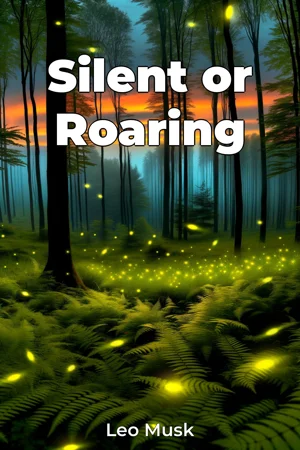
How do animals convey life-or-death messages without uttering a single word? *Silent or Roaring: The Hidden Language of the Animal Kingdom* unravels the complex tapestry of communication strategies that define survival, social bonds, and ecological balance across species. Bridging ethology, evolutionary biology, and sensory ecology, this book examines the silent dances, chemical whispers, thunderous calls, and intricate gestures that shape interactions in the wild. The book begins by exploring two foundational pillars of animal communication: *chemical signaling* and *acoustic adaptation*. From pheromones guiding ants to food sources to the low-frequency rumbles of elephants coordinating herds miles apart, these methods reveal how evolution has fine-tuned species to their environments. A third focus, *multimodal communication*, demonstrates how animals like dolphins and primates combine sounds, gestures, and touch to convey nuanced information. These topics underscore a central thesis: communication is not merely a tool for survival but a dynamic force driving ecological relationships and evolutionary innovation. Contextualizing these ideas, the book traces the history of animal communication research, beginning with Karl von Frisch’s decoding of honeybee dances and Jane Goodall’s pioneering observations of chimpanzee societies. Advances in technology, such as bioacoustic recording and AI-driven pattern analysis, now allow scientists to decode previously inscrutable behaviors, like the ultrasonic courtship calls of mice or the polarized light signals of mantis shrimp. This progression highlights how our understanding has shifted from viewing animal signals as simple reflexes to recognizing them as sophisticated, context-dependent systems. Structured in three parts, the book first introduces the mechanisms of communication, detailing how sensory adaptations—such as the infrared receptors of pit vipers or the electroreception of sharks—shape species-specific “languages.” The second section delves into case studies: the synchronized flashing of fireflies, the dialect variations in orca pods, and the deceptive alarm calls of fork-tailed drongos tricking other animals into abandoning food. Each chapter ties these behaviors to broader ecological impacts, such as pollination networks or predator-prey dynamics. The final section addresses human influences, from noise pollution disrupting marine mammal navigation to conservation efforts leveraging communication research to rebuild endangered populations. Evidence is drawn from peer-reviewed studies, field experiments, and cross-species comparisons. For instance, the book cites research on vervet monkeys’ distinct alarm calls for aerial versus terrestrial predators—a study pivotal to understanding the evolution of semantic signaling. Unique methodologies include biomechanical analyses of songbird syrinxes and 3D modeling of spiderweb vibrations transmitted as mating signals. Interdisciplinary links enrich the narrative: neuroscience clarifies how octopuses encode skin texture changes into visual signals, linguistics informs debates about syntax in bird songs, and robotics inspires biomimetic designs based on termite mound communication. These connections position animal communication as a lens for examining broader questions about intelligence, sociality, and the origins of human language. *Silent or Roaring* distinguishes itself by integrating sensory ecology—the study of how environmental factors shape signal transmission—with evolutionary theory. This approach reveals why certain communication modes dominate specific habitats, such as visual displays in clear waters versus chemical cues in dense forests. The book also challenges anthropocentric biases by reframing “silence” not as absence but as a strategic choice in contexts where stealth ensures survival. Written in an accessible yet rigorously scientific style, the book employs vivid field observations and concise explanations of technical concepts. It balances academic depth with narrative flair, such as recounting the discovery of bioluminescent communication in deep-sea squid or the role of infrasound in elephant mourning rituals. Targeted at biology enthusiasts, students of animal behavior, and general readers curious about the natural world, the book bridges textbook precision and popular science engagement. It adheres to genre conventions by prioritizing empirical evidence while emphasizing storytelling through species-specific case studies. Though focused on terrestrial and aquatic vertebrates, the scope acknowledges limitations—such as the sparse coverage of microbial communication—and directs readers to specialized texts. Practical applications are highlighted throughout: conservationists using playback technology to attract birds to restored habitats, or engineers applying swarm intelligence algorithms inspired by fish schooling. The book engages with ongoing debates, such as whether animal signals qualify as “language” or the ethical implications of interpreting their subjective experiences. By presenting competing hypotheses—for instance, conflicting views on prairie dog call complexity—it invites readers to critically evaluate emerging science. *Silent or Roaring* ultimately argues that decoding animal communication is not just about understanding other species but redefining humanity’s place within a network of interconnected, intelligent life. It leaves readers with a pressing question: As human activity drowns out natural signals, what vital messages might we be silencing?
How do animals convey life-or-death messages without uttering a single word? *Silent or Roaring: The Hidden Language of the Animal Kingdom* unravels the complex tapestry of communication strategies that define survival, social bonds, and ecological balance across species. Bridging ethology, evolutionary biology, and sensory ecology, this book examines the silent dances, chemical whispers, thunderous calls, and intricate gestures that shape interactions in the wild. The book begins by exploring two foundational pillars of animal communication: *chemical signaling* and *acoustic adaptation*. From pheromones guiding ants to food sources to the low-frequency rumbles of elephants coordinating herds miles apart, these methods reveal how evolution has fine-tuned species to their environments. A third focus, *multimodal communication*, demonstrates how animals like dolphins and primates combine sounds, gestures, and touch to convey nuanced information. These topics underscore a central thesis: communication is not merely a tool for survival but a dynamic force driving ecological relationships and evolutionary innovation. Contextualizing these ideas, the book traces the history of animal communication research, beginning with Karl von Frisch’s decoding of honeybee dances and Jane Goodall’s pioneering observations of chimpanzee societies. Advances in technology, such as bioacoustic recording and AI-driven pattern analysis, now allow scientists to decode previously inscrutable behaviors, like the ultrasonic courtship calls of mice or the polarized light signals of mantis shrimp. This progression highlights how our understanding has shifted from viewing animal signals as simple reflexes to recognizing them as sophisticated, context-dependent systems. Structured in three parts, the book first introduces the mechanisms of communication, detailing how sensory adaptations—such as the infrared receptors of pit vipers or the electroreception of sharks—shape species-specific “languages.” The second section delves into case studies: the synchronized flashing of fireflies, the dialect variations in orca pods, and the deceptive alarm calls of fork-tailed drongos tricking other animals into abandoning food. Each chapter ties these behaviors to broader ecological impacts, such as pollination networks or predator-prey dynamics. The final section addresses human influences, from noise pollution disrupting marine mammal navigation to conservation efforts leveraging communication research to rebuild endangered populations. Evidence is drawn from peer-reviewed studies, field experiments, and cross-species comparisons. For instance, the book cites research on vervet monkeys’ distinct alarm calls for aerial versus terrestrial predators—a study pivotal to understanding the evolution of semantic signaling. Unique methodologies include biomechanical analyses of songbird syrinxes and 3D modeling of spiderweb vibrations transmitted as mating signals. Interdisciplinary links enrich the narrative: neuroscience clarifies how octopuses encode skin texture changes into visual signals, linguistics informs debates about syntax in bird songs, and robotics inspires biomimetic designs based on termite mound communication. These connections position animal communication as a lens for examining broader questions about intelligence, sociality, and the origins of human language. *Silent or Roaring* distinguishes itself by integrating sensory ecology—the study of how environmental factors shape signal transmission—with evolutionary theory. This approach reveals why certain communication modes dominate specific habitats, such as visual displays in clear waters versus chemical cues in dense forests. The book also challenges anthropocentric biases by reframing “silence” not as absence but as a strategic choice in contexts where stealth ensures survival. Written in an accessible yet rigorously scientific style, the book employs vivid field observations and concise explanations of technical concepts. It balances academic depth with narrative flair, such as recounting the discovery of bioluminescent communication in deep-sea squid or the role of infrasound in elephant mourning rituals. Targeted at biology enthusiasts, students of animal behavior, and general readers curious about the natural world, the book bridges textbook precision and popular science engagement. It adheres to genre conventions by prioritizing empirical evidence while emphasizing storytelling through species-specific case studies. Though focused on terrestrial and aquatic vertebrates, the scope acknowledges limitations—such as the sparse coverage of microbial communication—and directs readers to specialized texts. Practical applications are highlighted throughout: conservationists using playback technology to attract birds to restored habitats, or engineers applying swarm intelligence algorithms inspired by fish schooling. The book engages with ongoing debates, such as whether animal signals qualify as “language” or the ethical implications of interpreting their subjective experiences. By presenting competing hypotheses—for instance, conflicting views on prairie dog call complexity—it invites readers to critically evaluate emerging science. *Silent or Roaring* ultimately argues that decoding animal communication is not just about understanding other species but redefining humanity’s place within a network of interconnected, intelligent life. It leaves readers with a pressing question: As human activity drowns out natural signals, what vital messages might we be silencing?
*Silent or Roaring: The Hidden Language of the Animal Kingdom* explores the astonishing ways animals communicate—from chemical cues to thunderous calls—revealing how these strategies shape survival, social bonds, and ecosystems. The book’s central theme underscores communication as an evolutionary force, weaving together ethology, sensory ecology, and cutting-edge technology. Readers discover how ants navigate via pheromone trails, elephants coordinate herds with infrasound rumbles, and dolphins combine clicks and gestures to share complex messages. These examples highlight a key insight: animals often blend multiple modes of communication, like a symphony of signals tailored to their environments. The book progresses from foundational concepts to vivid case studies, blending peer-reviewed research with storytelling. Early chapters decode sensory adaptations, such as pit vipers detecting infrared heat or sharks sensing electric fields, while later sections showcase fireflies syncing bioluminescent flashes and drongo birds deceiving rivals with fake alarms. Unique interdisciplinary links—like comparing octopus skin signals to visual languages—bridge biology with robotics and linguistics. A standout feature is its focus on *sensory ecology*, explaining why certain habitats favor specific signals, such as chemical cues in dense forests versus visual displays in clear waters. Closing with human impacts, *Silent or Roaring* examines how noise pollution drowns out whale songs and how conservationists use bioacoustic recordings to aid endangered species. Its accessible style balances scientific rigor with engaging anecdotes, like deep-sea squid conversations or elephant mourning rituals. By framing animal communication as both a survival toolkit and a window into intelligence, the book challenges readers to reconsider humanity’s role in a world where every silent gesture or roaring call sustains the delicate web of life.
Book Details
ISBN
9788233955519
Publisher
Publifye AS
Your Licenses
You don't own any licenses for this book
Purchase a license below to unlock this book and download the EPUB.
Purchase License
Select a tier to unlock this book
Need bulk licensing?
Contact us for enterprise agreements.