
About This Book
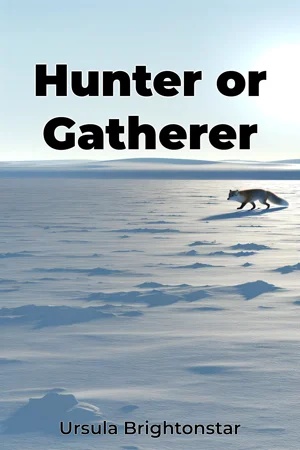
What does it truly mean to survive in the natural world? Is it the sharp claws of a predator, honed by millennia of pursuit, or the patient precision of a species that thrives by harvesting nature’s bounty without a drop of blood? *Hunter or Gatherer: The Evolutionary Strategies of Survival* delves into the stark contrasts and surprising parallels between species that hunt and those that gather, unraveling how these strategies shape ecosystems, drive evolutionary innovation, and redefine our understanding of “fitness” in the wild. The book anchors its exploration in three pivotal themes: the evolutionary trade-offs between energy expenditure and nutritional yield, the ecological ripple effects of hunting versus gathering behaviors, and the behavioral adaptations that define these survival strategies. These topics are vital for understanding how life sustains itself in diverse environments, offering insights into resource management, species interdependence, and the delicate balance of ecosystems. To contextualize these ideas, the book begins with a primer on evolutionary biology and ecological principles, explaining how Darwinian selection pressures—such as competition, predation, and resource scarcity—have sculpted the behaviors of species over millions of years. It contrasts the high-risk, high-reward lifestyle of predators like wolves and raptors with the steady, low-risk foraging of species such as squirrels and bees, emphasizing how environmental stability or volatility influences these strategies. At its core, *Hunter or Gatherer* argues that neither strategy is inherently superior. Instead, each represents a finely tuned response to specific ecological niches. The book challenges anthropocentric assumptions about “dominance” in nature, illustrating how gatherers often wield as much evolutionary influence as apex predators. For instance, seed-dispersing frugivores like toucans shape forest regeneration, while ambush predators such as crocodiles regulate aquatic ecosystems. Structured into three sections, the book first dissects the mechanics of hunting and gathering, detailing anatomical adaptations (e.g., carnassial teeth in big cats vs. specialized digestive systems in herbivores). The second section examines case studies across biomes, from the cooperative hunting of African wild dogs to the symbiotic gathering of leafcutter ants cultivating fungi. The final chapters synthesize these narratives, exploring how climate change and habitat fragmentation disproportionately affect hunters and gatherers, with implications for conservation. Evidence is drawn from field studies, isotopic analyses of diets, and fossil records tracking morphological changes in species over time. Unique research includes GPS tracking data comparing the movement patterns of Arctic foxes (hunters) and Galápagos tortoises (gatherers), revealing stark differences in energy efficiency. The book also highlights groundbreaking work on plant communication, showing how some flora “recruit” gatherers like ants to deter herbivores. Interdisciplinary connections bridge anthropology—comparing animal strategies to human hunter-gatherer societies—and climate science, linking foraging behaviors to shifting weather patterns. Robotics engineers, for example, study army ants’ collective hunting tactics to design swarm-based algorithms. A key innovation of the book is its rejection of hierarchy in survival strategies. By juxtaposing the stealth of a spider weaving its web with the industriousness of a bowerbird collecting trinkets, it underscores that survival hinges on niche specialization, not brute force. Written in a narrative nonfiction style, the book balances scientific rigor with vivid storytelling, weaving anecdotes about individual species with broader theoretical frameworks. Its tone is accessible to general readers but detailed enough for students of biology or ecology. Targeted at nature enthusiasts, conservationists, and educators, *Hunter or Gatherer* appeals to anyone curious about the hidden logic of ecosystems. Its practical applications range from informing wildlife management policies—such as protecting keystone gatherers like pollinators—to inspiring sustainable agricultural practices modeled on natural foraging systems. While focused on non-human species, the book briefly addresses parallels to human societal structures, though it deliberately avoids oversimplified comparisons. Controversies, such as the ethical debate over rewilding apex predators into human-dominated landscapes, are examined through a lens of ecological pragmatism. By illuminating the nuanced dance between hunters and gatherers, this book reframes our perception of survival, offering a profound reminder that every species, whether predator or scavenger, plays a role in the tapestry of life. In an era of rapid environmental change, such insights are not just academic—they are essential for safeguarding the future of biodiversity.
What does it truly mean to survive in the natural world? Is it the sharp claws of a predator, honed by millennia of pursuit, or the patient precision of a species that thrives by harvesting nature’s bounty without a drop of blood? *Hunter or Gatherer: The Evolutionary Strategies of Survival* delves into the stark contrasts and surprising parallels between species that hunt and those that gather, unraveling how these strategies shape ecosystems, drive evolutionary innovation, and redefine our understanding of “fitness” in the wild. The book anchors its exploration in three pivotal themes: the evolutionary trade-offs between energy expenditure and nutritional yield, the ecological ripple effects of hunting versus gathering behaviors, and the behavioral adaptations that define these survival strategies. These topics are vital for understanding how life sustains itself in diverse environments, offering insights into resource management, species interdependence, and the delicate balance of ecosystems. To contextualize these ideas, the book begins with a primer on evolutionary biology and ecological principles, explaining how Darwinian selection pressures—such as competition, predation, and resource scarcity—have sculpted the behaviors of species over millions of years. It contrasts the high-risk, high-reward lifestyle of predators like wolves and raptors with the steady, low-risk foraging of species such as squirrels and bees, emphasizing how environmental stability or volatility influences these strategies. At its core, *Hunter or Gatherer* argues that neither strategy is inherently superior. Instead, each represents a finely tuned response to specific ecological niches. The book challenges anthropocentric assumptions about “dominance” in nature, illustrating how gatherers often wield as much evolutionary influence as apex predators. For instance, seed-dispersing frugivores like toucans shape forest regeneration, while ambush predators such as crocodiles regulate aquatic ecosystems. Structured into three sections, the book first dissects the mechanics of hunting and gathering, detailing anatomical adaptations (e.g., carnassial teeth in big cats vs. specialized digestive systems in herbivores). The second section examines case studies across biomes, from the cooperative hunting of African wild dogs to the symbiotic gathering of leafcutter ants cultivating fungi. The final chapters synthesize these narratives, exploring how climate change and habitat fragmentation disproportionately affect hunters and gatherers, with implications for conservation. Evidence is drawn from field studies, isotopic analyses of diets, and fossil records tracking morphological changes in species over time. Unique research includes GPS tracking data comparing the movement patterns of Arctic foxes (hunters) and Galápagos tortoises (gatherers), revealing stark differences in energy efficiency. The book also highlights groundbreaking work on plant communication, showing how some flora “recruit” gatherers like ants to deter herbivores. Interdisciplinary connections bridge anthropology—comparing animal strategies to human hunter-gatherer societies—and climate science, linking foraging behaviors to shifting weather patterns. Robotics engineers, for example, study army ants’ collective hunting tactics to design swarm-based algorithms. A key innovation of the book is its rejection of hierarchy in survival strategies. By juxtaposing the stealth of a spider weaving its web with the industriousness of a bowerbird collecting trinkets, it underscores that survival hinges on niche specialization, not brute force. Written in a narrative nonfiction style, the book balances scientific rigor with vivid storytelling, weaving anecdotes about individual species with broader theoretical frameworks. Its tone is accessible to general readers but detailed enough for students of biology or ecology. Targeted at nature enthusiasts, conservationists, and educators, *Hunter or Gatherer* appeals to anyone curious about the hidden logic of ecosystems. Its practical applications range from informing wildlife management policies—such as protecting keystone gatherers like pollinators—to inspiring sustainable agricultural practices modeled on natural foraging systems. While focused on non-human species, the book briefly addresses parallels to human societal structures, though it deliberately avoids oversimplified comparisons. Controversies, such as the ethical debate over rewilding apex predators into human-dominated landscapes, are examined through a lens of ecological pragmatism. By illuminating the nuanced dance between hunters and gatherers, this book reframes our perception of survival, offering a profound reminder that every species, whether predator or scavenger, plays a role in the tapestry of life. In an era of rapid environmental change, such insights are not just academic—they are essential for safeguarding the future of biodiversity.
*Hunter or Gatherer: The Evolutionary Strategies of Survival* explores how species thrive through hunting or gathering, challenging assumptions about which strategy ensures survival. The book argues that neither approach is universally superior—each reflects precise adaptations to ecological niches. Anchored in evolutionary biology and ecological principles, it examines trade-offs between energy expenditure and nutritional gains, the ripple effects of these behaviors on ecosystems, and the surprising interdependence of species. From wolves’ high-risk predation to squirrels’ methodical foraging, the book reveals how environmental stability or volatility shapes survival tactics, emphasizing that gatherers like seed-dispersing toucans can influence ecosystems as profoundly as apex predators. Structured in three sections, the book first unpacks anatomical adaptations, such as carnassial teeth in big cats versus specialized digestion in herbivores. It then presents global case studies: African wild dogs’ cooperative hunts, leafcutter ants’ fungal farms, and GPS data contrasting Arctic foxes’ energy-intensive roaming with Galápagos tortoises’ efficient grazing. The final chapters address climate change’s uneven impact on hunters and gatherers, linking foraging behaviors to conservation challenges. Unique research highlights plant communication, where flora recruit ants as bodyguards, and robotics engineers drawing inspiration from army ants’ swarm tactics. Blending narrative storytelling with scientific rigor, *Hunter or Gatherer* reframes “fitness” in nature, showcasing niche specialization over brute dominance. Its interdisciplinary lens—bridging anthropology, climate science, and robotics—offers practical insights for conservation and sustainable practices. By illuminating the delicate balance of ecosystems, the book underscores that biodiversity’s survival hinges on understanding these strategies, making it essential reading for anyone invested in preserving the natural world.
Book Details
ISBN
9788233955458
Publisher
Publifye AS
Your Licenses
You don't own any licenses for this book
Purchase a license below to unlock this book and download the EPUB.
Purchase License
Select a tier to unlock this book
Need bulk licensing?
Contact us for enterprise agreements.