
About This Book
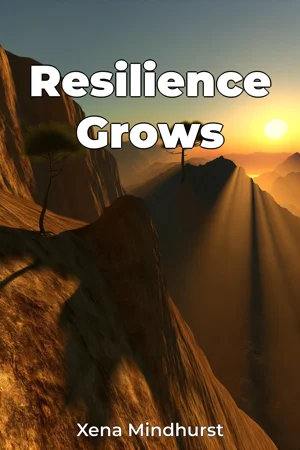
What separates those who thrive after adversity from those who struggle to recover? *Resilience Grows: Building Strength Through Science and Community* answers this question by synthesizing decades of research from psychology, sociology, and neuroscience into actionable strategies for cultivating personal resilience. This book argues that resilience is not an innate trait but a skill that can be developed through deliberate practice, social support, and cognitive reframing. The book opens by grounding resilience in its historical and scientific context. Early psychological studies, such as Martin Seligman’s work on learned helplessness, revealed how mindset shapes responses to adversity. Sociological research, including Émile Durkheim’s analysis of social integration, highlighted the role of community in buffering against life’s challenges. These foundational insights frame the book’s central thesis: Resilience emerges from the interplay between individual psychology and social ecosystems. Three core topics structure the narrative. First, **cognitive-behavioral strategies** are examined, emphasizing how reframing negative thought patterns can reduce emotional distress. Techniques like mindfulness and gratitude journaling are presented alongside studies demonstrating their impact on neural plasticity. Second, the **sociology of support networks** explores how relationships, cultural norms, and institutional resources foster collective resilience. Case studies from communities recovering from natural disasters illustrate the power of shared purpose. Third, the book introduces **practical resilience-building exercises**, such as stress inoculation training and values clarification, which readers can apply immediately. The argument is bolstered by diverse evidence. Longitudinal psychological studies, such as the Harvard Grant Study, show how adaptive coping mechanisms correlate with long-term well-being. Ethnographic research into tight-knit communities, like Roseto, Pennsylvania—where low rates of heart disease were linked to social cohesion—underscores the health benefits of interconnectedness. The book also incorporates emerging neuroscience, including fMRI data revealing how mindfulness practices dampen amygdala activity during stress. Interdisciplinary connections strengthen the book’s framework. Insights from behavioral economics explain how decision fatigue undermines resilience, while public health research clarifies the physiological costs of chronic loneliness. By integrating these perspectives, *Resilience Grows* challenges the myth of the “self-made” resilient individual, instead positioning resilience as a collaborative achievement. A unique contribution lies in the book’s dual focus on **micro-level cognitive tools** and **macro-level societal structures**. While many resilience guides prioritize self-help techniques, this work equally addresses systemic factors, such as economic inequality and access to mental health care, that influence an individual’s capacity to endure hardship. This balanced approach appeals to both readers seeking personal growth and professionals in education, therapy, or organizational leadership. Written in a clear, conversational tone, the book avoids jargon without sacrificing rigor. Each chapter concludes with reflection questions and evidence-based exercises, such as designing a “resilience blueprint” or mapping personal support networks. Real-world applications are emphasized: a teacher might use stress inoculation techniques to manage classroom challenges, while a community organizer could apply principles of social capital to strengthen neighborhood ties. The book acknowledges ongoing debates, such as critiques of positive psychology’s overemphasis on individual responsibility. It engages thoughtfully with these tensions, advocating for policies that complement personal resilience efforts—like workplace mental health programs or urban design prioritizing communal spaces. Targeted at adults navigating career shifts, caregivers, or anyone facing uncertainty, *Resilience Grows* limits its scope to contemporary Western contexts while acknowledging cultural variations in resilience practices. It does not delve into clinical mental health treatment but offers supplemental strategies for overall psychological fitness. By merging scientific rigor with accessible storytelling, *Resilience Grows* redefines resilience as a dynamic process—one that flourishes when nurtured within both the mind and the wider world.
What separates those who thrive after adversity from those who struggle to recover? *Resilience Grows: Building Strength Through Science and Community* answers this question by synthesizing decades of research from psychology, sociology, and neuroscience into actionable strategies for cultivating personal resilience. This book argues that resilience is not an innate trait but a skill that can be developed through deliberate practice, social support, and cognitive reframing. The book opens by grounding resilience in its historical and scientific context. Early psychological studies, such as Martin Seligman’s work on learned helplessness, revealed how mindset shapes responses to adversity. Sociological research, including Émile Durkheim’s analysis of social integration, highlighted the role of community in buffering against life’s challenges. These foundational insights frame the book’s central thesis: Resilience emerges from the interplay between individual psychology and social ecosystems. Three core topics structure the narrative. First, **cognitive-behavioral strategies** are examined, emphasizing how reframing negative thought patterns can reduce emotional distress. Techniques like mindfulness and gratitude journaling are presented alongside studies demonstrating their impact on neural plasticity. Second, the **sociology of support networks** explores how relationships, cultural norms, and institutional resources foster collective resilience. Case studies from communities recovering from natural disasters illustrate the power of shared purpose. Third, the book introduces **practical resilience-building exercises**, such as stress inoculation training and values clarification, which readers can apply immediately. The argument is bolstered by diverse evidence. Longitudinal psychological studies, such as the Harvard Grant Study, show how adaptive coping mechanisms correlate with long-term well-being. Ethnographic research into tight-knit communities, like Roseto, Pennsylvania—where low rates of heart disease were linked to social cohesion—underscores the health benefits of interconnectedness. The book also incorporates emerging neuroscience, including fMRI data revealing how mindfulness practices dampen amygdala activity during stress. Interdisciplinary connections strengthen the book’s framework. Insights from behavioral economics explain how decision fatigue undermines resilience, while public health research clarifies the physiological costs of chronic loneliness. By integrating these perspectives, *Resilience Grows* challenges the myth of the “self-made” resilient individual, instead positioning resilience as a collaborative achievement. A unique contribution lies in the book’s dual focus on **micro-level cognitive tools** and **macro-level societal structures**. While many resilience guides prioritize self-help techniques, this work equally addresses systemic factors, such as economic inequality and access to mental health care, that influence an individual’s capacity to endure hardship. This balanced approach appeals to both readers seeking personal growth and professionals in education, therapy, or organizational leadership. Written in a clear, conversational tone, the book avoids jargon without sacrificing rigor. Each chapter concludes with reflection questions and evidence-based exercises, such as designing a “resilience blueprint” or mapping personal support networks. Real-world applications are emphasized: a teacher might use stress inoculation techniques to manage classroom challenges, while a community organizer could apply principles of social capital to strengthen neighborhood ties. The book acknowledges ongoing debates, such as critiques of positive psychology’s overemphasis on individual responsibility. It engages thoughtfully with these tensions, advocating for policies that complement personal resilience efforts—like workplace mental health programs or urban design prioritizing communal spaces. Targeted at adults navigating career shifts, caregivers, or anyone facing uncertainty, *Resilience Grows* limits its scope to contemporary Western contexts while acknowledging cultural variations in resilience practices. It does not delve into clinical mental health treatment but offers supplemental strategies for overall psychological fitness. By merging scientific rigor with accessible storytelling, *Resilience Grows* redefines resilience as a dynamic process—one that flourishes when nurtured within both the mind and the wider world.
"Resilience Grows: Building Strength Through Science and Community" dismantles the myth that resilience is an innate gift, positioning it instead as a learnable skill shaped by neuroscience, psychology, and social connections. At its core, the book explores how resilience blossoms through the interplay of individual habits—like reframing negative thoughts—and community support systems. Grounded in decades of research, it reveals surprising insights: for example, tight-knit communities like Roseto, Pennsylvania, historically showed remarkably low heart disease rates tied not to diet but to social cohesion, proving relationships can physically buffer stress. Neuroscience studies further illustrate how mindfulness practices reduce amygdala activity, literally rewiring the brain’s stress response over time. The book uniquely balances *micro-level* tools, such as cognitive-behavioral exercises and gratitude journaling, with *macro-level* societal factors like economic inequality. While many self-help guides focus solely on personal effort, this work argues systemic change—like accessible mental healthcare—is equally vital. Chapters progress from foundational concepts (think Martin Seligman’s learned helplessness experiments) to practical strategies, including stress inoculation training and mapping personal support networks. Real-world examples, from disaster recovery communities to teachers applying resilience techniques, keep concepts relatable. Written in clear, jargon-free prose, each chapter ends with reflection questions and evidence-based exercises, bridging theory and action. By merging rigorous science with actionable steps, "Resilience Grows" offers a refreshing, holistic path to emotional well-being—one that empowers readers to cultivate strength within themselves *and* their communities.
Book Details
ISBN
9788233955441
Publisher
Publifye AS
Your Licenses
You don't own any licenses for this book
Purchase a license below to unlock this book and download the EPUB.
Purchase License
Select a tier to unlock this book
Need bulk licensing?
Contact us for enterprise agreements.