
About This Book
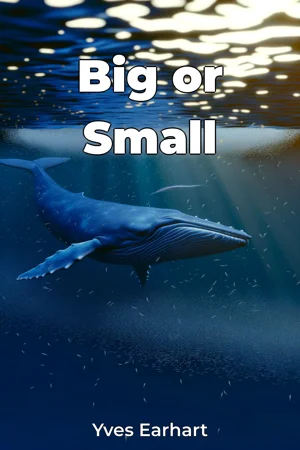
What determines whether a creature thrives or perishes in Earth’s diverse ecosystems? Is it strength, intelligence, or something far more fundamental—its size? *Big or Small: The Survival Strategies of Earth’s Extremes* examines the biological principles that allow the planet’s largest and smallest organisms to not only survive but shape the environments they inhabit. By exploring organisms at both ends of the size spectrum—from blue whales to soil microbes—this book reveals how scale dictates survival, influences ecological roles, and offers unexpected lessons for addressing modern environmental challenges. The book is structured around three core themes: the physics of size, the evolutionary trade-offs of adaptation, and the interconnectedness of life across scales. These topics anchor a broader discussion about biodiversity’s fragility and resilience, emphasizing that understanding extremes illuminates universal biological rules. Early chapters establish foundational concepts, such as the Square-Cube Law, which governs how an organism’s size affects its energy needs, mobility, and vulnerability to environmental shifts. For instance, while elephants require vast territories to sustain their mass, ants leverage their small size to form complex, energy-efficient colonies. These principles underscore a central thesis: size is not arbitrary but a evolutionary compromise shaped by survival demands. Contextualizing these ideas, the book traces historical scientific debates, including early 20th-century theories about biological scaling and contemporary research on microbial ecosystems. It assumes no prior expertise, introducing terms like *allometry* (the study of size-related growth) and *trophic cascades* (ecosystem disruptions triggered by species loss) with clarity. Case studies form the backbone of the narrative, such as how krill—tiny but abundant—support Antarctic food webs, or how the extinct *Titanosaur*’s colossal frame influenced prehistoric plant evolution. Parallel examples from microbiology illustrate how bacteria’s rapid reproduction enables antibiotic resistance, a phenomenon with stark parallels to larger species’ adaptive strategies. Interdisciplinary insights deepen the analysis. Physics explains why shrinking water droplets limit the mobility of fog-basking beetles, while engineering principles inform termite mound construction. The book also bridges ecology and climate science, arguing that preserving both megafauna and microorganisms is critical for carbon sequestration—whales trap atmospheric carbon in their bodies, while microbes regulate soil health. Such connections challenge readers to rethink conservation priorities, advocating for holistic approaches that value all scales of life. Research draws from peer-reviewed studies, field observations, and technological advancements like micro-CT scanning, which reveals the intricate anatomy of millimeter-long tardigrades. The author critiques outdated notions of “charismatic megafauna” dominating conservation discourse, presenting data on how phytoplankton—responsible for 50% of Earth’s photosynthesis—are as vital as polar bears. This evidence supports the argument that human-driven size biases in environmental policy risk destabilizing ecosystems. A unique feature of *Big or Small* is its dual-perspective approach: each chapter pairs a macro and micro organism to highlight convergent survival strategies. For example, the cooperative hunting of wolves is contrasted with bacterial quorum sensing, demonstrating that collective behavior transcends size. This framework reinforces the message that biological success hinges on universal principles, not scale alone. Written in a concise, journalistic style, the book balances scientific rigor with engaging storytelling. It avoids technical jargon, making it accessible to students, educators, and general readers curious about natural history. However, its focus on empirical case studies and systemic interactions will also appeal to professionals in ecology, conservation, and environmental policy. The final chapters address urgent applications, such as biomimicry inspired by hummingbird flight mechanics or mycorrhizal fungi networks used in sustainable agriculture. Controversies are not overlooked: the book examines ongoing debates about rewilding large herbivores versus protecting microbial diversity in degraded soils. By confronting these tensions, *Big or Small* positions itself as a pragmatic guide for reconciling human activity with planetary health. While the scope prioritizes terrestrial and marine animals, it acknowledges gaps—such as limited discussion of fungi or deep-sea extremophiles—as areas for future exploration. Ultimately, the book challenges readers to reconsider their perceptions of significance, arguing that in nature, size is neither an advantage nor a limitation, but a lens through which life’s ingenuity comes into focus.
What determines whether a creature thrives or perishes in Earth’s diverse ecosystems? Is it strength, intelligence, or something far more fundamental—its size? *Big or Small: The Survival Strategies of Earth’s Extremes* examines the biological principles that allow the planet’s largest and smallest organisms to not only survive but shape the environments they inhabit. By exploring organisms at both ends of the size spectrum—from blue whales to soil microbes—this book reveals how scale dictates survival, influences ecological roles, and offers unexpected lessons for addressing modern environmental challenges. The book is structured around three core themes: the physics of size, the evolutionary trade-offs of adaptation, and the interconnectedness of life across scales. These topics anchor a broader discussion about biodiversity’s fragility and resilience, emphasizing that understanding extremes illuminates universal biological rules. Early chapters establish foundational concepts, such as the Square-Cube Law, which governs how an organism’s size affects its energy needs, mobility, and vulnerability to environmental shifts. For instance, while elephants require vast territories to sustain their mass, ants leverage their small size to form complex, energy-efficient colonies. These principles underscore a central thesis: size is not arbitrary but a evolutionary compromise shaped by survival demands. Contextualizing these ideas, the book traces historical scientific debates, including early 20th-century theories about biological scaling and contemporary research on microbial ecosystems. It assumes no prior expertise, introducing terms like *allometry* (the study of size-related growth) and *trophic cascades* (ecosystem disruptions triggered by species loss) with clarity. Case studies form the backbone of the narrative, such as how krill—tiny but abundant—support Antarctic food webs, or how the extinct *Titanosaur*’s colossal frame influenced prehistoric plant evolution. Parallel examples from microbiology illustrate how bacteria’s rapid reproduction enables antibiotic resistance, a phenomenon with stark parallels to larger species’ adaptive strategies. Interdisciplinary insights deepen the analysis. Physics explains why shrinking water droplets limit the mobility of fog-basking beetles, while engineering principles inform termite mound construction. The book also bridges ecology and climate science, arguing that preserving both megafauna and microorganisms is critical for carbon sequestration—whales trap atmospheric carbon in their bodies, while microbes regulate soil health. Such connections challenge readers to rethink conservation priorities, advocating for holistic approaches that value all scales of life. Research draws from peer-reviewed studies, field observations, and technological advancements like micro-CT scanning, which reveals the intricate anatomy of millimeter-long tardigrades. The author critiques outdated notions of “charismatic megafauna” dominating conservation discourse, presenting data on how phytoplankton—responsible for 50% of Earth’s photosynthesis—are as vital as polar bears. This evidence supports the argument that human-driven size biases in environmental policy risk destabilizing ecosystems. A unique feature of *Big or Small* is its dual-perspective approach: each chapter pairs a macro and micro organism to highlight convergent survival strategies. For example, the cooperative hunting of wolves is contrasted with bacterial quorum sensing, demonstrating that collective behavior transcends size. This framework reinforces the message that biological success hinges on universal principles, not scale alone. Written in a concise, journalistic style, the book balances scientific rigor with engaging storytelling. It avoids technical jargon, making it accessible to students, educators, and general readers curious about natural history. However, its focus on empirical case studies and systemic interactions will also appeal to professionals in ecology, conservation, and environmental policy. The final chapters address urgent applications, such as biomimicry inspired by hummingbird flight mechanics or mycorrhizal fungi networks used in sustainable agriculture. Controversies are not overlooked: the book examines ongoing debates about rewilding large herbivores versus protecting microbial diversity in degraded soils. By confronting these tensions, *Big or Small* positions itself as a pragmatic guide for reconciling human activity with planetary health. While the scope prioritizes terrestrial and marine animals, it acknowledges gaps—such as limited discussion of fungi or deep-sea extremophiles—as areas for future exploration. Ultimately, the book challenges readers to reconsider their perceptions of significance, arguing that in nature, size is neither an advantage nor a limitation, but a lens through which life’s ingenuity comes into focus.
"Big or Small: The Survival Strategies of Earth’s Extremes" explores how an organism’s size shapes its survival, ecological impact, and evolutionary path. By comparing extremes—from blue whales to soil microbes—the book argues that size is a biological master key, governing energy needs, adaptation trade-offs, and roles in ecosystems. Central themes include the Square-Cube Law, which explains why elephants struggle on steep slopes while ants thrive, and how microorganisms and megafauna alike drive biodiversity. The book uniquely pairs macro and micro case studies: wolves’ cooperative hunting mirrors bacterial quorum sensing, revealing universal survival strategies. Blending physics, ecology, and climate science, the author demystifies concepts like allometry (size-related growth) and trophic cascades through vivid examples. Krill, though tiny, anchor Antarctic food webs, while whales sequester carbon, linking their survival to climate regulation. The narrative progresses from foundational principles to modern applications, such as biomimicry inspired by hummingbird flight or fungal networks used in sustainable farming. Avoiding jargon, it critiques conservation biases favoring “charismatic” species, stressing that phytoplankton—responsible for half of Earth’s photosynthesis—are as vital as polar bears. What sets *Big or Small* apart is its dual-perspective approach, showing how life’s ingenuity transcends scale. By connecting ancient evolutionary compromises to urgent environmental challenges, it urges readers to rethink conservation: protecting biodiversity means valuing microbes as much as megafauna. Accessible yet rigorous, the book bridges curiosity and science, proving that size isn’t a limitation—it’s a lens for understanding life’s resilience.
Book Details
ISBN
9788233955410
Publisher
Publifye AS
Your Licenses
You don't own any licenses for this book
Purchase a license below to unlock this book and download the EPUB.
Purchase License
Select a tier to unlock this book
Need bulk licensing?
Contact us for enterprise agreements.