
About This Book
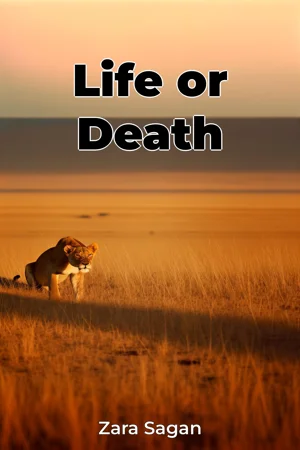
In the golden haze of the Serengeti, a lioness’s hunt fails—again. Her survival hinges not just on skill, but on an intricate web of adaptations, instincts, and environmental pressures that shape every living moment. *Life or Death: The Unseen Rules of Survival* delves into the relentless forces governing existence across Earth’s ecosystems, blending evolutionary biology, ecology, and behavioral science to unravel how life persists against staggering odds. The book centers on three pivotal themes: predator-prey dynamics, energy allocation trade-offs, and symbiotic interdependence. These concepts illuminate the universal calculus of survival, where every decision—from a gazelle’s sprint to a tree’s root depth—carries life-or-death consequences. By exploring these topics, the book challenges the oversimplified notion of “survival of the fittest,” revealing instead a world shaped by cooperation, sacrifice, and finely tuned evolutionary strategies. Contextualizing these ideas, the text traces their roots to Darwinian theory while integrating contemporary research. Foundational principles like natural selection and genetic adaptation are clarified, ensuring accessibility for readers without a scientific background. The narrative then bridges to modern discoveries, such as epigenetics and microbiome interactions, which redefine how organisms respond to environmental stressors. The central thesis posits that survival is not merely a contest of strength but a dynamic balance of competition and collaboration, driven by evolutionary innovation and constrained by resource limitations. Structured across eight chapters, *Life or Death* begins with an overview of survival mechanisms in diverse biomes, from rainforests to deep-sea vents. Subsequent sections dissect predation strategies, highlighting case studies like the coevolution of cheetahs and gazelles, and the role of venom in marine species. A chapter on energy trade-offs examines how organisms allocate resources between growth, reproduction, and defense—such as desert plants sacrificing leaf size for deeper roots. The latter half explores mutualistic relationships, including coral-algae symbiosis and human-gut microbiome interactions, culminating in a discussion of conservation biology. Here, the book argues that understanding survival strategies is critical for mitigating biodiversity loss, offering actionable insights for habitat restoration and species management. Evidence is drawn from peer-reviewed studies, field observations, and technological advancements. GPS tracking data reveals migratory patterns disrupted by climate change, while CRISPR gene-editing experiments demonstrate rapid evolutionary adaptations in lab settings. The book also leverages long-term ecological datasets, such as decades-long predator population surveys in Yellowstone, to underscore the fragility of food webs. Interdisciplinary connections deepen the analysis. Climate science contextualizes shifting habitats, while bioengineering principles illustrate how organisms “design” survival solutions through evolution. Ethical debates—such as humanity’s role in manipulating ecosystems—are examined through a philosophical lens, inviting readers to consider the moral implications of conservation tactics like de-extinction. *Life or Death* distinguishes itself by merging rigorous scientific inquiry with narrative-driven storytelling. Vivid descriptions of animal behavior and ecosystem dynamics are paired with clear explanations of molecular processes, creating a cohesive portrait of life’s resilience. The tone balances academic precision with approachable prose, avoiding jargon without sacrificing depth. Targeted at science enthusiasts, students, and conservation practitioners, the book appeals to anyone curious about humanity’s place within nature’s broader struggle. It adheres to genre conventions by prioritizing empirical evidence and real-world relevance, while candidly addressing gaps in current research—such as the understudied survival tactics of extremophiles in volcanic ecosystems. Practical applications are emphasized throughout. Farmers might apply principles of resource allocation to sustainable agriculture, while policymakers are urged to prioritize habitat connectivity in urban planning. The final chapter challenges readers to reflect on personal choices, linking individual actions—like reducing plastic use—to global ecological outcomes. Controversies are not shied away from. The book critiques debated practices like trophy hunting as a conservation tool and examines polarized views on human intervention in wildlife management. By presenting evidence from both sides, it encourages critical thinking over prescriptive solutions. *Life or Death* does not claim to resolve nature’s complexities but offers a framework for understanding them. In doing so, it transforms the silent struggle outside our windows into a narrative of ingenuity, interdependence, and enduring wonder.
In the golden haze of the Serengeti, a lioness’s hunt fails—again. Her survival hinges not just on skill, but on an intricate web of adaptations, instincts, and environmental pressures that shape every living moment. *Life or Death: The Unseen Rules of Survival* delves into the relentless forces governing existence across Earth’s ecosystems, blending evolutionary biology, ecology, and behavioral science to unravel how life persists against staggering odds. The book centers on three pivotal themes: predator-prey dynamics, energy allocation trade-offs, and symbiotic interdependence. These concepts illuminate the universal calculus of survival, where every decision—from a gazelle’s sprint to a tree’s root depth—carries life-or-death consequences. By exploring these topics, the book challenges the oversimplified notion of “survival of the fittest,” revealing instead a world shaped by cooperation, sacrifice, and finely tuned evolutionary strategies. Contextualizing these ideas, the text traces their roots to Darwinian theory while integrating contemporary research. Foundational principles like natural selection and genetic adaptation are clarified, ensuring accessibility for readers without a scientific background. The narrative then bridges to modern discoveries, such as epigenetics and microbiome interactions, which redefine how organisms respond to environmental stressors. The central thesis posits that survival is not merely a contest of strength but a dynamic balance of competition and collaboration, driven by evolutionary innovation and constrained by resource limitations. Structured across eight chapters, *Life or Death* begins with an overview of survival mechanisms in diverse biomes, from rainforests to deep-sea vents. Subsequent sections dissect predation strategies, highlighting case studies like the coevolution of cheetahs and gazelles, and the role of venom in marine species. A chapter on energy trade-offs examines how organisms allocate resources between growth, reproduction, and defense—such as desert plants sacrificing leaf size for deeper roots. The latter half explores mutualistic relationships, including coral-algae symbiosis and human-gut microbiome interactions, culminating in a discussion of conservation biology. Here, the book argues that understanding survival strategies is critical for mitigating biodiversity loss, offering actionable insights for habitat restoration and species management. Evidence is drawn from peer-reviewed studies, field observations, and technological advancements. GPS tracking data reveals migratory patterns disrupted by climate change, while CRISPR gene-editing experiments demonstrate rapid evolutionary adaptations in lab settings. The book also leverages long-term ecological datasets, such as decades-long predator population surveys in Yellowstone, to underscore the fragility of food webs. Interdisciplinary connections deepen the analysis. Climate science contextualizes shifting habitats, while bioengineering principles illustrate how organisms “design” survival solutions through evolution. Ethical debates—such as humanity’s role in manipulating ecosystems—are examined through a philosophical lens, inviting readers to consider the moral implications of conservation tactics like de-extinction. *Life or Death* distinguishes itself by merging rigorous scientific inquiry with narrative-driven storytelling. Vivid descriptions of animal behavior and ecosystem dynamics are paired with clear explanations of molecular processes, creating a cohesive portrait of life’s resilience. The tone balances academic precision with approachable prose, avoiding jargon without sacrificing depth. Targeted at science enthusiasts, students, and conservation practitioners, the book appeals to anyone curious about humanity’s place within nature’s broader struggle. It adheres to genre conventions by prioritizing empirical evidence and real-world relevance, while candidly addressing gaps in current research—such as the understudied survival tactics of extremophiles in volcanic ecosystems. Practical applications are emphasized throughout. Farmers might apply principles of resource allocation to sustainable agriculture, while policymakers are urged to prioritize habitat connectivity in urban planning. The final chapter challenges readers to reflect on personal choices, linking individual actions—like reducing plastic use—to global ecological outcomes. Controversies are not shied away from. The book critiques debated practices like trophy hunting as a conservation tool and examines polarized views on human intervention in wildlife management. By presenting evidence from both sides, it encourages critical thinking over prescriptive solutions. *Life or Death* does not claim to resolve nature’s complexities but offers a framework for understanding them. In doing so, it transforms the silent struggle outside our windows into a narrative of ingenuity, interdependence, and enduring wonder.
*Life or Death: The Unseen Rules of Survival* explores the delicate balance of competition and collaboration that defines life across Earth’s ecosystems. At its core, the book challenges the myth of “survival of the fittest,” revealing how survival hinges on intricate relationships—like predator-prey arms races and symbiotic partnerships—rather than brute strength alone. Through vivid examples such as cheetahs and gazelles locked in evolutionary one-upmanship or desert plants investing in deep roots over lush leaves, it illustrates how energy allocation and adaptation shape every life-or-death decision. Blending evolutionary biology, ecology, and behavioral science, the book progresses from foundational concepts like natural selection to cutting-edge discoveries, such as how microbiome interactions help species weather environmental stress. Structured across eight chapters, it moves from biome-specific survival tactics to pressing conservation challenges, using case studies like Yellowstone’s rewilded wolves and coral reefs reliant on algae. The narrative’s strength lies in its interdisciplinary approach, weaving GPS migration data, CRISPR experiments, and ethical debates into a cohesive story. What sets *Life or Death* apart is its ability to translate complex science—like epigenetics or mutualism—into relatable analogies, such as comparing energy trade-offs to a household budget. By connecting ancient survival strategies to modern crises like habitat loss and climate change, it empowers readers to see conservation as a shared responsibility. This book doesn’t just explain nature’s rules—it invites us to rethink our role in preserving them.
Book Details
ISBN
9788233955373
Publisher
Publifye AS
Your Licenses
You don't own any licenses for this book
Purchase a license below to unlock this book and download the EPUB.
Purchase License
Select a tier to unlock this book
Need bulk licensing?
Contact us for enterprise agreements.