
About This Book
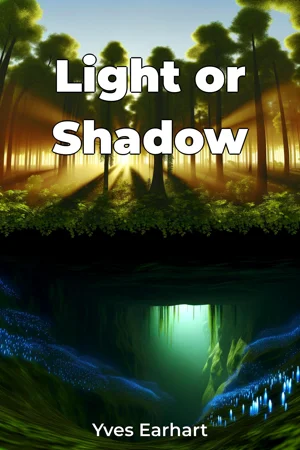
**How can life thrive equally in a sunlit forest canopy and a lightless cave?** *Light or Shadow* examines the biological ingenuity that allows organisms to conquer extremes of illumination, revealing the hidden rules governing survival in Earth’s most contrasting habitats. This book merges ecology, evolutionary biology, and environmental science to dissect the strategies species employ to adapt to—and often depend on—specific light conditions. **Main Themes and Relevance** The book anchors its exploration in three core concepts: physiological adaptations, behavioral plasticity, and symbiotic interdependence. From the translucent skins of cave-dwelling amphibians to the phototropic precision of forest plants, these themes underscore how light—or its absence—shapes anatomy, behavior, and ecological networks. Understanding these adaptations is critical to grasping biodiversity’s fragility and resilience, particularly as human activities alter global light environments. **Context and Foundations** The study of light-related adaptation stretches back to early evolutionary theories but has gained urgency with modern technologies like genomic sequencing and light-sensitive tracking. The book assumes a basic familiarity with photosynthesis, natural selection, and ecosystem dynamics but carefully builds on these concepts to explore niche specialization. For instance, it details how divergent selection pressures in sunlit versus shaded habitats drive speciation, citing Darwin’s observations of plant phototropism as a historical touchstone. **Central Thesis** *Light or Shadow* posits that adaptation to light gradients is a unifying force across ecosystems, fostering biological diversity through both competition and cooperation. This argument reframes light not merely as a resource but as an architect of life’s complexity, with implications for conservation biology and climate resilience. **Structure and Content** The book opens by defining photic zones—areas categorized by light availability—in forests, caves, and human-altered landscapes. Subsequent chapters delve into organismal case studies: 1. **Forest Layers**: How canopy plants optimize photosynthesis under intense light while understory species evolve low-light efficiency, often relying on symbiotic fungi for nutrient exchange. 2. **Cave Ecosystems**: The loss of vision in cavefish, countered by enhanced sensory systems like electroreception, and the role of chemosynthetic bacteria as foundational energy sources. 3. **Human Impact**: Artificial lighting’s disruption of nocturnal ecosystems and the evolutionary traps it creates for species like migrating birds. The final chapters synthesize these insights, advocating for light-aware conservation strategies, such as preserving dark corridors for wildlife and regulating urban glow. **Evidence and Methodologies** The text draws on peer-reviewed studies of extremophiles, long-term ecological surveys, and controlled lab experiments. Notable examples include genomic analyses of Mexican tetra fish (documenting eye degeneration genes) and isotopic tracing in mycorrhizal networks. Fieldwork from sites like Borneo’s dipterocarp forests and Kentucky’s Mammoth Cave provides empirical depth. **Interdisciplinary Links** Connections to optics clarify how light wavelength affects camouflage and communication, while biochemistry sections detail melanin production in response to UV exposure. The book also bridges ecology and urban planning, discussing how light pollution maps can guide policy. **Unique Contributions** Unlike prior works focused solely on vision or photosynthesis, *Light or Shadow* integrates plant and animal adaptations into a cohesive narrative. It also highlights understudied organisms, such as bioluminescent fungi that structure forest food webs, and critiques the anthropocentric bias in light-related research. **Tone and Accessibility** Written in lucid, jargon-free prose, the book balances academic rigor with narrative storytelling. Technical terms are contextualized, and concepts are illustrated through analogies, such as comparing cave ecosystems to isolated "islands" of evolution. **Audience and Application** Targeted at biology enthusiasts, students, and environmental professionals, the book equips readers to assess ecological challenges through the lens of light adaptation. Practically, it offers guidelines for reducing light pollution and restoring degraded photic zones. **Scope and Boundaries** While focused on terrestrial and freshwater systems, marine environments are referenced briefly. The book acknowledges but does not deeply explore adaptations in transitional zones like twilight-lit savannas. **Controversies Addressed** Debates on the rate of adaptation are examined, particularly whether species can adjust to artificial lighting’s rapid spread. Case studies on urban moths and light-tolerant algae provide evidence for both adaptive resilience and evolutionary stagnation. *Light or Shadow* ultimately challenges readers to perceive light as a dynamic ecological currency—one that life has spent millennia learning to harness, evade, and reshape. Its synthesis of biology and conservation ethics positions it as a timely resource for understanding humanity’s role in preserving Earth’s photic diversity.
**How can life thrive equally in a sunlit forest canopy and a lightless cave?** *Light or Shadow* examines the biological ingenuity that allows organisms to conquer extremes of illumination, revealing the hidden rules governing survival in Earth’s most contrasting habitats. This book merges ecology, evolutionary biology, and environmental science to dissect the strategies species employ to adapt to—and often depend on—specific light conditions. **Main Themes and Relevance** The book anchors its exploration in three core concepts: physiological adaptations, behavioral plasticity, and symbiotic interdependence. From the translucent skins of cave-dwelling amphibians to the phototropic precision of forest plants, these themes underscore how light—or its absence—shapes anatomy, behavior, and ecological networks. Understanding these adaptations is critical to grasping biodiversity’s fragility and resilience, particularly as human activities alter global light environments. **Context and Foundations** The study of light-related adaptation stretches back to early evolutionary theories but has gained urgency with modern technologies like genomic sequencing and light-sensitive tracking. The book assumes a basic familiarity with photosynthesis, natural selection, and ecosystem dynamics but carefully builds on these concepts to explore niche specialization. For instance, it details how divergent selection pressures in sunlit versus shaded habitats drive speciation, citing Darwin’s observations of plant phototropism as a historical touchstone. **Central Thesis** *Light or Shadow* posits that adaptation to light gradients is a unifying force across ecosystems, fostering biological diversity through both competition and cooperation. This argument reframes light not merely as a resource but as an architect of life’s complexity, with implications for conservation biology and climate resilience. **Structure and Content** The book opens by defining photic zones—areas categorized by light availability—in forests, caves, and human-altered landscapes. Subsequent chapters delve into organismal case studies: 1. **Forest Layers**: How canopy plants optimize photosynthesis under intense light while understory species evolve low-light efficiency, often relying on symbiotic fungi for nutrient exchange. 2. **Cave Ecosystems**: The loss of vision in cavefish, countered by enhanced sensory systems like electroreception, and the role of chemosynthetic bacteria as foundational energy sources. 3. **Human Impact**: Artificial lighting’s disruption of nocturnal ecosystems and the evolutionary traps it creates for species like migrating birds. The final chapters synthesize these insights, advocating for light-aware conservation strategies, such as preserving dark corridors for wildlife and regulating urban glow. **Evidence and Methodologies** The text draws on peer-reviewed studies of extremophiles, long-term ecological surveys, and controlled lab experiments. Notable examples include genomic analyses of Mexican tetra fish (documenting eye degeneration genes) and isotopic tracing in mycorrhizal networks. Fieldwork from sites like Borneo’s dipterocarp forests and Kentucky’s Mammoth Cave provides empirical depth. **Interdisciplinary Links** Connections to optics clarify how light wavelength affects camouflage and communication, while biochemistry sections detail melanin production in response to UV exposure. The book also bridges ecology and urban planning, discussing how light pollution maps can guide policy. **Unique Contributions** Unlike prior works focused solely on vision or photosynthesis, *Light or Shadow* integrates plant and animal adaptations into a cohesive narrative. It also highlights understudied organisms, such as bioluminescent fungi that structure forest food webs, and critiques the anthropocentric bias in light-related research. **Tone and Accessibility** Written in lucid, jargon-free prose, the book balances academic rigor with narrative storytelling. Technical terms are contextualized, and concepts are illustrated through analogies, such as comparing cave ecosystems to isolated "islands" of evolution. **Audience and Application** Targeted at biology enthusiasts, students, and environmental professionals, the book equips readers to assess ecological challenges through the lens of light adaptation. Practically, it offers guidelines for reducing light pollution and restoring degraded photic zones. **Scope and Boundaries** While focused on terrestrial and freshwater systems, marine environments are referenced briefly. The book acknowledges but does not deeply explore adaptations in transitional zones like twilight-lit savannas. **Controversies Addressed** Debates on the rate of adaptation are examined, particularly whether species can adjust to artificial lighting’s rapid spread. Case studies on urban moths and light-tolerant algae provide evidence for both adaptive resilience and evolutionary stagnation. *Light or Shadow* ultimately challenges readers to perceive light as a dynamic ecological currency—one that life has spent millennia learning to harness, evade, and reshape. Its synthesis of biology and conservation ethics positions it as a timely resource for understanding humanity’s role in preserving Earth’s photic diversity.
*Light or Shadow* explores how life adapts to extremes of light, from sunlit forest canopies to pitch-dark caves, revealing the ingenious strategies organisms use to thrive in these contrasting environments. The book weaves together ecology, evolutionary biology, and environmental science to show how light—or its absence—shapes anatomy, behavior, and ecosystems. It highlights fascinating adaptations, such as cavefish losing their eyesight while developing heightened senses like electroreception, and forest plants optimizing photosynthesis through symbiotic relationships with fungi. These examples underscore the delicate balance of biodiversity and the impact of human activities, like light pollution, on these intricate systems. The book’s unique strength lies in its interdisciplinary approach, blending detailed case studies with broader ecological principles. It examines how divergent light conditions drive speciation and how species cooperate or compete to survive. For instance, it discusses how bioluminescent fungi create food webs in dark forests and how urban lighting disrupts nocturnal ecosystems. By synthesizing research from genomics, fieldwork, and lab experiments, *Light or Shadow* offers a comprehensive view of light as a unifying force in evolution and ecology. Written in accessible, engaging prose, the book progresses from defining photic zones to exploring specific adaptations and concluding with practical conservation strategies. It challenges readers to see light not just as a resource but as a dynamic architect of life’s complexity, making it a valuable read for anyone interested in biology, environmental science, or conservation.
Book Details
ISBN
9788233955359
Publisher
Publifye AS
Your Licenses
You don't own any licenses for this book
Purchase a license below to unlock this book and download the EPUB.
Purchase License
Select a tier to unlock this book
Need bulk licensing?
Contact us for enterprise agreements.