
About This Book
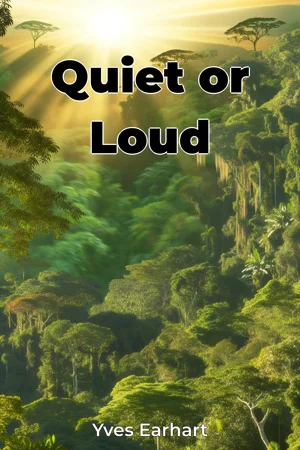
Have you ever stood in a forest so silent you could hear your own heartbeat—or walked through a jungle where life’s roar drowns out thought? *Quiet or Loud: The Hidden Language of Natural Soundscapes* explores the science, ecology, and cultural significance of Earth’s auditory environments, revealing how sound shapes ecosystems and human understanding of the wild. **Main Themes and Relevance** The book examines two core themes: the ecological role of sound in habitats ranging from boreal forests to tropical rainforests, and the escalating impact of human-generated noise on these fragile systems. By contrasting the near-silent winter forests of Scandinavia with the dense acoustic layers of the Amazon, it underscores how soundscapes serve as vital indicators of environmental health. These topics are critical for readers interested in conservation, ecology, or the often-overlooked sensory dimensions of nature. **Context and Scientific Foundations** Drawing from bioacoustics—a field combining biology and acoustics—the book explains how animals use sound for navigation, mating, and survival. For instance, the infrasound communication of elephants or the ultrasonic clicks of bats are unpacked with clarity, requiring no prior scientific expertise. Historically, naturalists like Bernie Krause have documented “soundscape ecology,” arguing that habitats possess unique acoustic signatures akin to musical compositions. This framework anchors the book’s exploration. **Central Argument** The text posits that natural soundscapes are not merely background noise but complex, living systems. Silence in a forest may signal biodiversity loss, while excessive noise in a jungle could mask critical predator-prey interactions. Human activities, from logging to urban sprawl, disrupt these auditory balances, often with irreversible consequences. Understanding these dynamics, the book argues, is essential for effective conservation and redefining humanity’s relationship with nature. **Structure and Evidence** 1. **Introduction**: Defines soundscapes and their ecological significance. 2. **Chapters 1–2**: Contrast the adaptive strategies of species in quiet versus loud environments, citing studies on owl hearing precision and how tropical frogs synchronize calls to avoid acoustic overlap. 3. **Chapter 3**: Analyzes anthropogenic noise—shipping, machinery, tourism—and its distortion of natural soundscapes, referencing marine biology research on whale vocalizations disrupted by sonar. 4. **Conclusion**: Advocates for “acoustic conservation,” including policy changes and public awareness campaigns. Evidence includes peer-reviewed fieldwork, spectrograms visualizing sound patterns, and interviews with researchers. Unique data sources include decades-old audio recordings from now-vanished ecosystems, highlighting shifts in biodiversity. **Interdisciplinary Insights** The book bridges ecology, psychology (examining how natural sounds reduce human stress), and technology (e.g., AI tools used to map soundscape changes). These connections emphasize that soundscapes are not just an environmental concern but a cultural and psychological one. **Unique Perspective** Unlike existing works focused solely on noise pollution, *Quiet or Loud* juxtaposes extreme auditory environments to reveal universal principles. A chapter on “sonic mimicry” in insects, for example, illustrates how evolution refines communication strategies in both quiet and loud settings. **Tone and Accessibility** Written in clear, narrative-driven prose, the book avoids jargon without sacrificing scientific rigor. It balances case studies—like the sudden silence of Chernobyl’s post-disaster forests—with broader analysis, making it equally suited for casual readers and academics. **Audience and Applications** Targeted at environmentally engaged readers, educators, and policymakers, the book provides actionable steps: reducing personal noise footprints, supporting sound-protected reserves, and leveraging acoustic data in biodiversity monitoring. **Scope and Limitations** While focused on terrestrial and marine environments, the book acknowledges gaps in desert and urban soundscape research. It avoids technical debates on measurement methodologies, prioritizing accessibility over niche discourse. **Controversies Addressed** The text engages with disputes over “natural silence” preservation—critics argue total quiet is an unrealistic ideal, but the book counters by advocating for balanced, context-specific solutions. By framing sound as a lens to diagnose planetary health, *Quiet or Loud* redefines listening as an act of ecological stewardship—and silence not as absence, but as a testament to resilience.
Have you ever stood in a forest so silent you could hear your own heartbeat—or walked through a jungle where life’s roar drowns out thought? *Quiet or Loud: The Hidden Language of Natural Soundscapes* explores the science, ecology, and cultural significance of Earth’s auditory environments, revealing how sound shapes ecosystems and human understanding of the wild. **Main Themes and Relevance** The book examines two core themes: the ecological role of sound in habitats ranging from boreal forests to tropical rainforests, and the escalating impact of human-generated noise on these fragile systems. By contrasting the near-silent winter forests of Scandinavia with the dense acoustic layers of the Amazon, it underscores how soundscapes serve as vital indicators of environmental health. These topics are critical for readers interested in conservation, ecology, or the often-overlooked sensory dimensions of nature. **Context and Scientific Foundations** Drawing from bioacoustics—a field combining biology and acoustics—the book explains how animals use sound for navigation, mating, and survival. For instance, the infrasound communication of elephants or the ultrasonic clicks of bats are unpacked with clarity, requiring no prior scientific expertise. Historically, naturalists like Bernie Krause have documented “soundscape ecology,” arguing that habitats possess unique acoustic signatures akin to musical compositions. This framework anchors the book’s exploration. **Central Argument** The text posits that natural soundscapes are not merely background noise but complex, living systems. Silence in a forest may signal biodiversity loss, while excessive noise in a jungle could mask critical predator-prey interactions. Human activities, from logging to urban sprawl, disrupt these auditory balances, often with irreversible consequences. Understanding these dynamics, the book argues, is essential for effective conservation and redefining humanity’s relationship with nature. **Structure and Evidence** 1. **Introduction**: Defines soundscapes and their ecological significance. 2. **Chapters 1–2**: Contrast the adaptive strategies of species in quiet versus loud environments, citing studies on owl hearing precision and how tropical frogs synchronize calls to avoid acoustic overlap. 3. **Chapter 3**: Analyzes anthropogenic noise—shipping, machinery, tourism—and its distortion of natural soundscapes, referencing marine biology research on whale vocalizations disrupted by sonar. 4. **Conclusion**: Advocates for “acoustic conservation,” including policy changes and public awareness campaigns. Evidence includes peer-reviewed fieldwork, spectrograms visualizing sound patterns, and interviews with researchers. Unique data sources include decades-old audio recordings from now-vanished ecosystems, highlighting shifts in biodiversity. **Interdisciplinary Insights** The book bridges ecology, psychology (examining how natural sounds reduce human stress), and technology (e.g., AI tools used to map soundscape changes). These connections emphasize that soundscapes are not just an environmental concern but a cultural and psychological one. **Unique Perspective** Unlike existing works focused solely on noise pollution, *Quiet or Loud* juxtaposes extreme auditory environments to reveal universal principles. A chapter on “sonic mimicry” in insects, for example, illustrates how evolution refines communication strategies in both quiet and loud settings. **Tone and Accessibility** Written in clear, narrative-driven prose, the book avoids jargon without sacrificing scientific rigor. It balances case studies—like the sudden silence of Chernobyl’s post-disaster forests—with broader analysis, making it equally suited for casual readers and academics. **Audience and Applications** Targeted at environmentally engaged readers, educators, and policymakers, the book provides actionable steps: reducing personal noise footprints, supporting sound-protected reserves, and leveraging acoustic data in biodiversity monitoring. **Scope and Limitations** While focused on terrestrial and marine environments, the book acknowledges gaps in desert and urban soundscape research. It avoids technical debates on measurement methodologies, prioritizing accessibility over niche discourse. **Controversies Addressed** The text engages with disputes over “natural silence” preservation—critics argue total quiet is an unrealistic ideal, but the book counters by advocating for balanced, context-specific solutions. By framing sound as a lens to diagnose planetary health, *Quiet or Loud* redefines listening as an act of ecological stewardship—and silence not as absence, but as a testament to resilience.
"Quiet or Loud: The Hidden Language of Natural Soundscapes" unveils the profound ecological and cultural significance of Earth’s auditory environments, framing sound as a vital indicator of environmental health. The book explores how natural soundscapes—from the hushed winter forests of Scandinavia to the cacophonous Amazon rainforest—shape ecosystems, influence animal behavior, and deepen human connection to nature. By blending bioacoustics research with vivid storytelling, it reveals startling insights: elephants communicate through infrasound imperceptible to humans, while tropical frogs synchronize calls to avoid acoustic chaos. These soundscapes, the authors argue, are not passive backdrops but dynamic systems where silence can signal biodiversity loss, and noise pollution disrupts critical interactions like predator warnings or mating rituals. The book’s strength lies in its interdisciplinary approach, weaving ecology, marine biology, and psychology to show how human-generated noise—from shipping to urban sprawl—alters habitats irreversibly. Chapters progress from analyzing animal adaptations in contrasting environments to documenting noise’s cascading effects, such as whales struggling to navigate amid sonar interference. Unique historical recordings of vanished ecosystems underscore the urgency of "acoustic conservation." Unlike typical noise pollution studies, *Quiet or Loud* juxtaposes extremes, illustrating universal principles through examples like Chernobyl’s post-disaster silence or insects’ sonic mimicry. Accessible yet rigorous, it balances fieldwork with actionable solutions, making a compelling case that preserving soundscapes is key to safeguarding biodiversity—and redefining stewardship as an act of listening.
Book Details
ISBN
9788233955335
Publisher
Publifye AS
Your Licenses
You don't own any licenses for this book
Purchase a license below to unlock this book and download the EPUB.
Purchase License
Select a tier to unlock this book
Need bulk licensing?
Contact us for enterprise agreements.