
About This Book
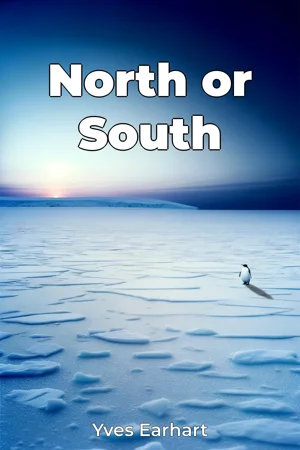
What does it mean to survive in a land where temperatures plummet to -60°C, darkness reigns for months, and ice stretches farther than the eye can see? *North or South: Life at the Poles* delves into the starkly contrasting ecosystems of the Arctic and Antarctic, unraveling how these remote regions—though both shaped by extreme cold—harbor uniquely adapted life forms and face divergent threats from human activity. Combining ecological analysis, climate science, and conservation policy, this book offers a rigorous examination of why preserving Earth’s polar regions demands tailored strategies informed by their irreplaceable biodiversity and geopolitical realities. The book opens by dismantling the common misconception that the Arctic and Antarctic are ecological mirror images. While both are cold deserts governed by seasonal extremes, their geological histories, species assemblages, and human footprints differ profoundly. The Arctic, a frozen ocean encircled by continents, supports terrestrial mammals like polar bears and Arctic foxes alongside migratory seabirds. In contrast, Antarctica—a continent surrounded by ocean—hosts marine-dependent species such as emperor penguins and leopard seals, with no native land mammals. These distinctions, rooted in millions of years of tectonic shifts and evolutionary isolation, form the foundation for understanding why conservation efforts cannot adopt a one-size-fits-all approach. Central to the book’s thesis is the argument that climate change and resource exploitation are destabilizing these regions at accelerating rates, but their vulnerabilities are not identical. The Arctic’s sea ice, critical for species like walruses and Indigenous hunting communities, is vanishing faster than Antarctic ice shelves, which are more influenced by oceanic currents. Meanwhile, Antarctica’s isolation has spared it from direct industrial development, unlike the Arctic, where oil drilling and shipping routes increasingly encroach. By dissecting these dynamics, the book underscores how localized data and Indigenous knowledge must guide policy-making. Structured into three sections, *North or South* first establishes the biogeographical and climatic frameworks defining each pole. Detailed chapters compare food webs, highlighting keystone species such as Antarctic krill (a linchpin for Southern Ocean ecosystems) and Arctic lichens (vital for caribou herds). The second section analyzes anthropogenic threats, from melting permafrost releasing methane in the Arctic to krill overfishing jeopardizing Antarctic predators. Final chapters propose solutions, emphasizing international treaties like the Antarctic Treaty System and the role of Indigenous stewardship in the Arctic. Evidence is drawn from recent peer-reviewed studies, satellite imagery tracking ice loss, and fieldwork from research stations. The integration of Sami and Inuit perspectives offers a human dimension often absent in polar science, revealing how traditional ecological knowledge complements Western data. For instance, Inuit observations of thinner sea ice align with satellite models but provide granular insights into animal behavior shifts. Interdisciplinary connections bridge climatology, marine biology, and geopolitics. The book illustrates how polar atmospheric changes influence global weather patterns, affecting agriculture and sea levels thousands of miles away. It also explores how territorial claims in the Arctic, driven by fossil fuel reserves, clash with Antarctica’s demilitarized status, raising questions about equity in global resource management. Unique to this work is its side-by-side analysis of the poles, a approach rarely taken in polar literature. By juxtaposing their ecological responses to warming, the book reveals paradoxes: Arctic species like the red fox are expanding into new territories, while Antarctic endemic species face nowhere to retreat. This comparative lens challenges readers to rethink simplistic narratives of polar doom. Written in a clear, journalistic style, the book balances scientific complexity with narrative pacing, making it accessible to students, policymakers, and environmentally engaged readers. It avoids technical jargon but retains precision, with maps and infographics supplementing key points. Scope is intentionally focused on terrestrial and marine ecosystems, excluding atmospheric chemistry. Practical applications include advocating for marine protected areas in the Southern Ocean and supporting Indigenous-led conservation in the Arctic. Controversies, such as debates over “assisted migration” for polar species, are presented with balanced scrutiny. *North or South* ultimately argues that the poles are not just barometers of climate change but active players in Earth’s ecological balance. Their survival depends on recognizing their differences as much as their shared fragility—a lesson in humility for a planet facing an uncertain future.
What does it mean to survive in a land where temperatures plummet to -60°C, darkness reigns for months, and ice stretches farther than the eye can see? *North or South: Life at the Poles* delves into the starkly contrasting ecosystems of the Arctic and Antarctic, unraveling how these remote regions—though both shaped by extreme cold—harbor uniquely adapted life forms and face divergent threats from human activity. Combining ecological analysis, climate science, and conservation policy, this book offers a rigorous examination of why preserving Earth’s polar regions demands tailored strategies informed by their irreplaceable biodiversity and geopolitical realities. The book opens by dismantling the common misconception that the Arctic and Antarctic are ecological mirror images. While both are cold deserts governed by seasonal extremes, their geological histories, species assemblages, and human footprints differ profoundly. The Arctic, a frozen ocean encircled by continents, supports terrestrial mammals like polar bears and Arctic foxes alongside migratory seabirds. In contrast, Antarctica—a continent surrounded by ocean—hosts marine-dependent species such as emperor penguins and leopard seals, with no native land mammals. These distinctions, rooted in millions of years of tectonic shifts and evolutionary isolation, form the foundation for understanding why conservation efforts cannot adopt a one-size-fits-all approach. Central to the book’s thesis is the argument that climate change and resource exploitation are destabilizing these regions at accelerating rates, but their vulnerabilities are not identical. The Arctic’s sea ice, critical for species like walruses and Indigenous hunting communities, is vanishing faster than Antarctic ice shelves, which are more influenced by oceanic currents. Meanwhile, Antarctica’s isolation has spared it from direct industrial development, unlike the Arctic, where oil drilling and shipping routes increasingly encroach. By dissecting these dynamics, the book underscores how localized data and Indigenous knowledge must guide policy-making. Structured into three sections, *North or South* first establishes the biogeographical and climatic frameworks defining each pole. Detailed chapters compare food webs, highlighting keystone species such as Antarctic krill (a linchpin for Southern Ocean ecosystems) and Arctic lichens (vital for caribou herds). The second section analyzes anthropogenic threats, from melting permafrost releasing methane in the Arctic to krill overfishing jeopardizing Antarctic predators. Final chapters propose solutions, emphasizing international treaties like the Antarctic Treaty System and the role of Indigenous stewardship in the Arctic. Evidence is drawn from recent peer-reviewed studies, satellite imagery tracking ice loss, and fieldwork from research stations. The integration of Sami and Inuit perspectives offers a human dimension often absent in polar science, revealing how traditional ecological knowledge complements Western data. For instance, Inuit observations of thinner sea ice align with satellite models but provide granular insights into animal behavior shifts. Interdisciplinary connections bridge climatology, marine biology, and geopolitics. The book illustrates how polar atmospheric changes influence global weather patterns, affecting agriculture and sea levels thousands of miles away. It also explores how territorial claims in the Arctic, driven by fossil fuel reserves, clash with Antarctica’s demilitarized status, raising questions about equity in global resource management. Unique to this work is its side-by-side analysis of the poles, a approach rarely taken in polar literature. By juxtaposing their ecological responses to warming, the book reveals paradoxes: Arctic species like the red fox are expanding into new territories, while Antarctic endemic species face nowhere to retreat. This comparative lens challenges readers to rethink simplistic narratives of polar doom. Written in a clear, journalistic style, the book balances scientific complexity with narrative pacing, making it accessible to students, policymakers, and environmentally engaged readers. It avoids technical jargon but retains precision, with maps and infographics supplementing key points. Scope is intentionally focused on terrestrial and marine ecosystems, excluding atmospheric chemistry. Practical applications include advocating for marine protected areas in the Southern Ocean and supporting Indigenous-led conservation in the Arctic. Controversies, such as debates over “assisted migration” for polar species, are presented with balanced scrutiny. *North or South* ultimately argues that the poles are not just barometers of climate change but active players in Earth’s ecological balance. Their survival depends on recognizing their differences as much as their shared fragility—a lesson in humility for a planet facing an uncertain future.
"North or South: Life at the Poles" explores the Arctic and Antarctic as vastly different frontiers of survival, biodiversity, and climate vulnerability. While both regions endure extreme cold and darkness, the book reveals how their ecosystems and human impacts diverge dramatically. The Arctic, a frozen ocean ringed by continents, shelters land mammals like polar bears and Indigenous communities, whereas Antarctica—a continent surrounded by ocean—thrives with marine life like emperor penguins, untouched by permanent human settlements. This contrast stems from millions of years of geological and evolutionary history, challenging the myth that the poles are ecological twins. The book emphasizes how climate change and resource exploitation destabilize these regions in distinct ways. Arctic sea ice, crucial for wildlife and Indigenous livelihoods, melts faster due to atmospheric warming, while Antarctic ice loss hinges more on shifting ocean currents. Unlike the industrialized Arctic, Antarctica faces threats from krill overfishing and tourism. *North or South* stands out by weaving climate science with Indigenous knowledge—such as Inuit observations of thinning ice—to argue for tailored conservation policies. Structured in three sections, it progresses from ecological basics to human-driven threats, finally proposing solutions like marine protected areas and Indigenous-led stewardship. By comparing poles side-by-side, the book uncovers paradoxes: some Arctic species adapt by expanding ranges, while Antarctic endemics face extinction. Its interdisciplinary approach, blending geopolitics, biology, and fieldwork, offers a nuanced lens on protecting these critical, fragile ecosystems.
Book Details
ISBN
9788233955328
Publisher
Publifye AS
Your Licenses
You don't own any licenses for this book
Purchase a license below to unlock this book and download the EPUB.
Purchase License
Select a tier to unlock this book
Need bulk licensing?
Contact us for enterprise agreements.