
About This Book
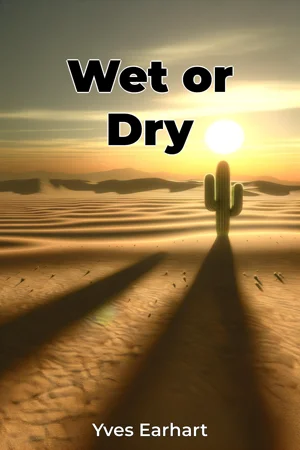
What does it take to survive in a world of extremes—where water drowns the air or vanishes for years? *Wet or Dry: Life’s Mastery of Moisture* delves into the biological ingenuity that allows ecosystems to flourish in Earth’s most polarized environments: rainforests and deserts. By contrasting these biomes, the book uncovers universal principles of adaptation, resilience, and the delicate balance between life and its environment. **Main Themes and Relevance** The book explores two core themes: the strategies organisms use to harness or conserve water, and the interconnectedness of these adaptations with broader ecological stability. Rainforests, with their hyper-saturated air and nutrient-poor soils, challenge life to compete for light and recycle resources. Deserts, where water scarcity defines existence, push species to innovate in storage, efficiency, and survival timing. Understanding these systems is critical as climate change intensifies weather extremes, forcing societies to rethink resource management and conservation. **Foundational Concepts** Rainforests and deserts occupy opposite ends of the hydrological spectrum, yet both host uniquely specialized life forms. The book grounds readers in basic ecological principles—photosynthesis, nutrient cycles, and symbiotic relationships—before detailing how these processes warp under extreme conditions. For instance, rainforest plants evolve drip-tip leaves to shed excess water, while desert cacti store moisture in fleshy stems and open stomata only at night. Such adaptations are not mere curiosities but solutions to existential challenges. **Core Thesis** Life’s success in moisture extremes hinges on flexibility and efficiency. The book argues that studying these adaptations reveals a blueprint for resilience applicable beyond biology, offering insights into sustainable technology, agriculture, and climate mitigation. By decoding how nature balances abundance and scarcity, we gain tools to address human-driven environmental disruption. **Structure and Evidence** The book opens with an overview of water’s role in shaping ecosystems, followed by deep dives into rainforest and desert biomes. Each section examines plant physiology, animal behavior, and microbial activity, supported by field studies from the Amazon Basin and the Sonoran Desert. For example, researchers track how leaf-cutter ants cultivate fungal gardens to break down toxic rainforest foliage, while kangaroo rats survive without drinking water by metabolizing seeds. Satellite data and climate models illustrate how rising temperatures are compressing desert rainfall cycles and amplifying rainforest droughts. **Interdisciplinary Insights** The narrative bridges climatology, evolutionary biology, and anthropology. Desert plant root systems, which mirror human-designed irrigation networks, inform water-efficient agriculture. Similarly, rainforest mycorrhizal networks—dubbed the “wood-wide web”—inspire decentralized communication systems in technology. These connections underscore that environmental science is not isolated but intersects with human innovation. **Unique Perspective** Unlike biome-specific texts, *Wet or Dry* uses contrast to highlight adaptive patterns. This duality reveals that scarcity and surplus demand similar innovation: efficient resource allocation. The book also critiques conservation strategies, arguing that protecting deserts and rainforests requires distinct approaches tailored to their hydrological rhythms. **Accessible Science** Written in a narrative style, the book avoids jargon without sacrificing depth. Real-world examples—like the role of saguaro cacti in Indigenous Tohono O’odham culture—anchor concepts in human experience. Charts and photographs supplement the text, visualizing phenomena like fog-harvesting beetles or emergent rainforest canopy layers. **Audience and Application** Targeting environmentally engaged readers, students, and policymakers, the book balances scientific rigor with actionable insights. Farmers in arid regions might adopt drought-resistant crop strategies modeled after desert flora, while urban planners could mimic rainforest water-recycling systems. The final chapters propose policy frameworks to safeguard these biomes, emphasizing that their survival is intertwined with human prosperity. **Scope and Urgency** While focused on rainforests and deserts, the book acknowledges other biomes’ vulnerabilities. It avoids speculative solutions, prioritizing methods validated by current research. However, it challenges the perception of deserts as “wastelands” and rainforests as “inexhaustible,” urging a recalibration of cultural and political attitudes. By dissecting life’s mastery of moisture, *Wet or Dry* reframes extremes not as barriers but as catalysts for evolutionary creativity—a lesson in resilience as humanity navigates an uncertain climate future.
What does it take to survive in a world of extremes—where water drowns the air or vanishes for years? *Wet or Dry: Life’s Mastery of Moisture* delves into the biological ingenuity that allows ecosystems to flourish in Earth’s most polarized environments: rainforests and deserts. By contrasting these biomes, the book uncovers universal principles of adaptation, resilience, and the delicate balance between life and its environment. **Main Themes and Relevance** The book explores two core themes: the strategies organisms use to harness or conserve water, and the interconnectedness of these adaptations with broader ecological stability. Rainforests, with their hyper-saturated air and nutrient-poor soils, challenge life to compete for light and recycle resources. Deserts, where water scarcity defines existence, push species to innovate in storage, efficiency, and survival timing. Understanding these systems is critical as climate change intensifies weather extremes, forcing societies to rethink resource management and conservation. **Foundational Concepts** Rainforests and deserts occupy opposite ends of the hydrological spectrum, yet both host uniquely specialized life forms. The book grounds readers in basic ecological principles—photosynthesis, nutrient cycles, and symbiotic relationships—before detailing how these processes warp under extreme conditions. For instance, rainforest plants evolve drip-tip leaves to shed excess water, while desert cacti store moisture in fleshy stems and open stomata only at night. Such adaptations are not mere curiosities but solutions to existential challenges. **Core Thesis** Life’s success in moisture extremes hinges on flexibility and efficiency. The book argues that studying these adaptations reveals a blueprint for resilience applicable beyond biology, offering insights into sustainable technology, agriculture, and climate mitigation. By decoding how nature balances abundance and scarcity, we gain tools to address human-driven environmental disruption. **Structure and Evidence** The book opens with an overview of water’s role in shaping ecosystems, followed by deep dives into rainforest and desert biomes. Each section examines plant physiology, animal behavior, and microbial activity, supported by field studies from the Amazon Basin and the Sonoran Desert. For example, researchers track how leaf-cutter ants cultivate fungal gardens to break down toxic rainforest foliage, while kangaroo rats survive without drinking water by metabolizing seeds. Satellite data and climate models illustrate how rising temperatures are compressing desert rainfall cycles and amplifying rainforest droughts. **Interdisciplinary Insights** The narrative bridges climatology, evolutionary biology, and anthropology. Desert plant root systems, which mirror human-designed irrigation networks, inform water-efficient agriculture. Similarly, rainforest mycorrhizal networks—dubbed the “wood-wide web”—inspire decentralized communication systems in technology. These connections underscore that environmental science is not isolated but intersects with human innovation. **Unique Perspective** Unlike biome-specific texts, *Wet or Dry* uses contrast to highlight adaptive patterns. This duality reveals that scarcity and surplus demand similar innovation: efficient resource allocation. The book also critiques conservation strategies, arguing that protecting deserts and rainforests requires distinct approaches tailored to their hydrological rhythms. **Accessible Science** Written in a narrative style, the book avoids jargon without sacrificing depth. Real-world examples—like the role of saguaro cacti in Indigenous Tohono O’odham culture—anchor concepts in human experience. Charts and photographs supplement the text, visualizing phenomena like fog-harvesting beetles or emergent rainforest canopy layers. **Audience and Application** Targeting environmentally engaged readers, students, and policymakers, the book balances scientific rigor with actionable insights. Farmers in arid regions might adopt drought-resistant crop strategies modeled after desert flora, while urban planners could mimic rainforest water-recycling systems. The final chapters propose policy frameworks to safeguard these biomes, emphasizing that their survival is intertwined with human prosperity. **Scope and Urgency** While focused on rainforests and deserts, the book acknowledges other biomes’ vulnerabilities. It avoids speculative solutions, prioritizing methods validated by current research. However, it challenges the perception of deserts as “wastelands” and rainforests as “inexhaustible,” urging a recalibration of cultural and political attitudes. By dissecting life’s mastery of moisture, *Wet or Dry* reframes extremes not as barriers but as catalysts for evolutionary creativity—a lesson in resilience as humanity navigates an uncertain climate future.
"Wet or Dry: Life’s Mastery of Moisture" explores how life thrives in Earth’s most extreme water environments—lush rainforests and arid deserts—revealing universal lessons about adaptation and resilience. The book contrasts these biomes to uncover shared survival strategies: rainforest species combat flooding and nutrient-poor soils with drip-tip leaves and rapid recycling, while desert life masters water storage and timing, like cacti storing moisture in their stems or kangaroo rats surviving on metabolic water. At its core, the book argues that these adaptations are not just biological marvels but blueprints for sustainability in a climate-changing world. Blending ecology, climatology, and anthropology, the book progresses from foundational concepts like photosynthesis and symbiotic relationships to real-world applications. It highlights how leaf-cutter ants cultivate fungi to detoxify rainforest plants and how desert root systems inspire water-efficient agriculture. Unlike single-biome studies, *Wet or Dry* uses stark contrasts to show how scarcity and surplus drive similar innovations in efficiency. The narrative avoids jargon, using vivid examples like fog-harvesting beetles and Indigenous cultural practices tied to saguaro cacti to anchor complex ideas. What makes this work unique is its urgent, interdisciplinary lens. It challenges misconceptions—deserts as “wastelands,” rainforests as “inexhaustible”—and connects evolutionary biology to human solutions, from drought-resistant crops to policy frameworks. By framing extremes as catalysts for creativity, the book transforms ecological insights into tools for navigating our climate future.
Book Details
ISBN
9788233955298
Publisher
Publifye AS
Your Licenses
You don't own any licenses for this book
Purchase a license below to unlock this book and download the EPUB.
Purchase License
Select a tier to unlock this book
Need bulk licensing?
Contact us for enterprise agreements.